

Contrast Media Safety: What You Need to Know About Risks, Reactions, and Best Practices
When you get a CT scan or MRI, contrast media, a substance injected to improve image clarity during medical imaging. Also known as dye, it helps doctors see blood vessels, organs, and tumors more clearly. But it’s not harmless—some people have serious reactions, and others face kidney damage they didn’t see coming. That’s why contrast media safety isn’t just a technical detail—it’s a life-or-death concern.
There are two main types: iodinated contrast, used in CT scans and X-rays, and gadolinium-based agents, used in MRI scans. Iodinated contrast can trigger allergic-like reactions—even in people who’ve never had one before. Gadolinium, while generally safer, can stick in the brain and bones if you have poor kidney function, and has been linked to a rare but serious skin condition called nephrogenic systemic fibrosis. These aren’t rare edge cases. Hospitals track these risks because they happen more often than you think.
People with kidney disease, diabetes, or heart failure are at higher risk for contrast-induced nephropathy, a sudden drop in kidney function after contrast exposure. Even if your kidneys seem fine, a simple blood test before the scan can catch hidden problems. Hydration before and after helps. Some meds, like metformin or NSAIDs, need to be paused. And if you’ve ever had a reaction to contrast—even mild itching—you need to tell your doctor. That history changes everything.
It’s not just about avoiding bad outcomes. It’s about making smart choices. Not every scan needs contrast. Sometimes, an ultrasound or non-contrast MRI gives the same info with zero risk. If you’re scheduled for a scan, ask: Is this contrast really needed? Are there alternatives? What are my risks based on my health? These aren’t dumb questions—they’re the ones that save lives.
Below, you’ll find real-world guides on how contrast interacts with other drugs, how to spot early signs of trouble, what hospitals do to protect patients, and how to speak up if something doesn’t feel right. These aren’t theory pieces—they’re based on clinical evidence, patient reports, and safety protocols used in real clinics. Whether you’re a patient, a caregiver, or just someone who wants to understand what’s happening during your next scan, this collection gives you the facts you need to stay safe.
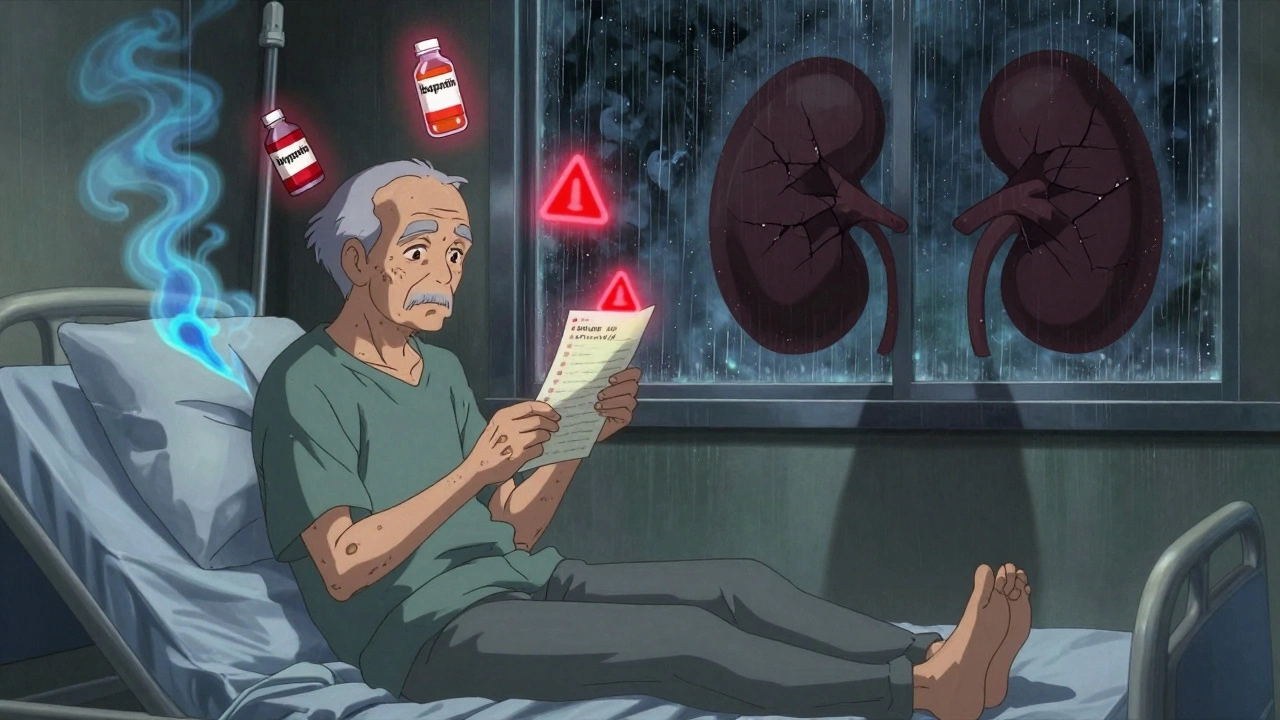
AKI on CKD: How to Avoid Contrast and Nephrotoxic Medications to Protect Kidney Function
Learn how to prevent acute kidney injury (AKI) if you have chronic kidney disease (CKD) by avoiding contrast dye and common nephrotoxic medications. Practical steps to protect your kidney function and reduce hospitalization risk.