

Tuberculosis: Understanding Latent Infection, Active Disease, and Treatment Options
 Dec, 11 2025
What Is Tuberculosis, Really?
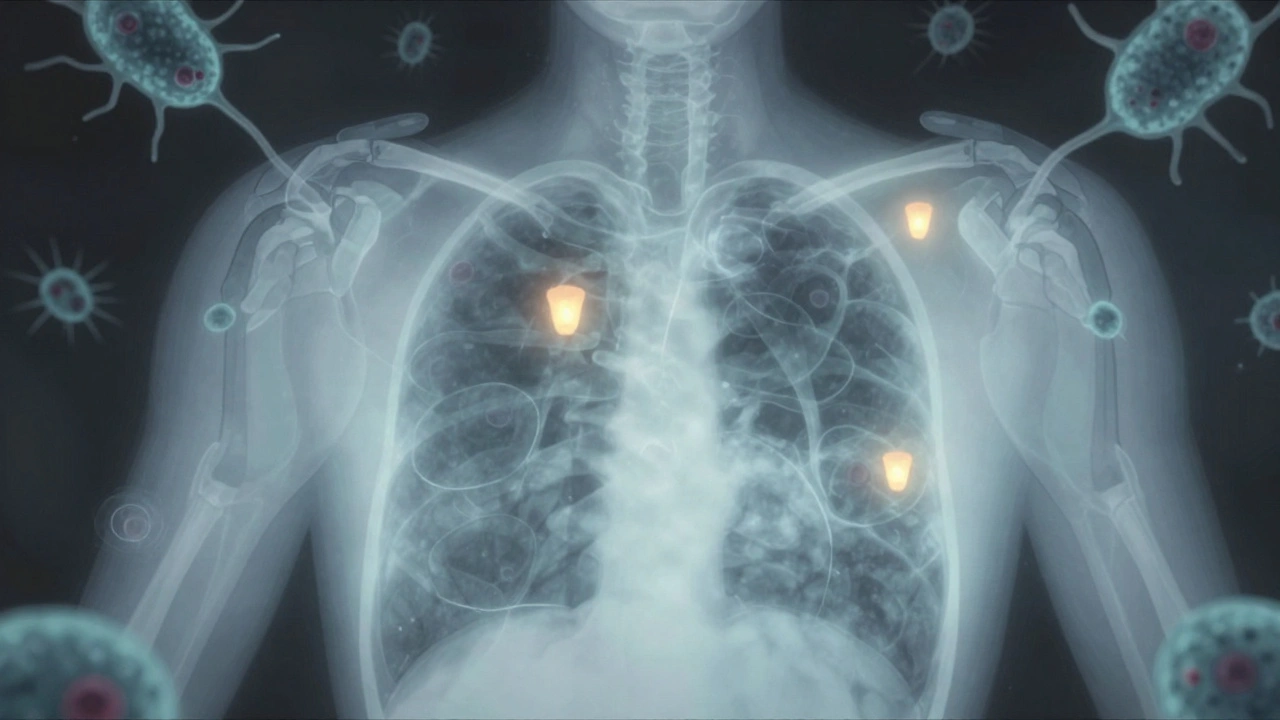
Tuberculosis, or TB, isn’t just a cough. It’s a silent infection that can live in your body for years without you ever knowing - until it doesn’t. Caused by Mycobacterium tuberculosis a bacterium that primarily attacks the lungs but can spread to other parts of the body, TB exists in two very different forms: latent infection and active disease. One is harmless for now. The other can kill you if left untreated.
Most people who breathe in TB bacteria never get sick. Their immune system walls off the germs in tiny clusters called granulomas. The bacteria stay alive but don’t multiply. That’s latent TB. No symptoms. No fever. No cough. And crucially - you can’t spread it to anyone else. But the bacteria are still there, waiting. About 5 to 10% of people with latent TB will eventually develop active disease. For someone with HIV, that risk jumps to 10% per year.
Latent TB: The Quiet Threat
Latent TB infection (LTBI) is the hidden majority. The World Health Organization estimates that nearly a quarter of the world’s population has it. In the U.S., most cases are found in people born in countries where TB is common - like India, the Philippines, Vietnam, or Nigeria. Many don’t even realize they were exposed.
How do you know if you have it? Two tests: the tuberculin skin test (TST) or the interferon-gamma release assay (IGRA). Both detect your immune system’s memory of the bacteria. A positive result doesn’t mean you’re sick. It means you’ve been infected. Your chest X-ray will look normal. You’ll feel fine. That’s the problem - you feel fine. So why treat it?
Because TB doesn’t stay quiet forever. Stress, illness, aging, or a weakened immune system can wake the bacteria up. Once that happens, you’re no longer just at risk - you’re contagious. Treating latent TB isn’t about fixing something broken. It’s about stopping something from breaking.
Active TB: When the Bacteria Fight Back
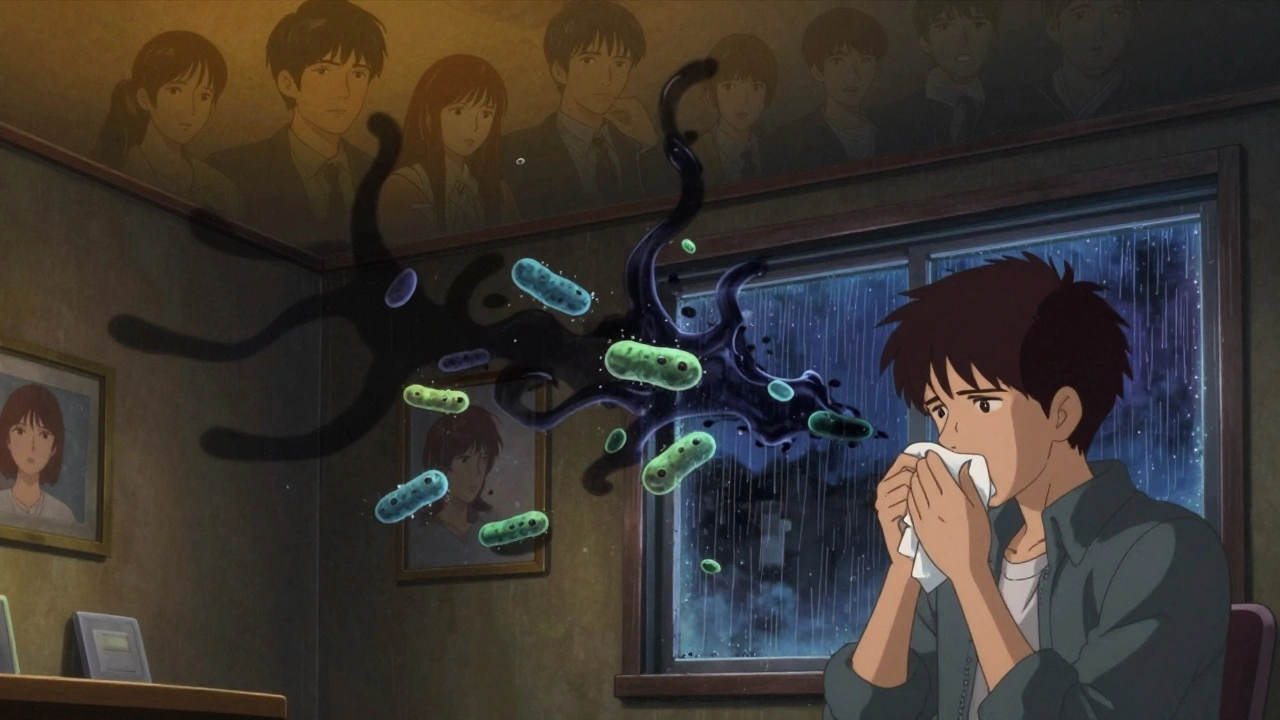
Active TB disease is when the bacteria break free from their prison and start multiplying. They damage lung tissue, trigger inflammation, and cause symptoms that don’t go away. A cough that lasts more than three weeks. Night sweats so heavy you change your pajamas. Unexplained weight loss - sometimes 20 pounds or more. Fever that comes and goes. Fatigue that doesn’t improve with rest. And in severe cases, coughing up blood.
Unlike latent TB, active disease is contagious. Every time you cough, sneeze, or even sing, you release tiny droplets into the air. Someone nearby can inhale them. That’s why TB spreads fastest in crowded, poorly ventilated places - shelters, prisons, nursing homes.
Diagnosis isn’t just about tests. It’s about timing. A positive TST or IGRA alone isn’t enough. You need a chest X-ray showing spots or cavities in the lungs. And you need proof the bacteria are alive - usually from a sputum sample tested with a nucleic acid amplification test (NAAT) or a culture that grows the bacteria in a lab. This takes time. But waiting is dangerous.
How TB Treatment Works - And Why It’s So Long
Treating latent TB is simple, but hard to stick with. The standard is nine months of daily isoniazid an antibiotic that kills dormant TB bacteria. That’s 270 pills. Most people miss at least a few. That’s why shorter options exist: four months of rifampin, or three months of weekly isoniazid and rifapentine (3HP). The 3HP regimen is now preferred by the CDC for most adults because it’s easier to complete.
Active TB? That’s a full-on medical campaign. You need four drugs at once: isoniazid, rifampin, pyrazinamide, and ethambutol. This combo attacks the bacteria in different ways, preventing resistance. You take them every day for two months. Then you drop pyrazinamide and ethambutol and keep isoniazid and rifampin for another four to seven months. Total treatment: six to nine months.
Why so long? Because TB bacteria are slow growers. They hide in tough, waxy cell walls. Most antibiotics kill fast-replicating bugs. These need constant pressure. Miss a dose, and the survivors become drug-resistant. That’s how multidrug-resistant TB (MDR-TB) forms - a nightmare that takes 18 to 24 months to treat and costs tens of thousands of dollars.
Directly Observed Therapy: Why Someone Watches You Take Your Pills
You might think it’s overkill. Why does a nurse show up at your door to watch you swallow your medicine? Because TB doesn’t just hurt you - it hurts communities.
Directly Observed Therapy (DOT) is standard for all active TB cases in the U.S. A health worker watches you take every pill. Why? Because if you stop early, the bacteria come back stronger. And if they come back resistant, you could pass on a strain that no drug can kill. DOT isn’t about control. It’s about public safety.
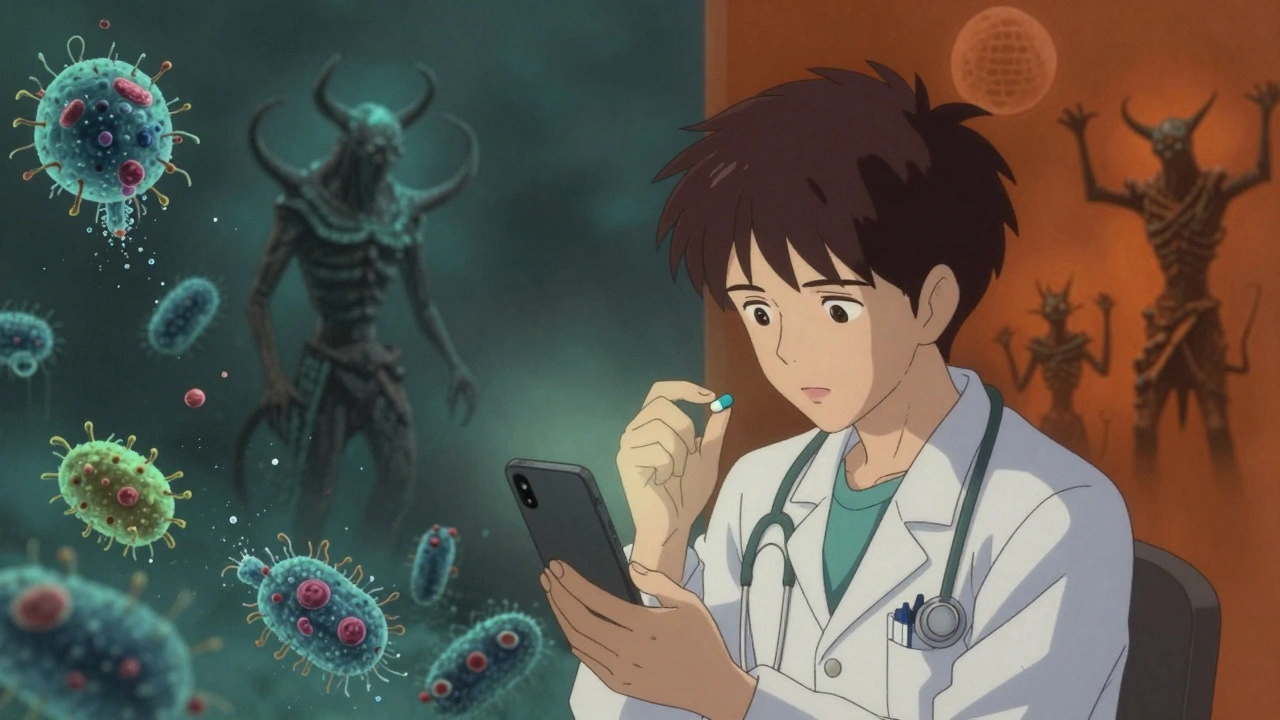
For latent TB, DOT isn’t required - but it’s offered. Many clinics use video DOT now. You film yourself taking your pills on your phone and send it in. It’s private. It’s effective. And it’s changing how TB is managed in the 2020s.
Who’s at Highest Risk - And Why It Matters
TB doesn’t pick people randomly. It picks the vulnerable.
- People with HIV - their immune systems can’t contain the bacteria
- Diabetics - high blood sugar weakens immune response
- People on immunosuppressants - like those after organ transplants
- People who smoke or abuse alcohol - both damage lung defenses
- Children under five - their immune systems aren’t fully developed
- People born in or who’ve lived in high-TB countries - exposure risk is higher
In the U.S., over 70% of TB cases occur in foreign-born individuals. That’s why screening programs target immigrants, refugees, and international students. It’s not about blame. It’s about catching TB before it spreads.
What’s New in TB Care (2025)
TB hasn’t changed much in decades - but the tools are improving.
Fast molecular tests like GeneXpert can now diagnose active TB and detect drug resistance in under two hours. That’s a game-changer in emergency rooms and clinics with no lab.
Researchers are testing new drugs like pretomanid and bedaquiline for MDR-TB, cutting treatment time from two years to six months. Clinical trials are also exploring host-directed therapies - drugs that boost your own immune system to kill TB bacteria faster.
The WHO now recommends shorter latent TB regimens globally. In 2025, the 3HP regimen (isoniazid + rifapentine) is becoming the default in most U.S. clinics. More people are completing treatment. Fewer are getting sick later.
What Happens If You Don’t Treat TB?
Latent TB? You might never know. But if it becomes active? You could end up in the hospital. With lung damage that never heals. With permanent scarring. With a cough that never goes away.
Untreated active TB kills about half of those who get it. It doesn’t just destroy your lungs - it can spread to your spine, brain, kidneys. Meningitis from TB is rare but deadly. And if you don’t finish treatment? You become a walking source of drug-resistant TB.
There’s no magic bullet. No quick fix. But there is a path - if you start early, take every pill, and get monitored. TB is still deadly. But it’s no longer inevitable.
Can you get TB from touching something someone with TB used?
No. TB spreads only through the air when someone with active lung TB coughs, sneezes, or talks. You can’t catch it from shaking hands, sharing food, or using the same toilet. The bacteria don’t live on surfaces.
If I had TB as a kid, do I need to be tested again as an adult?
Yes - especially if you’re at higher risk. A past infection doesn’t give lifelong immunity. You can be reinfected. And if you had latent TB that was never treated, it could still become active. Testing is recommended for people with HIV, those on immunosuppressants, or those who’ve recently moved from a high-TB country.
Are TB medications safe?
Most people tolerate them well. But isoniazid and rifampin can stress your liver. That’s why doctors check your liver enzymes before and during treatment. Signs of trouble: nausea, dark urine, yellow eyes or skin. If you notice these, call your provider immediately. Don’t stop the meds unless told to.
Can you get TB again after being treated?
Yes. Treatment cures the current infection, but it doesn’t make you immune. You can be reinfected if exposed again. That’s why people in high-risk groups - like healthcare workers or those living with someone who has active TB - should stay alert and get tested if symptoms appear.
Is there a vaccine for TB?
The BCG vaccine is used in many countries to protect babies from severe forms of TB, like meningitis. But it doesn’t prevent lung TB in adults and isn’t routinely given in the U.S. because it’s not very effective for the most common form. New vaccines are in clinical trials, but none are approved yet.
Audrey Crothers
December 12, 2025 AT 22:06Just got my IGRA results back positive-wasn’t even sick! 😅 Doc said I’m in the 25% of the world carrying TB silently. Gonna do the 3HP regimen. So glad it’s only 12 doses now. Feels like a tiny win for my future self.
Reshma Sinha
December 13, 2025 AT 09:43From India-TB is everywhere here. My uncle had MDR-TB. Took 2 years. Lost his job. Lost his voice. We’re lucky the government gives free drugs. But no one gets DOT. People stop because they feel better. Then it comes back worse. Please, if you’re diagnosed-finish it. Even if you feel fine.
sandeep sanigarapu
December 14, 2025 AT 11:35Latent TB is not a disease. It is a condition. A state of microbial coexistence. The body does not reject. It contains. This is not weakness. This is biology's quiet wisdom.
Donna Anderson
December 14, 2025 AT 12:05so i had tb as a kid and never got treated bc my mom thought it was just a bad cold. now im 34 and got a positive igra. im so mad at my parents. like... why didnt they take me to the doctor??
Rob Purvis
December 16, 2025 AT 02:44Wait-so if you have latent TB and you’re on immunosuppressants, you’re basically a ticking time bomb? I’m on Humira for my RA… I didn’t realize this was a risk. My doctor never mentioned it. Should I be getting screened annually? This feels like a massive oversight in primary care.
Stacy Foster
December 17, 2025 AT 22:11They say DOT is for public safety… but what if it’s just control? Who’s watching the watchers? What if the health workers are lying about whether you took your pills? What if they’re just collecting data for some government database? I’ve seen too many documentaries… this feels like surveillance with a stethoscope.
Laura Weemering
December 19, 2025 AT 19:19So… we’re treating latent TB like it’s a moral failing? Like if you don’t take 270 pills, you’re lazy? But what if you’re poor? What if you work two jobs? What if you have PTSD and the thought of swallowing pills every day makes you dissociate? We medicalize survival and then punish people for not performing wellness perfectly. It’s cruel. And it’s not science-it’s shame dressed in white coats.
And don’t even get me started on how we target immigrants. We don’t screen the homeless. We don’t screen the nurses who work 12-hour shifts. We screen the brown people who moved here 10 years ago. That’s not public health. That’s xenophobia with a lab report.
I’m not saying don’t treat TB. I’m saying: stop pretending this is about health. It’s about power. And the people who get punished are the ones who can’t afford to be invisible.
Levi Cooper
December 21, 2025 AT 02:38Why are we giving free TB meds to foreigners when American citizens can’t get insulin? This isn’t charity-it’s betrayal. We spend billions on global TB programs while our own hospitals are crumbling. Priorities, people. Priorities.
Robert Webb
December 22, 2025 AT 02:01I’ve been a nurse in a county clinic for 18 years. I’ve seen people finish DOT and come back to thank us-some of them had been homeless, addicted, mentally ill. They’d never taken a pill on time before. But with someone watching, with dignity, with coffee and a quiet room… they did it. It’s not about control. It’s about connection. We don’t just give pills-we give presence. And sometimes, that’s the only medicine that works.
And yes, video DOT works. I’ve had patients in rural Alaska do it from their cabins. No one’s spying. We’re just holding space. That’s all.
Lawrence Armstrong
December 22, 2025 AT 16:42Just got my 3HP shot last week. Took the first dose at the clinic. Nurse smiled, gave me a sticker. 🤗 Honestly? Felt like I won a prize. TB doesn’t have to be scary if you catch it early. Seriously. Don’t ignore the test. It’s a gift. A quiet, boring, pill-filled gift.
Adam Everitt
December 24, 2025 AT 05:18so i read this article and now i think maybe tb is just a metaphor for how we all carry hidden trauma right? like we bottle it up until something breaks and then we’re all like oh no the coughing… but really it was the silence all along…
nikki yamashita
December 25, 2025 AT 14:57if you have tb and you’re scared-just do the pills. you got this. you’re not alone. 💪❤️
Ashley Skipp
December 26, 2025 AT 04:49Why do we even bother treating latent TB? It’s natural selection. The weak get sick. The strong survive. If you can’t contain the bacteria, maybe you shouldn’t be breathing the same air as the rest of us.