

Tentative Approval and Litigation: Navigating the Path to Generic Drug Market Entry
 Dec, 20 2025
Getting a generic drug to market isn’t just about making a copy of a brand-name pill. It’s a high-stakes race against patents, legal battles, and strict regulatory timelines. One of the most misunderstood stages in this process is tentative approval-a status that looks like approval but doesn’t let you sell anything. It’s not a green light. It’s a green arrow pointing to a finish line you can’t cross yet. And if you don’t know how to read the map, you’ll lose months-or even years-of potential revenue.
What Tentative Approval Really Means
Tentative approval is a formal status given by the FDA to a generic drug application (ANDA) that has passed every scientific and technical review. The drug works the same way. The manufacturing is clean. The labeling is accurate. Everything checks out. But the FDA won’t let you sell it because a patent or exclusivity period is still active on the brand-name version. This isn’t a delay. It’s not a rejection. It’s not even a pause. It’s a legal hold. The FDA has done its job. Now it’s waiting for the patent clock to run out. This system was created by the Hatch-Waxman Act of 1984 to balance innovation and access. It lets generic companies get ready while the brand-name drug still has protection. The key thing to remember: tentative approval doesn’t mean you can market the drug. It means you’re first in line. You’ve secured your spot. But you can’t move forward until the legal barrier disappears.How Patent Litigation Changes the Game
Most generic companies don’t just wait. They challenge the patents. This is called a Paragraph IV certification. It’s a legal shot across the bow. You’re telling the brand-name company: “Your patent is invalid, or we don’t infringe it.” That triggers a lawsuit. And when a lawsuit starts, the FDA is forced to put a 30-month hold on final approval. That’s the “litigation stay.” The clock stops. Even if your drug has tentative approval, you can’t launch until the court rules-or the patent expires, whichever comes first. Here’s the twist: the first company to file a successful Paragraph IV certification gets 180 days of exclusive market access. That’s huge. One company can capture 80% of the market during that window. That’s why companies fight so hard for it. But it’s also why so many fail. A 2022 analysis by Evaluate Pharma found that 15% of tentatively approved drugs missed their launch window because the company didn’t submit the right paperwork on time. Not because of a bad drug. Not because of a failed patent challenge. Just because they missed a deadline.The Hidden Work During the Waiting Period
A lot of people think once you get tentative approval, you can relax. You can’t. This is when the real work begins. The FDA requires you to submit amendments before the patent expires. Minor changes? You need to file at least three months ahead. Major changes? Ten months. If you wait until the last minute, you lose your place in line. One company, Mylan, lost six months on their generic EpiPen because they didn’t account for an unexpected pediatric exclusivity extension. The patent had expired. But the exclusivity hadn’t. They didn’t know. The FDA didn’t tell them. They had to reapply. Another company, Aurobindo Pharma, lost $150 million when they changed their manufacturing site but didn’t properly document it in their final approval request. The FDA flagged it. The launch got delayed by four months. Tentative approval isn’t a finish line. It’s a starting line. And you have to be ready to sprint the moment the gun goes off.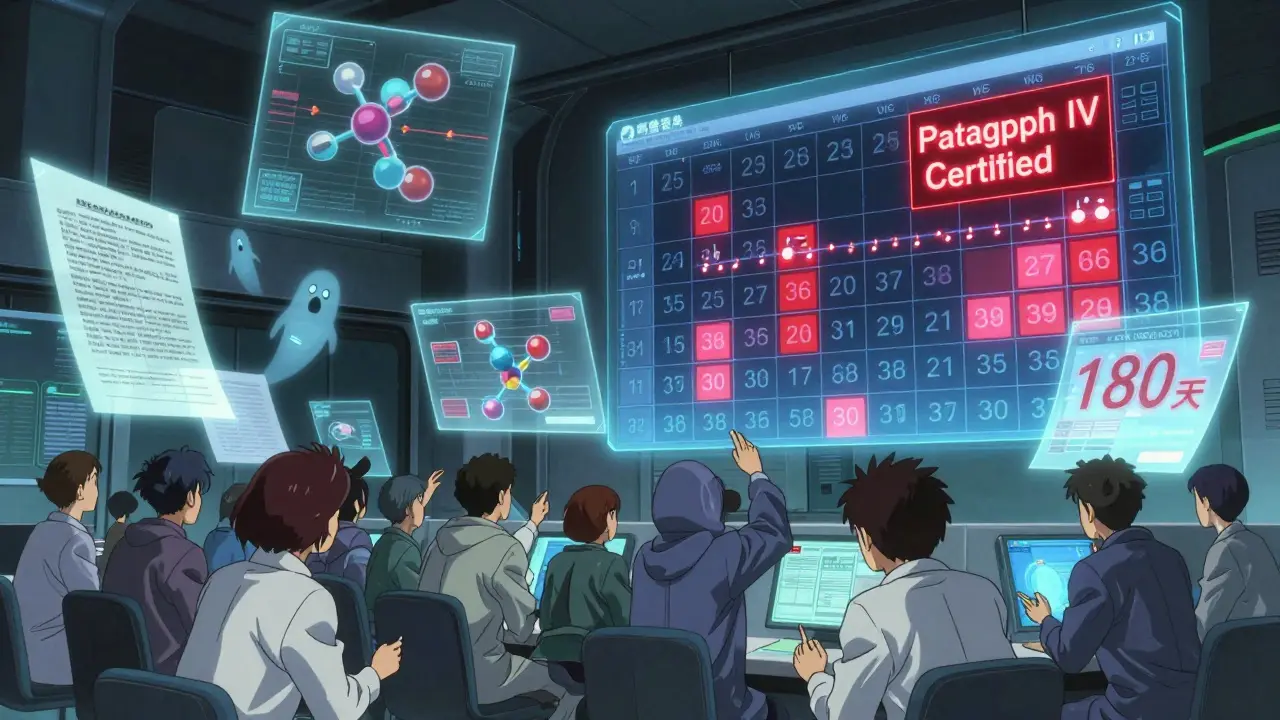
Final Approval Isn’t Automatic
Even after the patent expires, you don’t get final approval by default. You have to ask for it. And you have to ask correctly. The FDA doesn’t send you a letter saying, “Your patent expired. Go ahead.” You have to submit a formal request. You have to prove the patent is gone. You have to show you’ve met all requirements since your tentative approval. Legal expert Aaron Kantor says 30 to 60 days of delay are common because companies don’t provide enough documentation. They assume the FDA remembers their file. They don’t. The file is 200 pages long. The reviewer has 10 other cases. If your paperwork isn’t clear, you get stuck. Lupin Limited nailed this in 2018. They had tentative approval for their generic version of Cialis. They tracked every patent, every extension. They submitted their final request 92 days before the patent expired. When the clock hit zero, they got final approval within 24 hours. They captured 42% of the market in the first month. That’s the difference between luck and strategy.Who Uses This System-and Why It’s Growing
Eighty-five percent of all generic drugs in the U.S. that face patent barriers go through tentative approval. The top 10 generic manufacturers each have 15 to 25 products in this status at any given time. Smaller companies usually have 2 to 5. Why is this growing? Because the drugs getting copied are getting more complex. Insulin. Biologics. Inhalers. These aren’t simple pills. They’re hard to replicate. And the patents protecting them? They’re layered-like an onion. One patent expires. Another kicks in. Then there’s pediatric exclusivity. Then manufacturing exclusivity. It’s not one date. It’s a maze. The FDA is trying to keep up. In May 2023, they cut the review time for final approval requests from 90 days to 30 days for minor changes. That’s progress. But the complexity isn’t going away. Industry analysts predict tentative approvals will grow 12% a year through 2027. More complex drugs. More patent challenges. More companies trying to be first.
What Happens If You Get It Wrong?
The cost of a mistake isn’t just money. It’s market share. It’s reputation. It’s your next funding round. If you miss the amendment deadline, your tentative approval can be revoked. You have to start over. That’s 18 to 24 months of lost time. If you file a Paragraph IV certification and lose the lawsuit, you lose your 180-day exclusivity. Someone else gets in first. You’re back to the end of the line. And if you don’t maintain cGMP compliance during the waiting period? The FDA can block your final approval. In 2022, 27% of delays were due to manufacturing issues. This isn’t a game for amateurs. It takes a team: regulatory experts, patent lawyers, quality control, and project managers. All working in sync.How to Get It Right
If you’re in this game, here’s what you need to do:- Track every patent and exclusivity period-down to the day. Use a system, not a spreadsheet.
- Know the difference between minor and major amendments. Don’t guess.
- File your final approval request at least 90 days before the earliest lawful date.
- Document every change, every inspection, every communication with the FDA.
- Don’t assume the FDA remembers your file. Assume they’ve never seen it.
- Work with legal and regulatory teams together. Not separately. Together.
What’s Next?
The system works. But it’s under pressure. As drugs get more complex, and patents get more tangled, the tentative approval process will be tested. Some lawmakers want to extend patent terms. Others want to speed up generic entry. Neither side is wrong. But the generic industry needs predictability. For now, tentative approval remains the most powerful tool generic manufacturers have to challenge high-priced drugs. But it’s not a shortcut. It’s a marathon with checkpoints you can’t skip. If you’re waiting for your drug to be approved, don’t wait. Work. Track. Prepare. Because when the patent expires, the market doesn’t wait for you. It moves on.What’s the difference between tentative approval and final approval?
Tentative approval means the FDA has approved your generic drug scientifically, but you can’t sell it yet because of an active patent or exclusivity period. Final approval means you can legally market and sell the drug in the U.S. Tentative approval is a placeholder. Final approval is the green light.
Can I sell my drug after getting tentative approval?
No. Tentative approval does not authorize marketing. Selling a drug with only tentative approval is illegal and can lead to FDA enforcement actions, including product seizures and fines. You must wait for final approval, which only comes after patent or exclusivity barriers are resolved.
How long does it take to get from tentative approval to market?
There’s no fixed timeline. It depends on patent expiration dates and litigation. Some companies wait 6 months. Others wait 5 years. The key is preparing your final approval request well in advance-usually 3 to 10 months before the earliest lawful date-so you don’t miss your window.
What is a Paragraph IV certification?
A Paragraph IV certification is a legal statement in your ANDA that says you believe a patent protecting the brand-name drug is invalid or you won’t infringe it. Filing this triggers a 45-day window for the brand company to sue you. If they do, the FDA must delay final approval for up to 30 months-unless the court rules in your favor sooner.
Why do some companies lose their 180-day exclusivity?
You lose it if you don’t market the drug within 75 days of receiving final approval, or if you don’t file your ANDA first. You can also lose it if you settle with the brand company and agree to delay your launch. Many companies give up exclusivity by settling for a share of the market instead of fighting the patent.
Can I change my manufacturing site after tentative approval?
Yes, but it’s risky. Any change to your manufacturing site, process, or ingredients must be submitted as a major amendment. If you don’t follow FDA guidelines, your tentative approval can be withdrawn. Aurobindo Pharma lost $150 million in revenue after a site change wasn’t properly documented. Always consult the FDA’s 2020 guidance before making any changes.
Cara C
December 21, 2025 AT 03:55Tentative approval is such a weird limbo state - like getting your driver's license but being told you can't drive until your neighbor's car insurance expires. I've seen startups burn through cash waiting for that green light, thinking they're close when they're just sitting on a ticking clock.
It's not just about patents. It's about who's better at paperwork. The real winners aren't the ones with the best science - they're the ones with the best admin team.
Michael Ochieng
December 22, 2025 AT 02:00Man, I worked with a generic pharma co last year and this hit home. We had a drug tentatively approved for 18 months and spent half that time just updating forms because the FDA changed their template mid-process.
They don't call you. They don't email. You just wake up one day and your submission's flagged as 'incomplete' because someone in the review division decided 'tablet hardness' now needs a footnote. It's bureaucratic whack-a-mole.
Cameron Hoover
December 22, 2025 AT 03:26Let me tell you - I used to think the FDA was just slow. Now I know they're playing 4D chess while the generics are still learning how to tie their shoes.
That Mylan EpiPen story? That's not a mistake. That's a death sentence in this industry. One missed deadline and you're out. No second chances. No do-overs. You're just another footnote in the 'What Not To Do' slide deck.
And don't even get me started on how the big pharma companies stack patents like Jenga blocks. One patent falls, another pops up. It's not innovation - it's legal lockpicking with a billion-dollar prize.
Grace Rehman
December 22, 2025 AT 18:16also the 180 day exclusivity is just a fancy way of saying 'first past the post gets the whole cake' and everyone else gets crumbs and a pat on the back
and dont even get me started on how companies settle just to avoid the cost of fighting because why risk it when you can just take a cut and call it a day
its all just corporate theater with more paperwork than a divorce
Jerry Peterson
December 24, 2025 AT 09:10My cousin works at a mid-sized generic firm. She says the real secret isn't the patent challenges - it's having someone on staff who knows every single FDA reviewer's name, favorite coffee order, and which forms they ignore.
They don't have a system. They have a relationship. One person calls in a favor, gets a heads-up on a change, and suddenly they're first out the gate. The rest are just guessing.
Meina Taiwo
December 25, 2025 AT 22:00Adrian Thompson
December 26, 2025 AT 13:57They say it's about innovation and access but let's be real - this whole system is a corporate protection racket.
Big pharma pays lobbyists to stretch patents with junk claims. The FDA? They're just the bouncer at the club letting the rich guys keep their VIP tables.
And the 180-day exclusivity? That's not a reward - it's a bribe. They're paying one generic company to fight the system so the rest of us don't have to.
Meanwhile, real people can't afford insulin because the game is rigged. This isn't regulation. It's legalized theft with a compliance manual.
Southern NH Pagan Pride
December 27, 2025 AT 03:40Did you know the FDA has secret internal guidelines that aren't published? I read a whistleblower report from 2021 - they use a scoring algorithm that weights company size over drug merit. Small firms get flagged for 'inconsistent documentation' even when they're spot on.
And the 'minor' vs 'major' amendment rules? Totally arbitrary. One reviewer says a change is minor, another says it's major - depends on who's on shift.
They call it science. It's not. It's bureaucratic roulette. And the companies that win? They're not smarter. They just have better lawyers who know which reviewer to bribe - I mean, 'network' with.
Also, the 2020 guidance? It's outdated. They changed the rules again in late 2022 but didn't tell anyone. I found it buried in an obscure email chain. You think they want you to win? Nah. They want you to keep trying.