

Methotrexate Kidney Risk: What You Need to Know
When you take methotrexate, a chemotherapy and immunosuppressant drug used for cancer, rheumatoid arthritis, and psoriasis. Also known as MTX, it works by slowing down fast-growing cells—but it also puts stress on your kidneys, the organs that filter waste and regulate fluid balance in your body. Even at low doses for autoimmune conditions, methotrexate can build up if your kidneys aren’t clearing it properly, leading to serious renal toxicity, damage caused by drug buildup that reduces kidney function.
Not everyone on methotrexate will have kidney problems, but certain factors raise the risk. Older adults, people with existing kidney disease, those taking other drugs that affect the kidneys like NSAIDs or diuretics, and anyone who’s dehydrated are more vulnerable. Studies show that up to 15% of long-term users show signs of reduced kidney function, especially if they’re not getting regular blood tests. Your doctor should check your creatinine levels and estimated glomerular filtration rate (eGFR) before you start and every few months after. If your kidney numbers drop, they may lower your dose or switch you to another medication. Skipping these tests is like driving with no fuel gauge—you won’t know you’re running on empty until it’s too late.
Hydration matters more than you think. Drinking enough water helps your kidneys flush out methotrexate before it causes harm. Avoid alcohol and limit salt, both of which strain your kidneys. If you’re sick with vomiting or diarrhea, pause methotrexate until you’re back to normal—your body can’t process it well when it’s dehydrated. Some people think that because it’s a "common" drug, it’s always safe. But safety depends on how you use it. A simple blood test, a glass of water, and an honest chat with your doctor can prevent hospital visits down the road.
Below, you’ll find real-world insights from patients and doctors on how methotrexate affects kidney function, what warning signs to watch for, and how to balance its benefits with your long-term health. These aren’t theoretical warnings—they’re lessons learned by people who’ve been there.
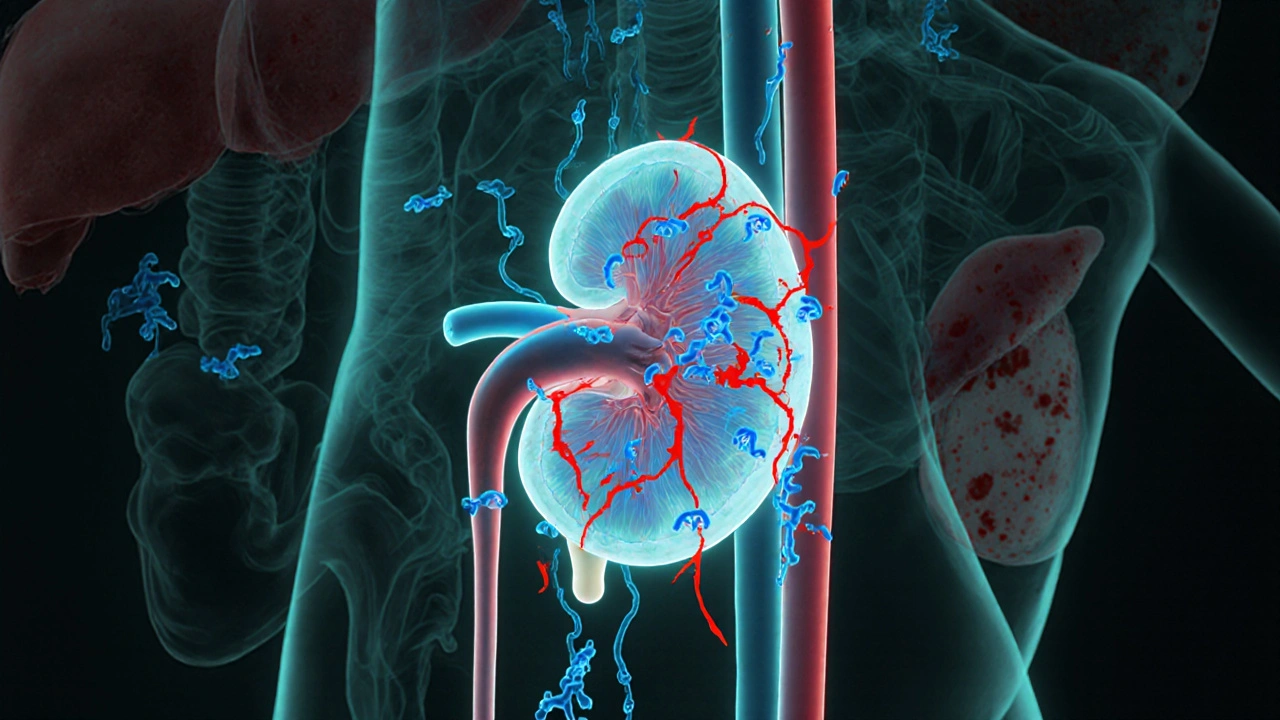
Methotrexate and NSAIDs: Understanding Renal Toxicity and Drug Level Interactions
Methotrexate and NSAIDs can dangerously increase kidney toxicity and drug levels. Learn how this interaction works, who’s at highest risk, which NSAIDs are safest, and what monitoring you need to stay safe.