

Supply Chain Security: How Legitimate Drugs Are Protected from Counterfeits
 Jan, 19 2026
How the U.S. Drug Supply Chain Stops Counterfeit Medicines Before They Reach You
Every year, more than 5.8 billion prescription drug packages move through the U.S. supply chain. Most reach patients safely. But not all. Counterfeit drugs-fake pills, diluted formulas, or stolen products relabeled as new-have killed people and endangered millions. So how do we stop them? It’s not just about police raids or shady online pharmacies. The real shield is a quiet, complex system built into every pill bottle, vial, and box you pick up at the pharmacy. This system is called the Drug Supply Chain Security Act, or DSCSA. And it’s the reason you’re far less likely to get a fake medication today than you were a decade ago.
The DSCSA: A 14-Year Plan to Lock Down the Drug Supply
The DSCSA didn’t appear overnight. It was signed into law in 2013, but its full power didn’t kick in until 2023-and it won’t be fully complete until 2027. This wasn’t rushed. The FDA knew forcing every manufacturer, wholesaler, and pharmacy to change how they handle drugs all at once would break the system. So they built it in phases.
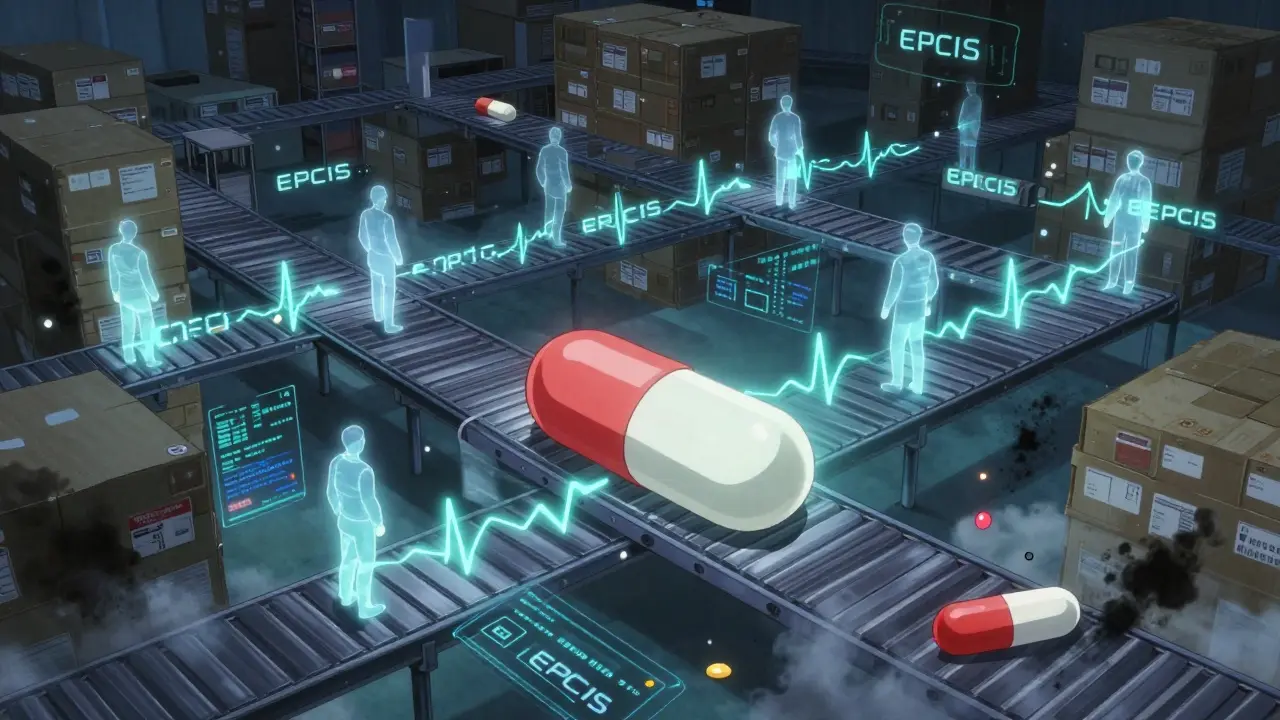
By 2017, every prescription drug package had to carry a unique identifier-a 2D barcode that holds the National Drug Code (NDC), a serial number, lot number, and expiration date. That’s over 1.2 million unique codes generated daily. No two are the same. By 2023, every trading partner had to exchange this data electronically. No more paper logs. No more hand-written invoices. Everything is tracked digitally using a global standard called EPCIS, developed by GS1.
This isn’t just tracking. It’s verification. If a pharmacy receives a suspicious package, they can scan the barcode and instantly check with the manufacturer’s database: Is this real? Was it shipped to me? Was it ever returned or recalled? If the answer is no, the system flags it. That’s how over 12,000 suspect products are stopped every year before they reach patients.
Who’s Responsible? Everyone in the Chain
One company can’t do this alone. It takes a chain of trust. The DSCSA forces every link to play by the same rules:
- Manufacturers must serialize every package and share transaction data electronically.
- Wholesalers must verify the authenticity of every product they receive and only accept it from authorized suppliers.
- Repackagers (like pharmacies that repackage bulk drugs into unit doses) must now create new serial numbers and keep full records.
- Dispensers (pharmacies and hospitals) must scan and verify every prescription drug before giving it to a patient.
Each of these groups must also prove they’re authorized trading partners (ATPs). The FDA runs a verification service that checks if a company is legally allowed to handle drugs. Over 50,000 ATP checks happen every day, and 99.8% of them succeed. That means if a fake supplier tries to sell drugs to a wholesaler, the system blocks them before the first box is shipped.
How It Works in Practice: Scanning, Verifying, Acting
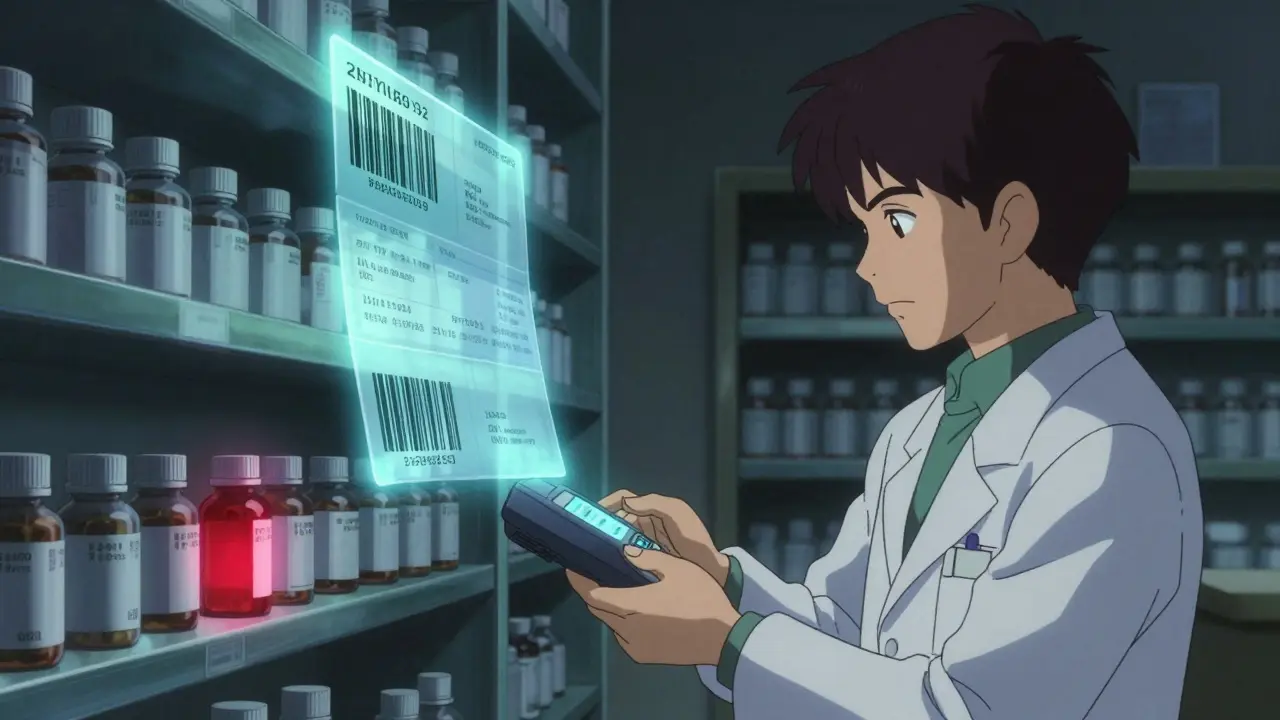
Imagine you’re a pharmacist at a small independent store. You get a delivery of metformin. You scan the barcode on the box. Your system checks the serial number against the manufacturer’s database. It matches. You scan each individual bottle. Each serial number is verified. All good.
But then one bottle doesn’t check out. The serial number doesn’t exist in the manufacturer’s system. Or worse-it was already marked as “decommissioned” because it was returned. Your system flags it. You isolate it. You report it to the manufacturer and the FDA within 24 hours. That bottle never goes on the shelf. That’s the DSCSA in action.
This system caught three fake opioid packages last year in a single pharmacy in Ohio. In 2022, a batch of contaminated insulin was traced back to a single repackaging facility in under 72 hours-something that used to take two weeks. That speed saves lives.
The Real Cost: Money, Time, and Tech
This system doesn’t run on magic. It costs money. Big money.
For a mid-sized drugmaker, setting up serialization and EPCIS integration can cost between $500,000 and $2 million. For a small independent pharmacy, annual compliance costs hit $18,500-a 3.2% cut of their net profit. Many can’t afford new scanners, software, or staff training. That’s why only 76% of pharmacies are fully compliant as of late 2023, compared to 92% of manufacturers.
Integration is the biggest headache. Most pharmacies still use old systems from the 2000s. Connecting them to modern EPCIS platforms isn’t plug-and-play. It takes months. Staff need 200+ hours of training. And even then, 12.7% of barcodes still don’t scan right due to poor printing or damaged packaging.
Yet, the cost of doing nothing is higher. Counterfeit drugs cost the U.S. healthcare system over $20 billion annually in wasted treatments, lawsuits, and hospitalizations. The DSCSA isn’t cheap-but it’s cheaper than the alternative.
International Differences: Why the U.S. System Isn’t the Same as Europe’s
The U.S. isn’t the only country fighting fake drugs. The European Union uses the Falsified Medicines Directive (FMD). It’s similar-but not the same.
Europe uses a centralized database. Every time a pharmacist dispenses a drug, they must scan it and “decommission” it in a national system. The U.S. doesn’t do that. We don’t track when a drug is sold to a patient-only that it moved from A to B. That’s a key difference. Europe’s system is more invasive but also more complete.
Serial numbers differ too. The U.S. allows 20-character alphanumeric codes. Europe uses only 20-digit numbers. That means a drug made for both markets needs two different barcodes. For global companies, that’s a nightmare. It’s why multinational drugmakers spend 22% more on compliance than U.S.-only companies.
China forced serialization on all manufacturers overnight in 2019. Over a third of local drugmakers went out of business or had supply chain meltdowns. The U.S. avoided that by taking 14 years to roll out the system.
What’s Next? AI, Blockchain, and the Future of Drug Safety
The DSCSA isn’t static. It’s evolving.
By November 2025, all data must be exchanged in JSON format-not the older XML. That’s faster, lighter, and easier for computers to process. By 2027, every single link in the chain must be fully interoperable. No more siloed systems. Everything talks to everything else.
Some companies are testing blockchain to make the data tamper-proof. Others are using AI to spot anomalies. If a wholesaler suddenly gets 10,000 packages from a supplier they’ve never dealt with before, the system flags it. If a drug’s temperature sensors show it was exposed to heat during transit, the system alerts the pharmacy.
Right now, 27% of wholesalers use AI for anomaly detection. 34% are running blockchain pilots. These aren’t gimmicks. They’re the next layer of defense.
Why This Matters to You
You might never see a barcode on your pill bottle. You might never know your pharmacist scanned it. But you benefit every time you take your medication.
Since DSCSA started, counterfeit drug seizures in the U.S. have dropped by 63%. In 2014, the FDA seized over 1,100 fake drug shipments. In 2022, that number fell to 412. That’s not just a statistic. That’s someone’s grandmother not getting fake blood pressure pills. That’s a child not getting diluted antibiotics.
The system isn’t perfect. Small pharmacies struggle. Some data still gets lost. Cyberattacks can disrupt verification for hours. But it works. It’s the most advanced, coordinated defense against counterfeit drugs the world has ever seen.
And it’s still getting better.
Frequently Asked Questions
What is the DSCSA and why was it created?
The Drug Supply Chain Security Act (DSCSA) is a U.S. federal law passed in 2013 to build a secure, electronic system that tracks prescription drugs from manufacturer to pharmacy. It was created to prevent counterfeit, stolen, or contaminated drugs from entering the supply chain. Before DSCSA, there was no reliable way to verify if a drug was legitimate once it left the factory.
How do I know if my medication is real?
You can’t verify it yourself-but your pharmacist can. Every prescription drug sold in the U.S. now has a unique 2D barcode. When you pick it up, your pharmacy scans it to confirm it matches the manufacturer’s records. If it doesn’t, the system flags it and the drug is pulled. You don’t need to do anything, but you can ask your pharmacist if they’re DSCSA-compliant.
Are online pharmacies safe?
Most online pharmacies that sell prescription drugs without a valid prescription are illegal and dangerous. The DSCSA only applies to licensed U.S. pharmacies and distributors. If a website offers drugs at 80% off, ships from overseas, or doesn’t require a prescription, it’s not part of the secure supply chain. Stick to pharmacies you know or those listed on the National Association of Boards of Pharmacy’s Verified Internet Pharmacy Practice Sites (VIPPS) list.
Why do some drugs still get counterfeited?
The DSCSA covers the legal U.S. supply chain, but it can’t stop drugs smuggled in from overseas or sold through illegal channels. Counterfeiters target high-demand, high-cost drugs like insulin, cancer meds, and erectile dysfunction pills. These often enter through unregulated sources, like fake websites or black-market distributors. The system protects the legal path-but not every possible route.
What happens if a drug is flagged as suspect?
If a drug is flagged, the pharmacy or wholesaler must immediately quarantine it and notify the manufacturer and FDA. The manufacturer checks the serial number and lot history. If confirmed as fake or tampered, the FDA issues a recall. The entire batch is pulled from all locations. The system can trace where every unit went within hours, which is why recalls now take 72 hours instead of two weeks.
Will this system work globally?
Not yet. The U.S. DSCSA and the EU’s FMD use different standards, making it hard for global drugmakers to comply with both. The International Council for Harmonisation (ICH) is working on a global standard by 2026, but until then, companies must run parallel systems. That’s why international shipments remain a weak point-counterfeit drugs often slip in at borders where systems don’t connect.
What You Can Do
Stay informed. Don’t buy drugs from websites that don’t require a prescription. If your medication looks different-color, shape, packaging-ask your pharmacist. Report anything suspicious to the FDA’s MedWatch program. You don’t need to understand EPCIS or serialization. But knowing the system exists-and that it’s working-gives you peace of mind.
Andy Thompson
January 20, 2026 AT 21:19Edith Brederode
January 20, 2026 AT 22:59Greg Robertson
January 21, 2026 AT 00:42Renee Stringer
January 21, 2026 AT 09:23Crystal August
January 22, 2026 AT 12:25pragya mishra
January 23, 2026 AT 18:40sagar sanadi
January 25, 2026 AT 10:07clifford hoang
January 27, 2026 AT 08:06Arlene Mathison
January 28, 2026 AT 06:10