

Sugar vs. Artificial Sweeteners: How They Affect Your Appetite and Cravings
 Jan, 11 2026
For years, people have swapped sugar for artificial sweeteners hoping to cut calories and lose weight. But if you’ve ever had a diet soda and then found yourself craving a cookie an hour later, you’re not alone. The truth is, sugar vs. artificial sweeteners isn’t just about calories-it’s about your brain, your hunger signals, and what your body expects when it tastes something sweet.
What Happens When You Taste Sweetness
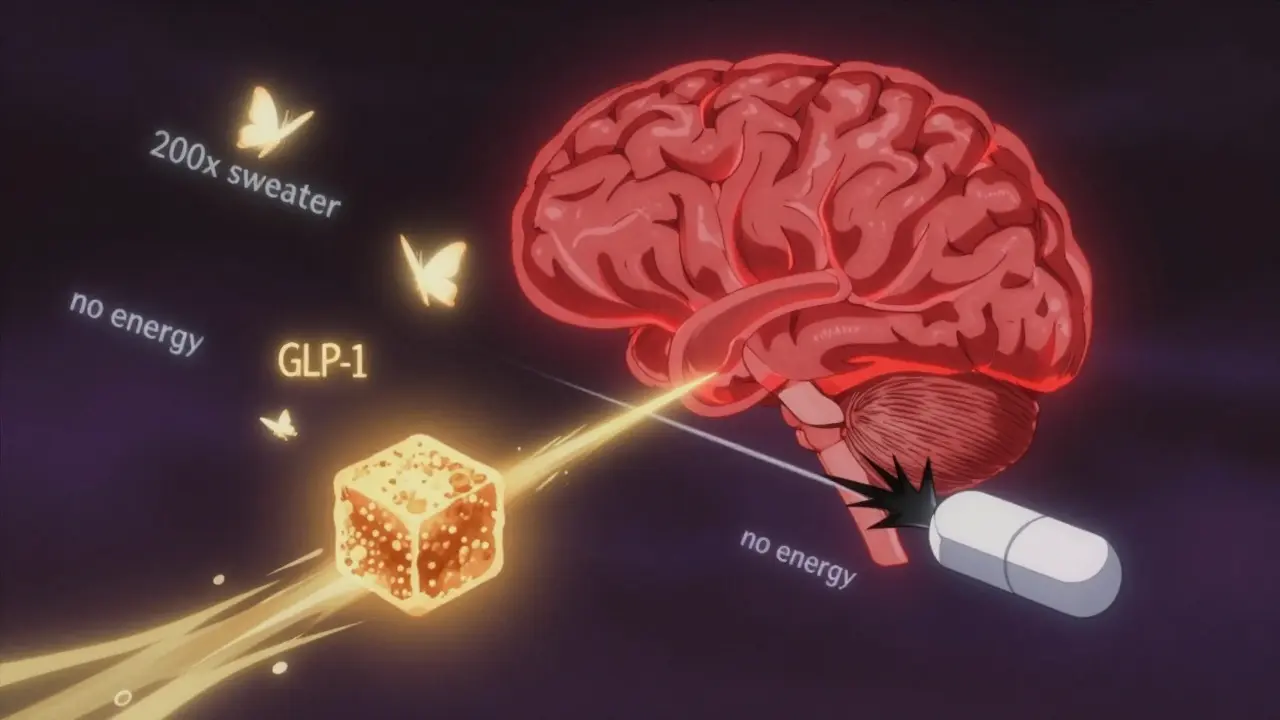
When you eat sugar, your body gets a clear signal: energy is coming. Your pancreas releases insulin. Your gut releases hormones like GLP-1 that tell your brain, “You’re full.” Your reward system lights up, but it’s balanced by actual calories. That’s how nature designed it. Artificial sweeteners? They trick your taste buds. They’re 200 to 600 times sweeter than sugar, with zero or almost no calories. But your body doesn’t get the energy it expects. Studies using fMRI scans show that when you drink a diet soda with sucralose, your brain’s hunger centers-especially the hypothalamus-stay active longer. In one 2023 study from the University of Southern California, people who drank sucralose-sweetened beverages reported 17% more hunger than those who drank sugar water. And women showed nearly double the brain activity changes compared to men.Why Some People Crave More After Sweeteners
Your brain learns patterns. If you’ve been drinking diet soda every day for months, your brain starts to associate sweetness with no energy. Over time, it gets confused. A 2016 study from the University of Sydney showed that fruit flies exposed to sucralose for five days ate 30% more food when given real sugar later. The same thing happens in humans. This is called “sweetness recalibration.” Your brain starts demanding more sweetness to feel satisfied. That’s why people who switch to artificial sweeteners often end up eating more sugary snacks-not because they’re weak-willed, but because their taste preferences have shifted. A 2024 survey by the American Diabetes Association found that 41% of people with type 2 diabetes who used aspartame reported increased appetite, even though their blood sugar was better controlled.Not All Sweeteners Are the Same
It’s easy to treat all artificial sweeteners like they’re the same. But they’re not. Here’s how they stack up:| Sweetener | Sweetness (vs. sugar) | GLP-1 Response | Appetite Impact | Common Products |
|---|---|---|---|---|
| Sucralose (Splenda) | 600x | Minimal to none | Increases hunger in 17% of users (USC 2023) | Diet sodas, sugar-free gum |
| Aspartame (Equal, NutraSweet) | 200x | Low | Linked to 27% higher appetite in men (NIH 2010) | Diet sodas, low-calorie yogurt |
| Acesulfame K (Sunett) | 200x | Low | Associated with cravings in 63% of daily users (Healthline 2024) | Energy drinks, baked goods |
| Stevia (Truvia, PureVia) | 200-300x | Moderate | Lower hunger reports (15% negative reviews) | Teas, tabletop sweeteners |
| Monk Fruit | 150x | Neutral | Least disruptive to appetite (dietitian recommendation) | Low-sugar snacks, protein bars |
Stevia and monk fruit seem to cause fewer appetite spikes. Why? They’re plant-based and may trigger slightly better hormonal responses. In Amazon reviews, stevia-based products have higher ratings and fewer complaints about cravings. Dietitians in a 2023 survey recommended starting with monk fruit if you’re switching from sugar-it’s less intense, so your brain doesn’t get as confused.
What the Research Really Says
There’s a big gap between short-term and long-term studies. In the first few weeks, switching from sugar to sweeteners often leads to fewer calories consumed. A 2021 meta-analysis of 15 trials found people ate 112 fewer calories per day when using artificial sweeteners instead of sugar. But after three months? Things change. A 2024 study from the German Center for Diabetes Research found that people who drank sucralose daily for six months had higher fasting hunger hormones and stronger cravings for sweets. The brain starts to expect energy with sweetness-and when it doesn’t get it, it demands more food to make up the difference. One major reason for the confusion? Most studies are too short. Your body doesn’t adapt overnight. The SWEET project, a large 2022 trial from the University of Leeds, showed that sweeteners helped reduce appetite over two hours. But that’s not the same as managing cravings over months or years.How to Use Sweeteners Without Triggering Cravings
If you want to use artificial sweeteners without sabotaging your appetite, here’s what works:- Pair them with protein. A 2021 study found that adding sweetener to Greek yogurt or cottage cheese reduced hunger by 22% compared to sweetener alone. Protein slows digestion and signals fullness.
- Avoid daily diet soda. If you drink one a day, try cutting back to two or three times a week. The more often you expose your brain to fake sweetness, the more it rewires itself.
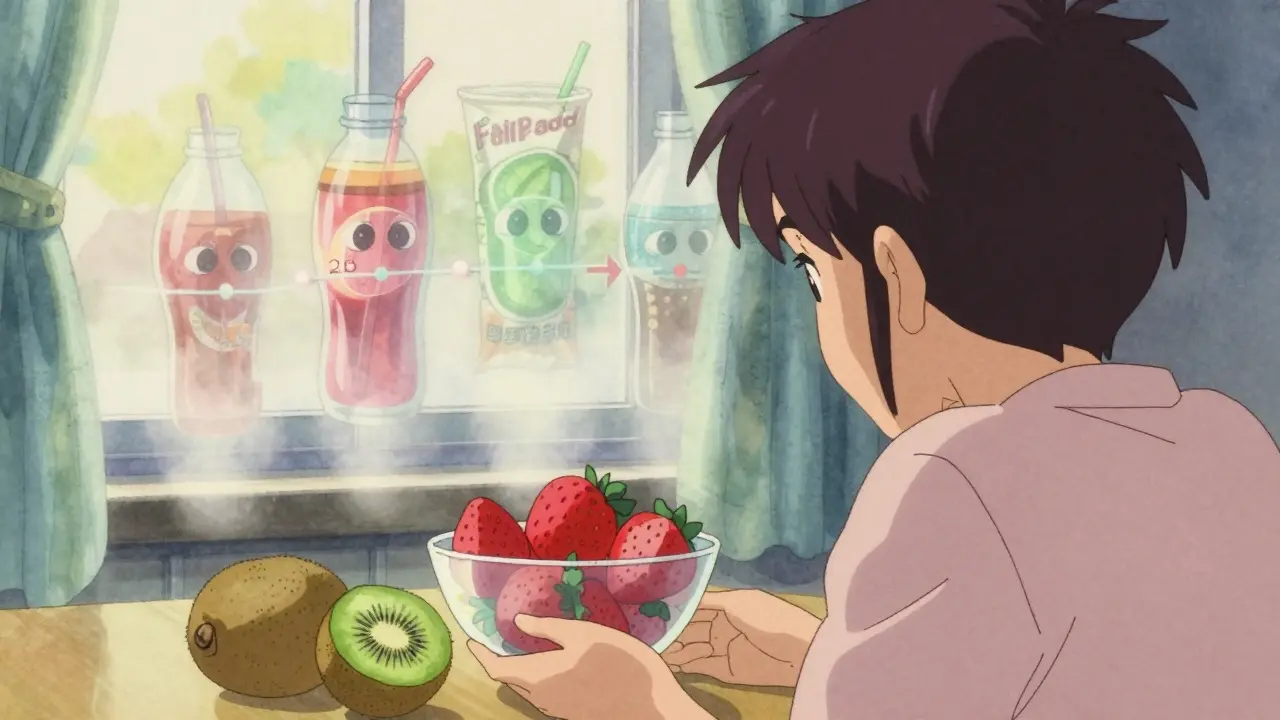
- Give your taste buds a break. Try a 2-week period with no added sweeteners-no diet soda, no sugar-free candy. You’ll reset your palate. Most people find that after this, naturally sweet foods like fruit taste much sweeter.
- Choose stevia or monk fruit. These have fewer reports of increased hunger. They’re not perfect, but they’re gentler on your appetite.
- Watch for hidden sweeteners. Many “healthy” snacks-protein bars, granola, flavored yogurt-use multiple sweeteners. Read labels. If you see sucralose, acesulfame K, or aspartame in the first three ingredients, you’re likely setting yourself up for cravings.
Who Should Avoid Artificial Sweeteners?
Not everyone reacts the same. Women, especially those with obesity, show stronger brain responses to sucralose. People with a history of binge eating or sugar addiction may find sweeteners make cravings worse. And children? The American Heart Association advises against regular use because their taste preferences are still developing. If you’re trying to lose weight and you notice that diet soda leaves you hungrier, it’s not in your head. It’s your biology. The solution isn’t going back to sugar-it’s retraining your system to appreciate less sweetness overall.The Bottom Line
Artificial sweeteners aren’t magic. They can help reduce sugar intake in the short term, especially for people with diabetes or those trying to cut calories. But they’re not a free pass to eat more later. The real issue isn’t the sweetener-it’s the disconnect between taste and energy. Your body wants balance. When you give it sweetness without calories, it fights back with hunger. If you’re using sweeteners to manage weight, track how you feel-not just the scale. Are you snacking more? Do you crave sweets after drinking diet soda? If yes, it’s time to adjust. Try reducing your intake, switching to stevia, or taking a break. Real progress comes not from replacing sugar with something chemically sweeter, but from learning to enjoy food that’s naturally satisfying.Do artificial sweeteners make you gain weight?
They don’t directly cause weight gain, but they can lead to increased hunger and cravings, which may cause you to eat more later. Studies show mixed results: short-term use often reduces calories, but long-term use-especially with sucralose or aspartame-is linked to higher appetite in some people. The key is how you use them. Pairing sweeteners with protein and avoiding daily consumption helps prevent this.
Is stevia better than sucralose for controlling appetite?
Yes, stevia appears to be gentler on appetite. Studies and user reports show fewer cravings with stevia compared to sucralose. Sucralose doesn’t trigger the fullness hormone GLP-1, which can leave you feeling hungrier. Stevia, being plant-based, may have a slightly better hormonal response. In Amazon reviews, stevia-based products have fewer complaints about increased hunger than sucralose brands like Splenda.
How long does it take for artificial sweeteners to affect cravings?
It varies, but most people notice changes after 2-4 weeks of daily use. A 2023 study found that 38% of users experienced stronger sweet cravings during the first 2-3 weeks after switching from sugar. After 6 months of daily consumption, 63% of users in a Healthline survey reported increased hunger, especially with diet sodas. Your brain rewires slowly-so if you’ve been drinking diet soda every day for a year, your cravings might be a result of long-term exposure.
Should I stop using artificial sweeteners entirely?
Not necessarily. If you’re using them to cut sugar and you’re not experiencing increased hunger or cravings, they can still be a helpful tool. But if you’re noticing you’re snacking more, craving sweets, or feeling hungrier after diet drinks, it’s time to cut back. Try switching to monk fruit or stevia, reduce frequency, or take a 2-week break. The goal isn’t to eliminate sweeteners forever-it’s to avoid training your brain to expect sweetness without energy.
Can artificial sweeteners affect blood sugar?
Most artificial sweeteners don’t raise blood sugar directly. Sucralose, aspartame, and stevia have minimal impact on glucose levels. In fact, a 2021 study showed sucralose caused 15% lower post-meal blood sugar spikes than sugar. That’s why they’re still recommended for people with diabetes. But if they increase your appetite and you end up eating more carbs later, your blood sugar will rise anyway. The problem isn’t the sweetener-it’s the extra food you eat because you’re hungrier.
Ben Kono
January 13, 2026 AT 00:49Artificial sweeteners are just sugar but with extra steps and zero chill
Monica Puglia
January 13, 2026 AT 16:52omg yes i tried switching to stevia after reading this and my afternoon cookie cravings just... vanished 🥹 i thought i was weak but turns out my brain was just confused
Cecelia Alta
January 14, 2026 AT 05:28Okay but let’s be real - if you’re drinking diet soda daily and then wondering why you’re raiding the pantry at 10pm, you’re not ‘trying to be healthy’ you’re just addicted to the dopamine hit and pretending it’s a lifestyle choice. The science is clear: your brain is being gaslit by chemistry. And no, monk fruit isn’t a magic fairy dust. It’s just less aggressive about it. But still - why are we even trying to trick our bodies like this in the first place? Just eat the damn cookie. You’ll feel better.
Lelia Battle
January 14, 2026 AT 06:58There’s an interesting philosophical tension here: sweetness evolved as a signal of energy abundance, yet modern technology has severed that biological contract. We’ve created a linguistic and sensory paradox - something that tastes like reward but delivers no nourishment. The body doesn’t lie. It responds to patterns, not intentions. When we repeatedly offer the appearance of sustenance without the substance, we don’t just confuse the appetite - we rewire the expectation of care. Is it any wonder we feel hollow?
George Bridges
January 14, 2026 AT 22:00I’ve been using monk fruit in my coffee for 8 months now and honestly? My sugar cravings dropped off after about 3 weeks. I didn’t even realize how much I was craving sweets until they were gone. Still eat fruit, still enjoy dessert - just less often and with more intention. It’s not about perfection, it’s about alignment.
Faith Wright
January 16, 2026 AT 02:36So let me get this straight - you’re telling me I’ve been punishing myself with diet soda for years because I thought I was ‘being good’… but really I was just training my brain to want more sugar? 🤦♀️ thanks for the enlightenment, science. Now I’m going to go eat a banana and cry a little.
Rinky Tandon
January 16, 2026 AT 22:26Look - this whole ‘sweetness recalibration’ framework is just a neoliberal distraction. You’re not ‘addicted’ to sugar - you’re reacting to systemic food apartheid where real nourishment is priced out of reach. The real issue isn’t your dopamine receptors - it’s that corporations sold you a lie that ‘low-calorie’ = ‘healthy’ while flooding your environment with hyperpalatable, chemically engineered alternatives that exploit evolutionary biology. Stop blaming your brain. Blame the food industry. And stop drinking Splenda like it’s a virtue.
steve ker
January 18, 2026 AT 09:34stevia is fine if you dont mind the aftertaste which is basically the taste of regret
Eileen Reilly
January 20, 2026 AT 08:26ok but like… i tried the 2 week no sweeteners thing and i swear my strawberries tasted like candy after. like actual candy. i cried. not because i missed diet coke but because i realized i’d forgotten what real sweetness even felt like. also i ate 3 bowls of oatmeal with cinnamon and thought i was in heaven. 10/10 would reset again