

Stimulants and Cardiac Arrhythmias: How to Assess Risk and Choose Safer Alternatives
 Dec, 4 2025
Stimulant Cardiac Risk Assessment Tool
This tool estimates your risk of cardiac complications when taking ADHD stimulants based on factors discussed in the article.
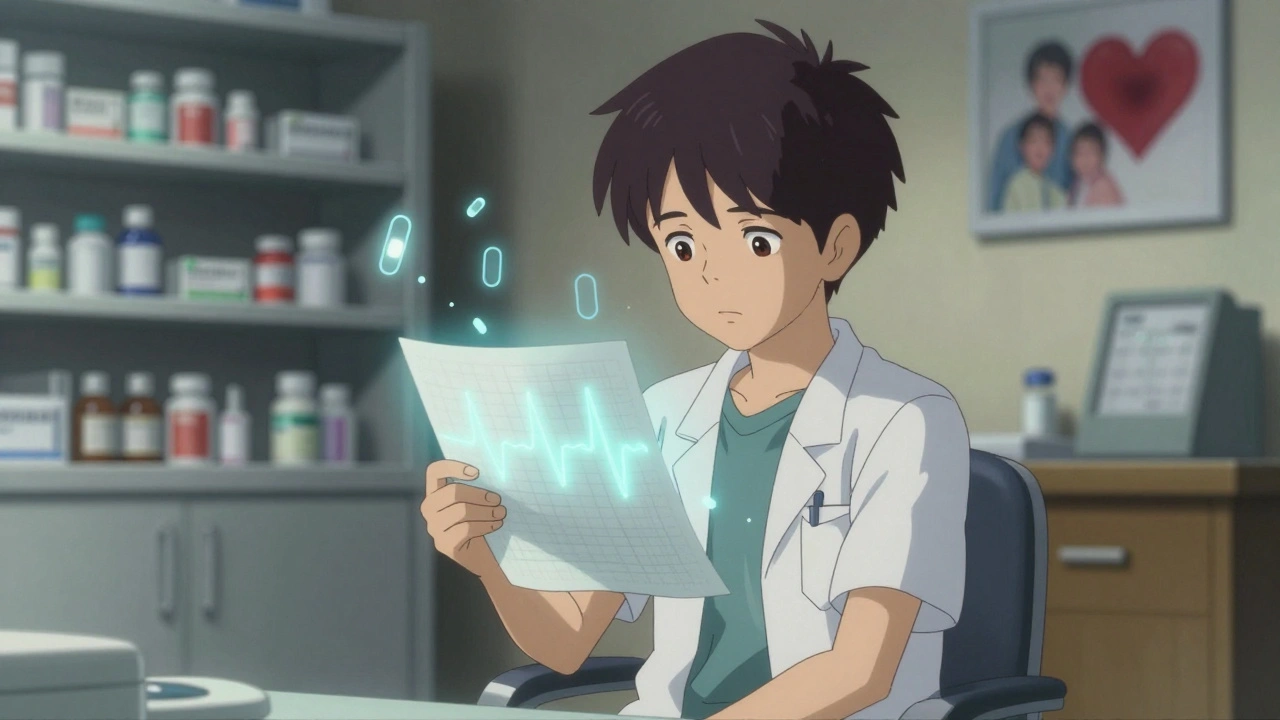
When you or your child starts taking a stimulant for ADHD, the goal is clear: focus, calm, and control. But behind that relief can be a quiet question-could this hurt my heart? It’s not paranoia. It’s science. Prescription stimulants like Adderall, Ritalin, and Vyvanse are powerful tools. They work for 70 to 80% of people with ADHD. But they also nudge the heart into overdrive-faster beats, higher blood pressure, and in rare but real cases, dangerous heart rhythms. The key isn’t to avoid them altogether. It’s to know who’s at risk, how to spot trouble early, and what else you can try if the heart doesn’t respond well.
How Stimulants Can Trigger Heart Rhythm Problems
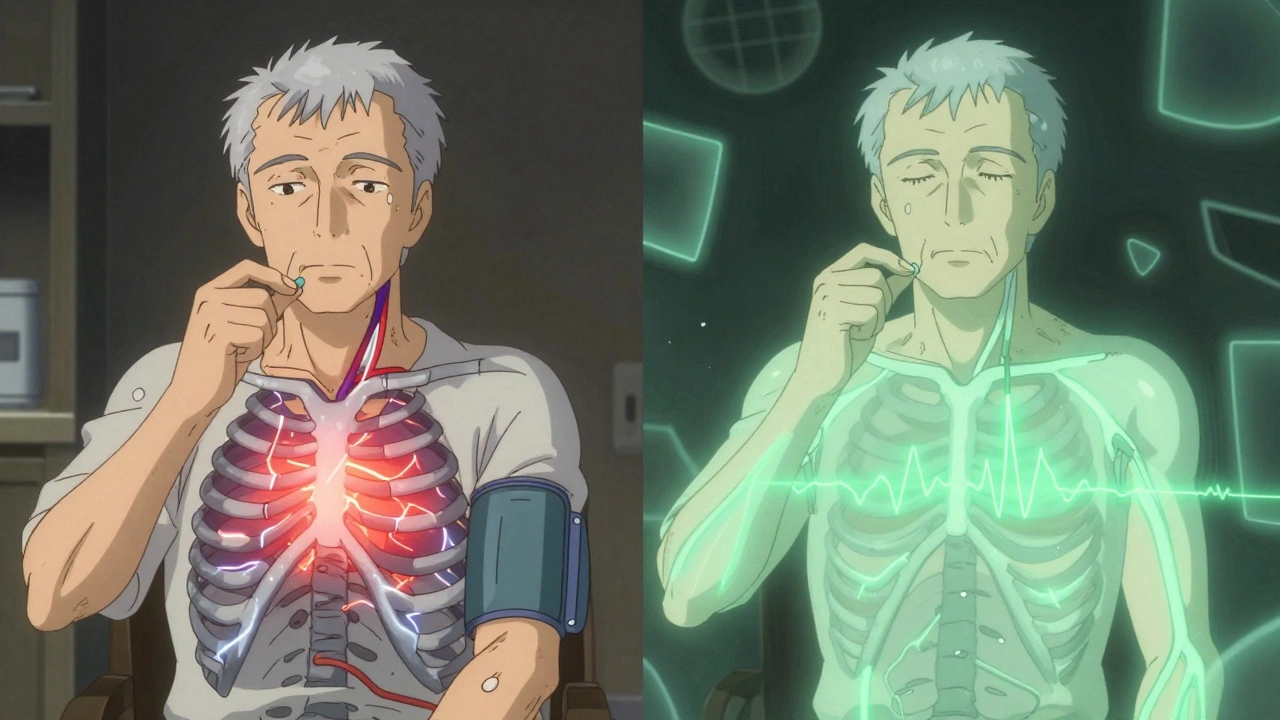
Stimulants don’t just boost focus-they flood the body with adrenaline-like chemicals. That’s why your heart rate might go up by a few beats per minute and your blood pressure climbs slightly. For most people, that’s harmless. But for some, it’s enough to tip the balance. These drugs interfere with the heart’s electrical system. They block potassium and sodium channels, slow down the heart’s recovery phase between beats, and can cause early, abnormal electrical signals. That’s how a normal heartbeat turns into ventricular tachycardia or other dangerous arrhythmias.
The risk isn’t the same for everyone. In adults over 65, a 2021 study found the chance of a dangerous heart rhythm tripled in the first 30 days after starting a stimulant. For younger people, the danger builds slowly. A 2024 study showed that after eight years on stimulants, the risk of heart muscle damage increased by 57%. That doesn’t mean everyone will get it-but it does mean the longer you’re on these drugs, the more your heart is being asked to adapt.
Illicit stimulants like cocaine and methamphetamine are far worse. They don’t just nudge the system-they overload it. Cocaine can double the QT interval on an ECG, a red flag for sudden cardiac arrest. Methamphetamine does the same, plus it scars heart tissue over time. These aren’t just side effects-they’re structural changes that make the heart more likely to misfire.
Who’s Really at Risk?
Not everyone needs to panic. But some people should be extra careful. If you or a close family member has had:
- Sudden cardiac death before age 50
- Unexplained fainting or seizures
- A diagnosed heart condition like long QT syndrome, hypertrophic cardiomyopathy, or congenital heart disease
- High blood pressure that’s hard to control
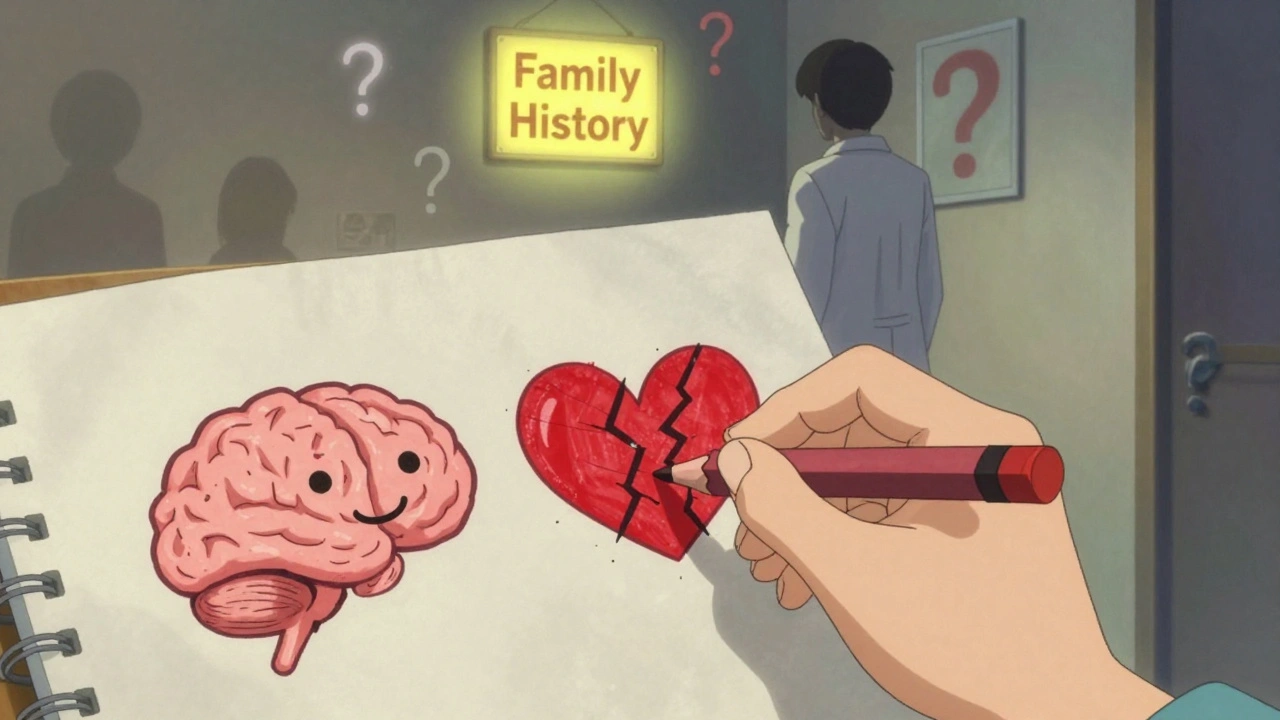
Then you’re in a higher-risk group. The American Heart Association doesn’t require an ECG before starting stimulants-but that doesn’t mean you shouldn’t get one. If your doctor skips a full cardiac history, ask why. A simple question like, “Has anyone in our family died suddenly before 50?” can uncover hidden risks. Many doctors miss this because they’re focused on behavior, not biology. But the heart doesn’t care how well you focus in class-it only cares if its rhythm is stable.
Even if you’re young and healthy, watch for symptoms: palpitations, dizziness, chest tightness, or shortness of breath that doesn’t match your activity level. These aren’t “just anxiety.” They could be your heart signaling trouble.
What Doctors Should Be Doing
Best practice isn’t complicated. Before starting any stimulant, your provider should:
- Take a detailed personal and family heart history
- Perform a physical exam-listen for heart murmurs or irregular rhythms
- Check your blood pressure and pulse at baseline
- Recheck both within 1 to 3 months of starting the medication
- Continue monitoring every 6 to 12 months, or more often if doses change
That’s it. No fancy tests for everyone. But if you have red flags, an ECG is essential. If your QT interval is over 0.46 seconds, or your blood pressure stays above the 95th percentile after a few weeks, the drug should be stopped. Many clinicians report spending 15 to 20% more time on initial ADHD visits just to cover this. That’s not wasted time-it’s lifesaving.
When to Consider Alternatives
Stimulants aren’t the only option. If your heart doesn’t handle them well-or if you’d rather avoid the risk altogether-there are non-stimulant medications that work, though not as powerfully.
- Atomoxetine (Strattera): A norepinephrine reuptake inhibitor. It doesn’t raise heart rate or blood pressure like stimulants. Response rate? About 50 to 60%. Slower to work-takes 4 to 8 weeks-but safer for the heart.
- Guanfacine (Intuniv): Originally a blood pressure pill. It calms the nervous system without stimulating it. Works well for impulsivity and emotional regulation. Side effects: drowsiness, low blood pressure.
- Clonidine (Kapvay): Similar to guanfacine. Helps with hyperactivity and sleep issues. Can cause dry mouth and fatigue.
These aren’t magic bullets. They’re slower. Less effective for pure focus. But for someone with a family history of sudden cardiac death, or someone who already has high blood pressure, they’re the right choice.
The Bigger Picture: Risk vs. Reward
Let’s be honest: ADHD is debilitating. Kids miss school. Adults lose jobs. Relationships suffer. Stimulants fix that-for most. The FDA says the risk of serious heart problems is very low. A 2011 study of over 1.2 million children found no significant increase in sudden cardiac death. The American Academy of Pediatrics says don’t delay treatment for an ECG. And they’re right-for the majority.
But “most” isn’t “all.” And when it comes to your heart, “most” isn’t enough. The real problem isn’t the drugs. It’s the assumption that everyone fits the same profile. A 68-year-old with high blood pressure shouldn’t get the same prescription as a 12-year-old with no family history. That’s not medicine-that’s one-size-fits-all thinking.
The future? Personalized medicine. Researchers are looking at genetic markers that might predict who’s more likely to develop arrhythmias on stimulants. Early signs point to variations in adrenergic receptor genes. In five years, a simple blood test might tell you whether Adderall is safe for you. Until then, the best tool is awareness.
What You Can Do Today
If you’re on a stimulant:
- Know your family heart history. Ask relatives if anyone had unexplained deaths, fainting spells, or heart conditions.
- Track your pulse and blood pressure at home. Write it down. Bring it to appointments.
- Don’t ignore palpitations or dizziness. Say something-even if you think it’s nothing.
- If you’re starting a stimulant, ask for a baseline ECG. It’s quick, painless, and could catch something no one else noticed.
- If you’re not feeling better after 6 to 8 weeks, or if your heart feels off, talk about alternatives-not just higher doses.
If you’re a parent:
- Don’t let your child start stimulants without a full cardiac check.
- Ask the doctor: “Have you ruled out inherited heart conditions?”
- Watch for signs: Is your child suddenly tired after school? Are they complaining of chest discomfort? Don’t dismiss it as “just being tired.”
The goal isn’t to scare you away from treatment. It’s to make sure you’re making an informed choice. Your brain deserves help. But so does your heart.
Can stimulants cause sudden cardiac death?
The absolute risk is very low-studies show no significant increase in sudden cardiac death in children and young adults taking ADHD stimulants. But the risk isn’t zero. In adults over 65, the chance of ventricular arrhythmia triples in the first month. People with undiagnosed heart conditions, especially inherited ones like long QT syndrome, are at higher risk. That’s why a thorough medical history and physical exam are critical before starting treatment.
Do I need an ECG before taking Adderall or Ritalin?
Official guidelines from the American Heart Association and American Academy of Pediatrics say routine ECGs aren’t required. But that doesn’t mean you shouldn’t get one. If you have a family history of sudden death, unexplained fainting, or known heart disease, an ECG is strongly recommended. Even if you’re young and healthy, a baseline ECG can provide useful data for future comparisons if symptoms develop.
Are non-stimulant ADHD meds less effective?
Yes, generally. Stimulants work for 70 to 80% of people. Non-stimulants like Strattera, Intuniv, and Kapvay help about 50 to 60% of users. They’re slower-taking weeks to show full effect-and don’t improve focus as sharply. But for people with heart concerns, high blood pressure, or a history of substance abuse, they’re often the safer and smarter choice. Effectiveness isn’t just about focus-it’s about sustainability and safety too.
How often should my blood pressure be checked while on stimulants?
At baseline, then again within 1 to 3 months of starting. After that, every 6 to 12 months is standard. But if your dose is changed, or if you develop symptoms like headaches, dizziness, or palpitations, check it more often-weekly or even daily. Blood pressure spikes above the 95th percentile are a sign the medication may not be safe for you.
Can I switch from a stimulant to a non-stimulant safely?
Yes, but it should be done under medical supervision. Stopping stimulants suddenly can cause fatigue, depression, or rebound ADHD symptoms. Doctors usually taper the dose slowly while introducing the non-stimulant. It takes 4 to 8 weeks for drugs like Strattera to reach full effect, so patience is key. Many people find they adapt well-especially if the stimulant was causing heart-related side effects.
Final Thoughts: Your Heart, Your Choice
ADHD is real. The pain of distraction, impulsivity, and failure is real. Stimulants help. But they’re not risk-free. The latest science shows that cardiac risk isn’t just about age or dosage-it’s about individual biology. Your family history, your heart’s electrical wiring, your body’s response to adrenaline-they all matter. Don’t let fear stop you from treatment. But don’t let convenience override caution either. Ask the questions. Get the checkups. Know your options. Your brain needs help. Your heart deserves the same respect.
Michael Dioso
December 4, 2025 AT 16:35Yeah right, like anyone actually cares about QT intervals when their kid can’t sit still for 5 minutes. I’ve been on Adderall for 12 years and my heart’s still ticking. Meanwhile, my boss thinks I’m lazy because I don’t ‘try hard enough.’ Tell that to the ER doctor who just told me my BP was 180/110 after my last dose. Oh wait-you won’t, because you’re the kind of person who thinks a blood test is a cult ritual.
Krishan Patel
December 6, 2025 AT 14:50It is not merely a matter of pharmacological risk-it is a moral failure of modern medicine to prioritize cognitive enhancement over biological integrity. The heart is not a machine to be overclocked for productivity. You are not a CPU. You are a sacred vessel of divine energy, and to chemically manipulate its rhythm is to commit sacrilege against the natural order. The West has lost its soul in the pursuit of focus. I speak not as a doctor, but as a witness to the collapse of wisdom.
sean whitfield
December 7, 2025 AT 18:24So let me get this straight. You want me to get an ECG before I take a pill that helps me not fail my job? Meanwhile, the FDA says it’s fine but the AHA says maybe? Sounds like the same people who told us vaping was safe. Next they’ll say sunlight causes cancer. I’m just here for the ADHD. My heart’s been fine since 2012. If your kid’s heart is that fragile maybe they should stop eating gluten and start meditating. 🤷♂️
Carole Nkosi
December 7, 2025 AT 19:18Let’s be real-this whole thing is a pharmaceutical scam dressed up as science. They don’t care if your heart blows up. They care if you keep buying pills. I’ve seen families get hooked on these drugs because the school system is broken, not because the kids are broken. And now you want us to get an ECG? Who pays for that? Not the insurance company. Not the school. You. Again. They profit. You bleed.
Stephanie Bodde
December 7, 2025 AT 23:38Thank you for writing this. 💙 I’m a mom of a 10-year-old with ADHD and we switched to Strattera after his resting heart rate hit 110. He’s slower to focus but he’s sleeping, smiling, and not complaining about his chest. I wish we’d known about the family history angle earlier-my uncle died at 47 of an undiagnosed arrhythmia. Please, parents-ask the questions. Your kid’s heart matters more than a perfect report card. 🤍
Philip Kristy Wijaya
December 9, 2025 AT 06:07It is a profound oversight that the medical establishment continues to treat stimulant use as a binary decision between yes and no when the reality is a spectrum of physiological adaptation. One must consider not merely the presence of arrhythmia but the cumulative burden of sympathetic overdrive across years. The data is clear yet ignored. The pharmaceutical industry profits from compliance not cure. I have witnessed three patients develop cardiomyopathy after prolonged use. None were warned. This is not negligence. It is institutionalized violence disguised as care.
Jennifer Patrician
December 11, 2025 AT 00:53Oh please. They’re lying about the risk to sell more meds. The real danger? The government wants you dependent on pills so you don’t question the system. Why else would they push stimulants in schools? You think ADHD is real? Or is it just kids who won’t sit still because their parents are glued to their phones? They want you to think your heart’s broken so you’ll keep buying the fix. Get an ECG? Yeah right. Get a life.
Mellissa Landrum
December 11, 2025 AT 06:26My cousin took Vyvanse for 8 years and died at 31. No one knew he had long QT. The doc just asked if he had asthma. That’s it. Now my daughter’s on Strattera and she’s fine. But guess what? The school says she’s "not performing". Like, what? She’s not a robot. They don’t care about her heart. They care about test scores. And the FDA? They got paid. I’m not paranoid. I’m a mom who read the fine print.