

State Laws on NTI Substitution: Varying Requirements Across the US
 Dec, 3 2025
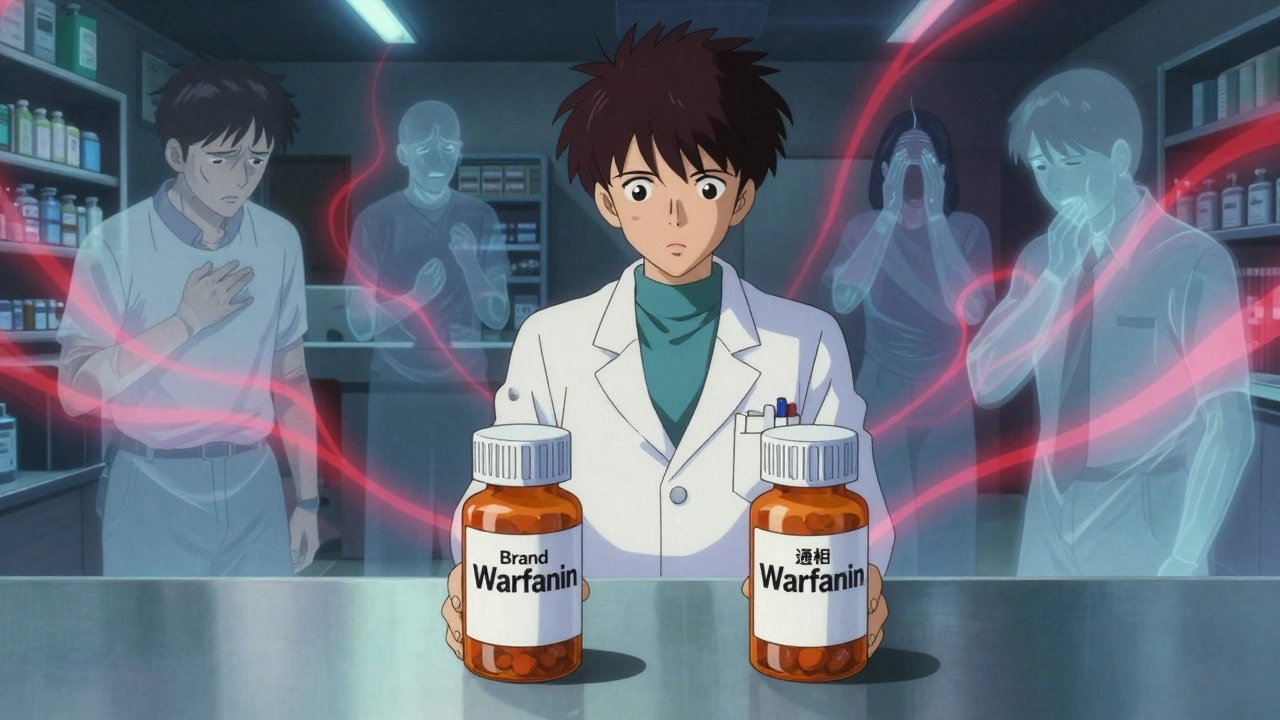
When you fill a prescription for a medication like warfarin, levothyroxine, or phenytoin, you might assume the pharmacist can swap the brand name for a cheaper generic version without issue. But in many states, that’s not allowed-and it’s not just about cost. These are NTI drugs: Narrow Therapeutic Index medications where even tiny changes in dose can cause serious harm. A 5% difference in blood levels might mean a seizure, a blood clot, or even death. Yet federal rules say it’s fine. State laws? They’re all over the place.
What Makes a Drug an NTI Drug?
NTI stands for Narrow Therapeutic Index. That means the difference between a safe, effective dose and a toxic or ineffective one is razor-thin. These drugs don’t play nice with variations. Levothyroxine, used for hypothyroidism, is a classic example. If your body gets slightly less or more than what it’s stabilized on, your TSH levels swing. That can mean fatigue, weight gain, heart palpitations, or worse. Warfarin, an anticoagulant, is another. Too much? Risk of internal bleeding. Too little? Clots. Epilepsy drugs like carbamazepine and valproic acid? One wrong dose and a patient could have a life-threatening seizure.
The FDA doesn’t officially label any drug as NTI in its Orange Book, the go-to guide for therapeutic equivalence. Instead, it uses an ‘A’ or ‘B’ rating system. An ‘A’ rating means the generic is considered therapeutically equivalent to the brand. But here’s the catch: the FDA allows a 20% bioequivalence range for generics. For most drugs, that’s fine. For NTI drugs? It’s a gamble. Clinical studies show that 32.4% of patients stabilized on brand-name levothyroxine had measurable thyroid hormone shifts after switching to generics. That’s not a fluke-it’s a pattern.
Why Do States Step In?
The FDA says its standards are enough. But states see patients getting hurt. In 2022, a study in the Journal of the American Pharmacists Association found that states with strict NTI substitution rules saw 18.7% fewer adverse events tied to warfarin. That sounds small-just a 0.3% absolute drop-but in real life, it means fewer hospitalizations, fewer ER visits, fewer deaths.
States aren’t acting out of bureaucracy. They’re reacting to real harm. Kentucky, Pennsylvania, and South Carolina have created official lists of NTI drugs that pharmacists can’t substitute without a prescriber’s explicit OK. Kentucky’s list includes digitalis glycosides, antiepileptics, and warfarin tablets. Pennsylvania’s list is nearly identical. South Carolina goes further, adding brand-specific drugs like Synthroid and Premarin, plus a broader category called ‘Critical drugs’ that includes insulin and time-release asthma meds.
Tennessee takes a different path. It allows substitution of ‘A-rated’ generics-but makes a hard exception for antiepileptic drugs used by patients with epilepsy. California doesn’t ban substitution outright. Instead, it requires pharmacists to notify the prescriber whenever they swap a ‘critical dose drug,’ which the state defines as any medication where a 10% or less change in blood concentration could be dangerous. Texas bans substitution of anticonvulsants for epilepsy patients unless the doctor specifically says it’s OK.

The Patchwork of Rules
There’s no national standard. That means a pharmacist working in multiple states is playing a high-stakes guessing game.
Some states are Mandatory: Pharmacists must substitute unless the prescriber writes ‘dispense as written’ or checks a box on the prescription. Other states are Permissive: Substitution is allowed but not required. Then there are Restrictive states like Kentucky and Pennsylvania, where substitution is flat-out prohibited for certain drugs.
And here’s where it gets messy: even within a single state, rules can vary. A pharmacist in Knoxville, Tennessee, follows state law. But if they cover a different pharmacy in Chattanooga, they might run into local clinic policies or insurance rules that add another layer. One 2023 survey found that 68.3% of pharmacists working across state lines had been confused about substitution rules. Over 40% admitted they’d accidentally broken a law in the past year.
Pharmacy benefit managers like Express Scripts report that NTI substitution restrictions have increased their administrative costs by 5.7%. Why? Because they have to track which drugs are restricted where, update formularies, train staff, and handle exceptions. It’s not just pharmacists who are stressed-it’s the entire system.
What’s Changing in 2025?
The tide might be turning. In January 2024, the National Association of Boards of Pharmacy released the Model State NTI Substitution Act. It’s a blueprint for standardizing NTI drug lists across states, using evidence-based criteria instead of each state making up its own rules. Twelve states have already introduced legislation based on it.
Even the FDA is reconsidering. In September 2024, after pressure from the Senate Committee on Aging and a Government Accountability Office report that found nearly 3,000 adverse events linked to NTI drug substitutions between 2019 and 2023, the agency signaled it might finally acknowledge the category formally. That could mean changes to the Orange Book, clearer labeling, and a federal baseline.
Meanwhile, the Department of Labor issued an opinion letter in January 2025 clarifying that NTI drug substitution rules can impact eligibility for paid medical leave under FMLA. If a patient needs to switch back to a brand-name NTI drug after a bad reaction to a generic, that could count as a qualifying medical event for leave. It’s a small step-but it shows how deeply these rules now affect real people’s lives.

The Bottom Line for Patients
If you’re on an NTI drug, don’t assume your generic is interchangeable. Check your prescription. Ask your pharmacist: ‘Is this a restricted drug in my state?’ If your medication is on a state’s NTI list, you may need your doctor to write ‘dispense as written’ or ‘no substitution.’
Keep a list of your NTI meds. Know the brand and generic names. If your pharmacy switches your pill without telling you, speak up. Your health isn’t a cost-saving experiment.
And if you’re a pharmacist, know your state’s rules. Double-check your state board’s website. Use tools like the NABP’s state-by-state guide. Don’t rely on memory. One mistake can change a life.
What’s Next?
By 2027, analysts at IQVIA predict 38 states will have adopted standardized NTI substitution rules. That could cut cross-state prescription errors by over 20%. But it might also reduce generic use for NTI drugs by nearly 8 percentage points. That’s not just a policy shift-it’s a financial one. Generic drugs saved the U.S. healthcare system $1.67 trillion from 2009 to 2022. NTI restrictions account for only 2.3% of that savings. But for the patients on those drugs? That 2.3% could mean everything.
Are all generic drugs safe to substitute for brand-name versions?
No. For most medications, generics are safe and effective. But for Narrow Therapeutic Index (NTI) drugs-like warfarin, levothyroxine, and certain epilepsy medications-even small differences in absorption or formulation can lead to serious side effects or treatment failure. Many states restrict or prohibit substitution for these drugs.
Does the FDA recognize NTI drugs as a special category?
No. The FDA does not officially designate any drugs as NTI in its Orange Book or regulatory documents. It uses an ‘A’ or ‘B’ therapeutic equivalence rating system and allows a 20% bioequivalence range for all generics. This has led to a conflict between federal policy and state laws, where many states have created their own NTI lists based on clinical evidence.
Which states prohibit NTI drug substitution?
As of 2024, 27 states have specific restrictions on NTI drug substitution. Kentucky and Pennsylvania maintain formal lists of prohibited substitutions, including warfarin, levothyroxine, and antiepileptics. South Carolina restricts substitution for NTI drugs, brand-name drugs like Synthroid, and other ‘critical drugs’ like insulin. California requires prescriber notification for substitution, while Texas bans anticonvulsant substitution for epilepsy patients.
Can a pharmacist substitute an NTI drug without my permission?
It depends on your state. In restrictive states like Kentucky or Pennsylvania, pharmacists cannot substitute NTI drugs at all without a prescriber’s explicit instruction. In permissive states, substitution is allowed unless the prescription says ‘dispense as written.’ Always check your prescription and ask your pharmacist if your medication is restricted.
What should I do if my generic NTI drug doesn’t seem to work like the brand?
If you notice changes in how you feel-like increased fatigue, heart palpitations, seizures, or unusual bruising-contact your prescriber immediately. Request your original brand name or ask for a prescription that says ‘dispense as written.’ You can also ask your pharmacist to verify whether your state restricts substitution for your medication. Document any symptoms and report them to your doctor and pharmacy.
Shawna B
December 3, 2025 AT 23:31So generics can kill you and no one’s doing anything about it?
vanessa parapar
December 4, 2025 AT 05:06Oh sweetie, you think this is new? I’ve been telling my rheumatologist for years that switching my methotrexate generic gave me a flare that landed me in the ER. The FDA doesn’t care. States are the only thing standing between patients and pharmacy-driven chaos. And yet, some folks still think ‘generic = cheaper = better.’ Honey, no. Not for NTI drugs. Not ever.
My cousin’s dad died from a warfarin switch. They didn’t even tell him it happened. Just handed him a different pill. He thought he was fine until he started bleeding internally. That’s not healthcare. That’s roulette with your life.
And don’t get me started on levothyroxine. I’ve been on Synthroid since 2012. Switched to generic once. Felt like a zombie for three months. TSH went from 1.8 to 8.2. My doctor had to write ‘dispense as written’ on the prescription like a damn plea for mercy. Why should I have to beg for my own stability?
Pharmacists? They’re stuck in the middle. They don’t want to kill someone, but they’re pressured to cut costs. Meanwhile, PBMs make bank off the switch. It’s a perfect storm of greed, bureaucracy, and ignorance.
I’ve started keeping a printed list of my NTI meds in my wallet. Every time I refill, I hand it to the pharmacist. ‘Check the state list. Is this one restricted?’ If they look confused, I know I’m dealing with someone who hasn’t read the rules. And I walk out. No exceptions.
2025’s model act? Finally. But it’s too little, too late. Thousands of people have been harmed because no one wanted to admit that one size doesn’t fit all. Especially not when one size could kill you.
And yes-I’m still mad about it. And I will keep yelling until the FDA admits what we’ve known for decades: some drugs aren’t interchangeable. Period.
Jerry Ray
December 5, 2025 AT 21:19So you’re saying the FDA is wrong and states know better? That’s hilarious. You know how many times states have banned things that turned out to be nonsense? Like mercury in vaccines or homeopathy as medicine? This is just another fearmongering trend dressed up as patient care. If generics were dangerous, they’d be pulled. They’re not. So stop acting like your thyroid is a sacred temple.
Also-why do people think 20% bioequivalence is dangerous? That’s the standard for EVERYTHING. You think insulin is the only thing that needs precision? Blood pressure meds? Antidepressants? They all have ranges. You’re just cherry-picking the scary ones to fit your narrative.
And let’s not forget: 98% of people switch generics without issue. But you? You want to make 300 million Americans pay more because you had one bad experience. That’s not science. That’s anecdote with a megaphone.
David Ross
December 6, 2025 AT 11:05THIS IS WHY AMERICA IS FALLING APART. We let bureaucrats in D.C. decide what’s safe for our bodies-then we let state legislators play whack-a-mole with patchwork laws that make no sense. The FDA’s 20% rule is based on decades of clinical data-not guesswork. But now, because some hysterical patients had a bad reaction, we’re turning pharmacists into legal risk-takers? And who pays? YOU DO. Every single time you fill a script, you’re paying more because of these stupid state restrictions.
And don’t even get me started on the ‘critical drugs’ list. Insulin? Time-release asthma meds? You’re equating diabetes with epilepsy? That’s not medicine-that’s political theater. The only thing being restricted here is common sense.
Meanwhile, countries like Canada and the UK switch generics without a single federal list. No chaos. No lawsuits. No confusion. Just rational, science-based care. But no-here, we need a 50-state bingo card to know if we can get our meds.
And now the DOL is getting involved? FMLA for a pill switch? This isn’t healthcare. This is a bureaucratic nightmare dressed in patient advocacy pajamas. We need less regulation, not more. And we need the FDA to stop letting states bully them into submission.
Abhi Yadav
December 7, 2025 AT 11:32Life is a river, no? One day you flow with the generic, next day you drown in the brand...
Why do we fight over pills? The body knows what it needs. The system just doesn't listen. 🌊
Maybe the real NTI drug... is capitalism itself.
Peace, brother.
Krys Freeman
December 8, 2025 AT 00:27Stop the madness. Let generics be generics. If you can’t handle a pill switch, don’t take the drug. Simple.
AARON HERNANDEZ ZAVALA
December 8, 2025 AT 20:21I’ve worked in pharmacies for 18 years. I’ve seen people get sick after switches. I’ve also seen people save hundreds a month because of generics. It’s not black and white.
But I do know this: if a patient says, ‘I feel different,’ we listen. No matter what the state says. Because people aren’t data points. They’re human beings who show up with anxiety, fatigue, confusion.
Maybe the real answer isn’t more rules-it’s better communication. Pharmacist to patient. Doctor to pharmacist. System to patient.
Let’s fix that first.
And yeah, I’ve accidentally switched a NTI drug once. I’ve never forgotten it. Never will be.
Lyn James
December 10, 2025 AT 11:14It’s not just about levothyroxine or warfarin-it’s about the entire moral collapse of American healthcare. We’ve turned healing into a spreadsheet. We’ve normalized risk because it’s cheaper. We’ve made patients into cost centers instead of human beings who deserve stability, dignity, and consistency.
And now, when people start to push back, we call them hysterical. We call them ‘anecdotal.’ We call them ‘anti-generic.’ But let me tell you something: I’ve sat with patients who cried because they couldn’t afford their brand-name meds, and then cried again because the generic made them feel like they were dying.
This isn’t about politics. It’s about ethics. Who gets to decide what’s safe? A board of executives at Express Scripts? A pharmacist who’s been told to hit a 90% generic fill rate? Or the person who actually has to live with the consequences?
The FDA’s 20% bioequivalence range? That’s not science. That’s a corporate compromise. And the fact that 32.4% of patients on levothyroxine had measurable shifts after switching? That’s not a fluke-that’s a failure.
And yet, here we are. Still arguing about whether a pill should be blue or white instead of asking why we’re letting people’s lives be governed by profit margins.
I’m not anti-generic. I’m pro-safety. I’m pro-transparency. I’m pro-letting patients choose what keeps them alive. And if that means paying a little more? Then so be it. Because some things aren’t negotiable.
And if you think otherwise? You’ve never held someone’s hand while they’re having a seizure because their phenytoin level dropped 15% after a switch. You haven’t seen the look in their eyes when they realize the system didn’t care enough to stop it.
So don’t tell me to ‘get over it.’ Don’t tell me to ‘trust the science.’ The science is telling us something’s wrong. And until we listen-not just to the numbers, but to the people behind them-we’re not healing. We’re just hiding.
Craig Ballantyne
December 11, 2025 AT 21:20The regulatory fragmentation observed across U.S. jurisdictions reflects a systemic failure in harmonizing pharmacovigilance protocols with clinical pharmacokinetic realities. The absence of a federally mandated NTI classification framework necessitates state-level intervention, yet this introduces transactional inefficiencies in the pharmaceutical supply chain-particularly for PBMs operating across state lines.
While the NABP’s Model Act represents a step toward standardization, its efficacy hinges on uniform adoption and enforcement. Without centralized oversight, we risk institutionalizing a patchwork of compliance burdens that disproportionately impact rural providers and small pharmacies.
Moreover, the 20% bioequivalence threshold, while statistically defensible for most compounds, remains empirically inadequate for drugs with nonlinear pharmacodynamics-such as antiepileptics and anticoagulants-where Cmax and AUC variability directly correlate with clinical endpoints.
It is not anti-market to demand precision in therapeutics. It is prudent.
Victor T. Johnson
December 12, 2025 AT 20:13People don’t get it. This isn’t about generics. It’s about control.
Who gets to decide what you take? The FDA? The pharmacy? The insurance company? Or you?
I’ve been on carbamazepine for 15 years. Switched to generic once. Seizure. Not a little one. A full-on tonic-clonic. I woke up in the ER with my wife screaming and a nurse saying ‘it’s probably just a coincidence.’
It wasn’t.
Now I carry a laminated card in my wallet. ‘DO NOT SUBSTITUTE. BRAND ONLY.’
And if you think that’s extreme? Try living with the fear that your next pill could be your last.
💰💊 #TrustThePatient
And yeah, I’m mad. And I won’t shut up until this changes.
Nicholas Swiontek
December 13, 2025 AT 19:11Hey everyone-just wanted to say thank you to the people sharing their stories. This isn’t just policy. It’s real life.
I’m a pharmacist in Ohio. I’ve had patients cry because they couldn’t afford the brand. I’ve had others cry because the generic made them sick.
We’re not the enemy. We’re just trying to do right by people.
My advice? If you’re on an NTI drug, always ask: ‘Is this restricted in my state?’ Write ‘dispense as written’ on your prescription. Keep a list. Talk to your doctor.
And if you’re a pharmacist? Don’t guess. Check the state board website. Use the NABP tool. One mistake can change everything.
We’re all in this together. Let’s keep talking.
❤️
Robert Asel
December 14, 2025 AT 20:19It is an incontrovertible fact that the FDA’s bioequivalence standards are scientifically robust and clinically validated across thousands of studies. The assertion that NTI drugs require unique regulatory treatment is not supported by the totality of pharmacokinetic evidence. The 20% variance is not arbitrary-it is derived from the 90% confidence interval of geometric mean ratios for Cmax and AUC, which have been consistently shown to predict therapeutic equivalence.
Furthermore, the purported ‘32.4% shift’ in thyroid hormone levels cited in the article is misleading. It fails to distinguish between statistically significant changes and clinically significant changes. A minor fluctuation in TSH does not equate to symptomatic deterioration. To conflate statistical noise with clinical harm is a fundamental misrepresentation of medical data.
State-level restrictions are not patient protections-they are regulatory overreach disguised as compassion. They increase costs, reduce access, and undermine the principle of therapeutic equivalence upon which modern pharmacology is built.
It is regrettable that anecdotal narratives are being elevated above evidence-based medicine.
Ben Wood
December 15, 2025 AT 21:33So like… the FDA is dumb and states are smart? LMAO. You know who else used to say ‘we need special rules’ for stuff? People who thought vaccines caused autism. This is the same energy. Generic = same chemical. Same active ingredient. Same everything. If your body can’t handle a pill that’s chemically identical? Maybe your body’s the problem. Not the system.
And now we’re gonna start regulating insulin like it’s plutonium? Next they’ll ban switching from Advil to store-brand ibuprofen. You people are out of control.
Also-why is everyone so obsessed with brand names? Synthroid? Like it’s holy water. It’s a pill. A chemical. Not a miracle.
Just stop. Please.
Jerry Ray
December 16, 2025 AT 03:23Wait-so you’re saying the FDA is wrong, but Kentucky’s list is gospel? That’s not logic. That’s tribalism. If you want real safety, push for better bioequivalence testing-not more state bureaucracy. And if your thyroid freaks out over a 5% difference? Maybe you’re not stable. Maybe you need a different dose. Not a different pill.
Also-why are you all so scared of generics? You think Big Pharma is hiding something? Or are you just scared of saving money?
Just saying.