

RSV Infections: What Parents and Older Adults Need to Know About Risks and Prevention
 Jan, 2 2026
Every winter, a quiet but powerful virus sweeps through homes, hospitals, and daycare centers. It starts with a runny nose, a cough, maybe a fever. For most adults, it’s just a cold. But for infants and older adults, it can turn deadly. This virus is RSV - Respiratory Syncytial Virus - and it’s not something you can ignore.
What Is RSV, Really?
RSV isn’t new. Scientists first isolated it in 1956, but it’s only in the last few years that we’ve fully understood how dangerous it can be. It’s a common virus that attacks the respiratory tract - from the nose all the way down to the lungs. In healthy kids and adults, it usually causes mild cold symptoms: stuffy nose, sore throat, cough, maybe a low fever. But for babies under 1 year and people over 65, it can quickly become life-threatening.RSV spreads easily. You can catch it from someone coughing or sneezing nearby. You can pick it up from a doorknob, a toy, or a shopping cart if someone with RSV touched it earlier. The virus can live on surfaces for up to 10 hours. And once infected, you’re contagious for 3 to 8 days - longer if you’re an infant or have a weak immune system.
Why Are Infants at Such High Risk?
Babies under 6 months are the most vulnerable. Their airways are tiny. Even a little bit of swelling or mucus can block their breathing. That’s why RSV is the #1 cause of bronchiolitis (inflammation of the small airways) and pneumonia in infants under 1 year.About 2 to 3% of babies under 6 months end up in the hospital each year because of RSV. In the U.S. alone, that’s 58,000 to 80,000 hospitalizations for kids under 5. Globally, RSV leads to over 3.6 million hospitalizations and around 100,000 deaths in children under 5 every year - and 97% of those deaths happen in countries where oxygen, IV fluids, or ventilators aren’t always available.
Some babies are at even higher risk:
- Preterm babies (born before 29 weeks) - 3 to 5 times more likely to be hospitalized
- Babies with congenital heart disease - 20 to 25 times higher risk of severe illness
- Children with chronic lung disease - 10 to 15 times more likely to need intensive care
Signs of trouble in infants include:
- Fast, shallow breathing - more than 60 breaths per minute
- Chest pulling in with each breath (retractions)
- Noisy breathing or wheezing
- Poor feeding - taking less than half their usual amount
- Lethargy - unusually sleepy, hard to wake up
If you see any of these in your baby, don’t wait. Get help right away.
Why Older Adults Are in Danger Too
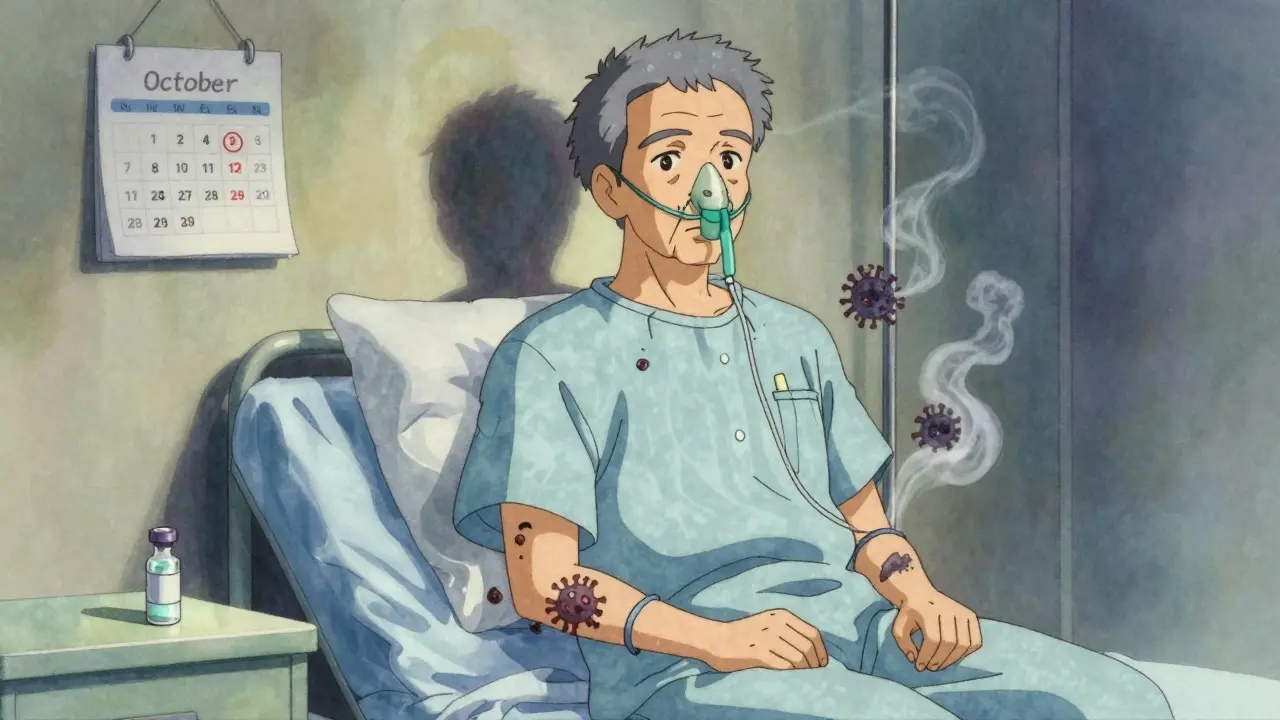
For years, RSV was seen as a “kids’ virus.” But since 2020, doctors have been sounding the alarm: older adults are dying from it in alarming numbers.In the U.S., RSV sends 60,000 to 160,000 adults over 65 to the hospital each year. About 6,000 to 14,000 die. That’s more than the flu kills in many years.
It’s not just age - it’s what comes with it. As we get older, our immune systems weaken. That makes it harder to fight off infections. And if you already have heart or lung problems, RSV can push your body over the edge.
People with COPD are 4.2 times more likely to be hospitalized with RSV. Those with heart failure face 2.8 times higher risk. Adults over 75 stay in the hospital nearly 3 times longer than younger adults and are almost twice as likely to die.
And the damage doesn’t end when you leave the hospital. Nearly half of older adults who are hospitalized with RSV develop new problems - trouble bathing, dressing, or walking. About 28% need to go to a rehab center or nursing home after recovery.
How RSV Changes Your Health Long-Term
Many people think once you recover from RSV, you’re fine. But that’s not true - especially for babies.Children who were hospitalized with RSV bronchiolitis before age 2 are more than four times as likely to develop asthma by age 7. Studies show their lungs never fully catch up. Even into their teens, these kids have lower lung function - about 8 to 12% below normal.
For older adults, severe RSV can trigger a downward spiral. One infection can lead to long-term weakness, reduced mobility, and increased risk of future infections. It’s not just a cold - it’s a major health event.
Prevention: What Actually Works
The good news? We now have powerful tools to stop RSV before it starts.For Infants: Nirsevimab (Beyfortus™)
In July 2023, the FDA approved a game-changer: nirsevimab, a single-shot monoclonal antibody given to babies before or during RSV season. It doesn’t prevent infection - but it prevents serious illness. In clinical trials, it cut the risk of hospitalization by 75% for the first 5 months of life.The CDC now recommends it for all infants under 8 months entering their first RSV season. Babies 8 to 19 months with high-risk conditions (like prematurity or lung disease) should get it too, even in their second season.
For Older Adults: RSV Vaccines
For the first time ever, two RSV vaccines are available for adults 60 and older:- GSK’s Arexvy - 82.6% effective at preventing lower respiratory tract disease
- Pfizer’s Abrysvo - 66.7% effective
Both were approved in May 2023. The CDC recommends shared decision-making: talk to your doctor about your health, risk factors, and whether the vaccine is right for you. It’s especially important if you have heart disease, COPD, or live in a nursing home.
For Everyone: Simple, Proven Steps
Even with new tools, basic hygiene still saves lives:- Wash hands with soap for at least 20 seconds - it cuts transmission by up to 50%
- Avoid touching your face - especially eyes, nose, and mouth
- Disinfect high-touch surfaces daily - doorknobs, phones, toys, counters - with EPA-approved cleaners
- Stay home if you’re sick - even with mild symptoms
- Keep babies away from crowded places during RSV season (late fall to early spring)
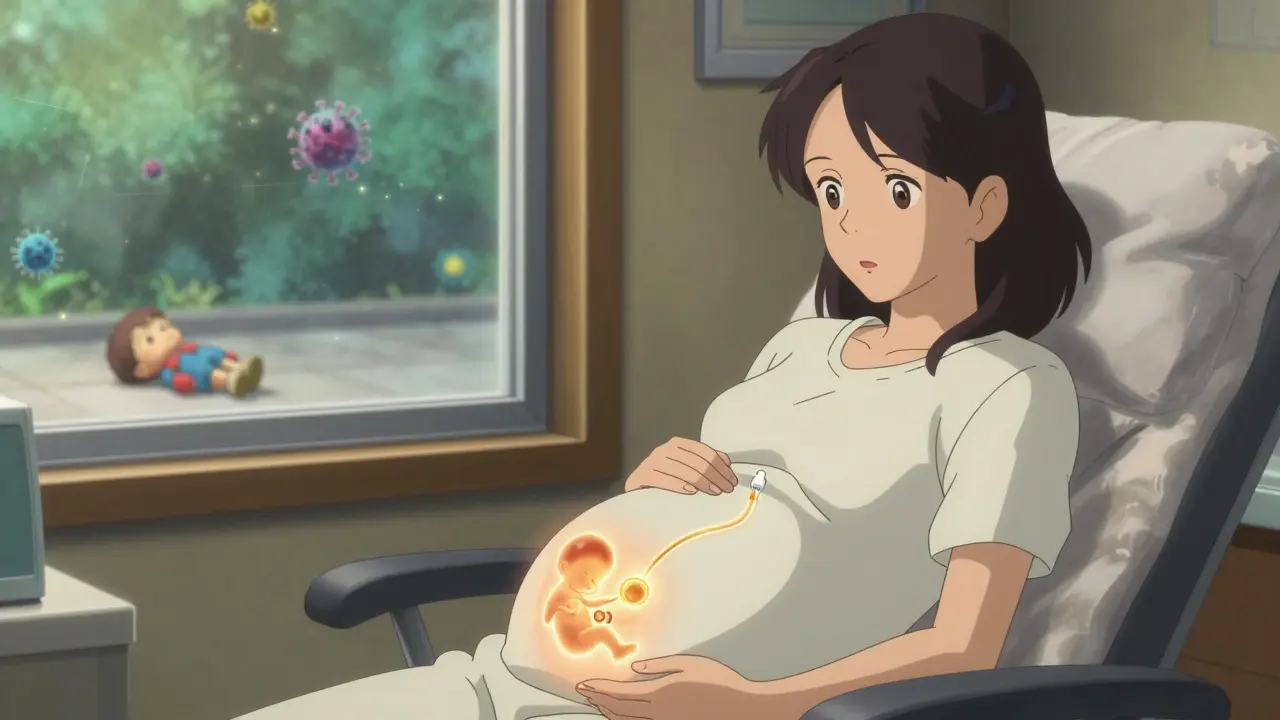
And if you’re pregnant? Pfizer’s Abrysvo is now approved for use between 32 and 36 weeks of pregnancy. It passes protective antibodies to your baby before birth, reducing severe RSV in newborns by 81.8% for the first 6 months of life.
What’s Still Missing
These tools are powerful - but not equal. In the U.S., nirsevimab and RSV vaccines are available in most clinics and pharmacies. But in low-income countries, access is nearly zero. The cost of one dose of Arexvy is $295 in the U.S. - far beyond what families in rural Kenya or Papua New Guinea can afford.That’s why global health experts warn: without fair access, we’ll keep seeing 97% of RSV deaths in places with the least resources. That’s not just a health issue - it’s a justice issue.
What You Should Do Now
If you have a baby under 1 year:- Ask your pediatrician about nirsevimab - it’s free or low-cost for most families in the U.S.
- Wash hands before touching your baby
- Keep visitors away if they’re sick
- Know the warning signs: fast breathing, poor feeding, lethargy
If you’re over 65:
- Ask your doctor about the RSV vaccine
- Get it before RSV season starts - usually October
- Don’t wait until you’re sick - prevention is the only real defense
If you’re pregnant:
- Ask about Abrysvo between 32 and 36 weeks
- It protects your baby before they’re even born
RSV isn’t going away. But now, we have the tools to stop it from killing our most vulnerable people. The question isn’t whether we can prevent it anymore. The question is: will we?
Is RSV the same as the flu or COVID?
No. RSV, flu, and COVID are all respiratory viruses, but they’re caused by different germs. RSV mainly affects the small airways in babies and causes severe bronchiolitis. Flu hits harder in older adults and causes high fever and body aches. COVID can affect more systems in the body and has a longer contagious period. Symptoms can look similar, but RSV is the top cause of hospitalization in infants under 1 year - more than flu or COVID combined.
Can adults get RSV more than once?
Yes. You can get RSV multiple times in your life. Immunity after infection is incomplete, so you can catch it again - even in the same season. But later infections are usually milder. The real danger is for people with weak immune systems, babies, and older adults - not healthy adults.
How do I know if my baby’s RSV is serious?
Watch for these red flags: breathing faster than 60 breaths per minute, chest pulling in with each breath, flaring nostrils, grunting while breathing, blue lips or fingernails, not eating or drinking, or being unusually sleepy and hard to wake. If you see any of these, go to the ER. Don’t wait.
Is the RSV vaccine safe for older adults?
Yes. Both Arexvy and Abrysvo were tested in tens of thousands of adults over 60. Side effects are mild: sore arm, fatigue, headache, or muscle pain - similar to the flu shot. Serious reactions are rare. The benefits far outweigh the risks, especially for people with heart or lung disease.
Can I get the RSV vaccine and flu shot at the same time?
Yes. The CDC says it’s safe to get the RSV vaccine, flu shot, and COVID booster all in one visit. You might feel a little sore or tired, but that’s normal. Getting them together saves time and gives you full protection before RSV season peaks.
Where can I get the RSV vaccine or nirsevimab?
In the U.S., RSV vaccines for older adults are available at pharmacies (CVS, Walgreens, etc.), doctor’s offices, and clinics. Nirsevimab for babies is given by pediatricians and hospitals. Most insurance plans cover both. If you’re uninsured, programs like Vaccines for Children (VFC) and 340B drug pricing help make them free or low-cost.
Tru Vista
January 4, 2026 AT 10:50RSV? Yeah, it's just a glorified cold. Why are we giving monoclonal antibodies to every baby? Sounds like pharma's latest cash grab. 🤷♀️
Vincent Sunio
January 5, 2026 AT 15:16One must question the epistemological validity of conflating RSV with influenza or SARS-CoV-2, given their distinct pathogenic mechanisms and immunological profiles. The conflation undermines clinical precision.
JUNE OHM
January 6, 2026 AT 21:51They're lying about RSV. Why now? Why the vaccine? Who owns the patent? Big Pharma + CDC = mind control. 🤫💉 #WakeUp
Shanahan Crowell
January 8, 2026 AT 18:11This is the kind of info we need more of! Seriously - if you’ve got a grandkid or an aging parent, don’t wait. Get the shot. Wash hands. Stay home when sick. Small steps save lives. 💪❤️
Kerry Howarth
January 9, 2026 AT 14:03Prevention works. Nirsevimab is a game-changer. If your pediatrician hasn't mentioned it, ask. It's free under most plans.
Tiffany Channell
January 11, 2026 AT 06:2375% effectiveness? That’s not immunity. That’s a placebo with a price tag. And who’s monitoring long-term side effects? No one. Just trust the system.
Angela Fisher
January 12, 2026 AT 11:13They’re pushing this vaccine because they want to track kids through their immune systems. They’ve been doing it with the flu shot for years. Now they’re using RSV as the Trojan horse. You think your baby’s safe? Think again. The microchips are in the vials. I saw it on a forum. I’m not paranoid - I’m informed. 😔👁️
Neela Sharma
January 12, 2026 AT 14:39In India, we call RSV 'the silent thief' - it steals breath before you know it’s gone. No vaccines. No monoclonals. Just mothers holding their babies, whispering prayers. We need global justice - not just science.
Shruti Badhwar
January 13, 2026 AT 14:57While the data presented is statistically robust, the ethical implications of vaccine accessibility disparity cannot be understated. The global RSV mortality gap reflects systemic inequity, not biological difference.
Brittany Wallace
January 14, 2026 AT 13:13My grandma got the vaccine last fall. She’s still dancing at 82. 😊 I’m getting mine next week. And yes - I got my flu shot too. No shame in being prepared.
Michael Burgess
January 15, 2026 AT 02:02My niece was in the NICU for RSV last year. We didn’t know what hit us. The nurses said, ‘If she’d had nirsevimab, she’d have been home in 3 days.’ That shot? It’s not magic - it’s mercy. 🙏
Liam Tanner
January 15, 2026 AT 10:32For those skeptical about the vaccine - I get it. But if your grandparent had a heart condition, would you really gamble with a 66-82% protection rate? I wouldn’t.
veronica guillen giles
January 17, 2026 AT 08:45Oh, so now we’re vaccinating pregnant women to protect babies from a virus that’s been around since 1956? Genius. What’s next? Mandatory handwashing with unicorn tears?
Ian Ring
January 17, 2026 AT 18:25Actually, I’m a nurse - and I’ve seen the ICU beds fill up with RSV cases every winter. The vaccine isn’t perfect - but neither is waiting for tragedy. I got mine. My 78-year-old dad got his. No regrets.