

Postpartum Anxiety: Recognizing Symptoms, Screening Tools, and Effective Care Pathways
 Dec, 15 2025
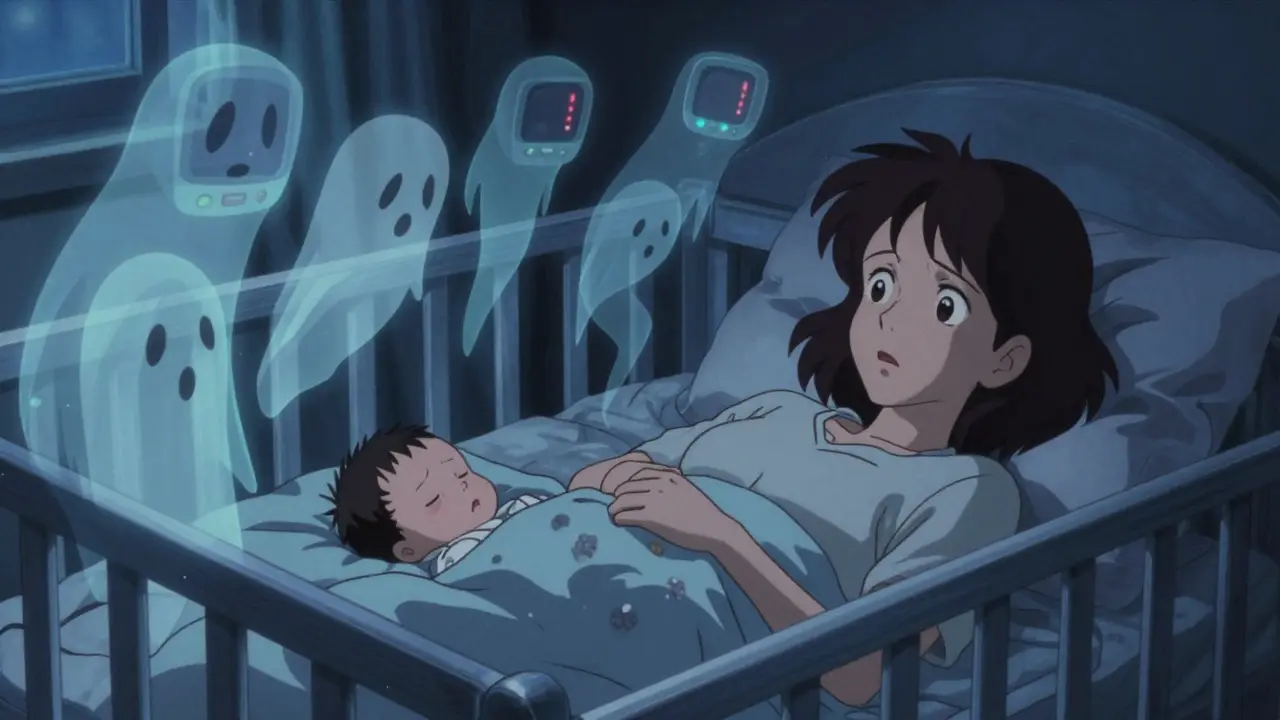
One in five new mothers experiences postpartum anxiety - but most don’t realize what’s happening to them. They think they’re just tired, overwhelmed, or "not cut out for this." But this isn’t normal stress. It’s a real, treatable condition that can last for months - or even a year - after giving birth. Unlike the baby blues, which fade after two weeks, postpartum anxiety doesn’t just go away on its own. It grows. It whispers doubts. It makes your heart race when the baby is asleep. It turns every cough into a crisis and every missed feeding into a catastrophe.
What Postpartum Anxiety Actually Feels Like
It’s not just being nervous. Postpartum anxiety is a constant, physical, and mental overload. You might lie awake while your baby sleeps, your mind racing through worst-case scenarios: "What if they stop breathing? What if I’m not a good mom? What if something terrible happens?"
Physical symptoms are common - and often mistaken for something else. Sixty-two percent of women report a racing heart. Nearly half feel nauseous. Almost four in ten lose their appetite. These aren’t signs of a stomach bug or lack of sleep. They’re signs your nervous system is stuck on high alert.
Panic attacks happen in 28% to 35% of cases. You might feel like you’re having a heart attack, even though your doctor says your vitals are fine. Intrusive thoughts - like imagining your baby getting hurt - affect nearly 70% of women with this condition. These thoughts are terrifying, but they don’t mean you’re dangerous. They’re a symptom, not a reflection of your character.
And unlike depression, where sadness dominates, anxiety is all about worry. Eighty-five percent of women with postpartum anxiety say their main struggle is uncontrollable, obsessive thinking. They’re not crying all day - they’re checking the baby’s chest for breath every five minutes.
How It’s Different From Baby Blues and Postpartum Depression
Many new moms assume any emotional struggle after birth is "just the baby blues." And yes, up to 80% of women feel moody, tearful, or overwhelmed in the first few days. But those feelings usually vanish within two weeks. Postpartum anxiety sticks around - and gets worse.
Postpartum depression and anxiety often show up together. In fact, nearly half of women diagnosed with one also have the other. But they’re not the same. Depression feels like heaviness - no energy, no joy, no motivation. Anxiety feels like pressure - your body is tense, your thoughts are spinning, and you’re always waiting for the next disaster.
Here’s how the symptoms break down:
- Postpartum anxiety: Racing heart, nausea, insomnia even when the baby sleeps, obsessive worry, panic attacks, intrusive thoughts.
- Postpartum depression: Persistent sadness, feeling worthless, loss of interest in the baby, crying without reason, thoughts of self-harm.
One study found that women with anxiety-only symptoms scored an average of 9.8 on the Edinburgh Postnatal Depression Scale (EPDS). Those with depression-only scored 11.3. But when both are present? The score jumps to 14.7 - a clear signal that both conditions need attention.
Screening: Why It Matters and How It’s Done
There’s no blood test. No X-ray. No brain scan. Diagnosis comes from listening - to you.
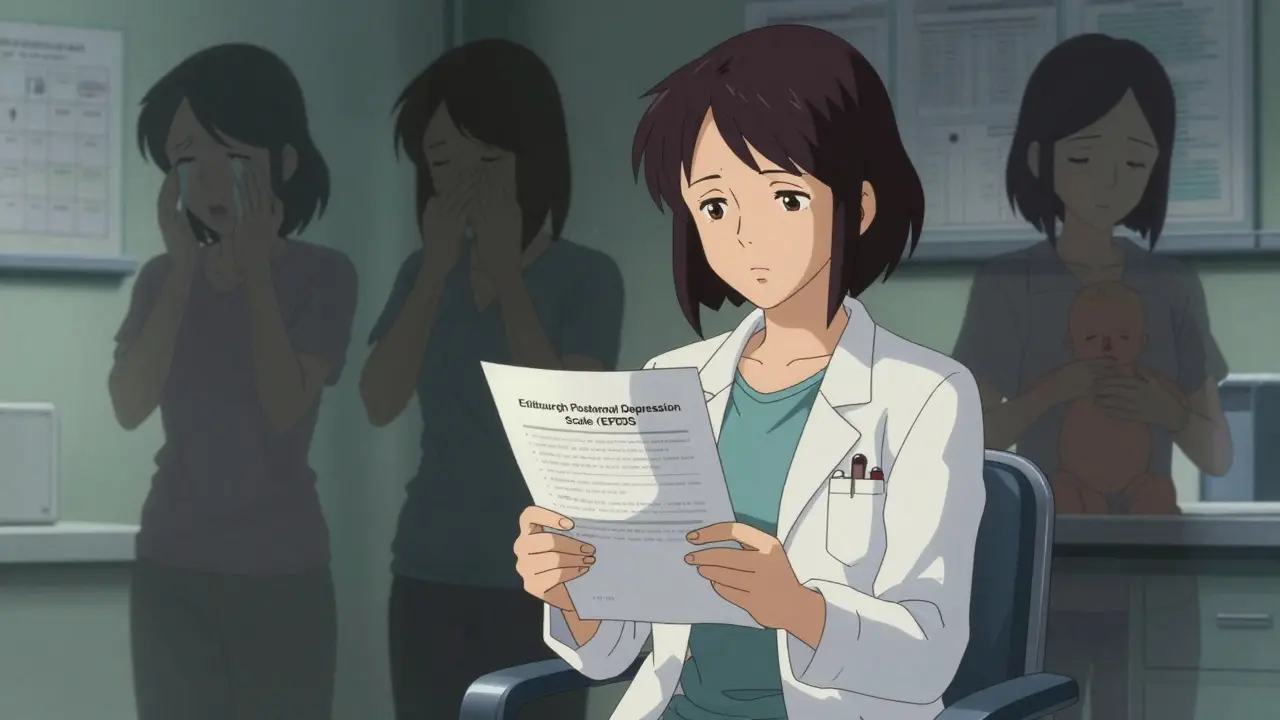
That’s why screening is so critical. The EPDS, used in most OB-GYN offices, was originally designed to catch depression. But it’s still the most common tool. A score above 10 raises a red flag. But here’s the problem: it only catches 92% of anxiety cases - and misses nearly a third of them because it doesn’t ask the right questions.
That’s changing. In 2023, the EPDS was updated to include specific anxiety subscales. Now, providers can ask targeted questions like: "Have you felt tense or wound up?" or "Have you had a sense of impending doom?" This new version catches anxiety with 89% accuracy.
Another tool, the GAD-7 (Generalized Anxiety Disorder scale), is more precise for anxiety alone. It’s 89% sensitive and 84% specific - meaning it’s good at spotting real cases and avoiding false alarms.
Yet, despite these tools, 63% of cases are still misdiagnosed as "just stress." The average delay in getting help? 11.3 weeks. That’s over two and a half months of suffering - while your brain and body stay stuck in fight-or-flight mode.
What Causes It? Risk Factors You Should Know
It’s not your fault. But understanding what increases your risk can help you get ahead of it.
- If you’ve had an anxiety disorder before pregnancy, your risk jumps 3.2 times.
- If you’ve had a pregnancy loss, your risk is 2.7 times higher.
- If your baby had medical problems after birth, your risk goes up 2.4 times.
- If you had postpartum depression after a previous birth, your risk is nearly four times greater.
Other factors play a role too: lack of support, financial stress, a traumatic birth, or being a single parent. It’s not about being "weak" or "overreacting." It’s about biology, history, and environment colliding at a time when your body is changing faster than ever.
Care Pathways: What Works - and What Doesn’t
Treatment isn’t one-size-fits-all. It’s layered, based on how severe your symptoms are.
Mild Cases (EPDS 10-12)
For women with mild anxiety, therapy and lifestyle changes are often enough. Cognitive Behavioral Therapy (CBT) is the gold standard - it helps you challenge those racing thoughts and replace them with realistic ones. A 12- to 16-session CBT program works for 57% of new moms.
But you don’t need to wait for therapy to start feeling better. Simple habits make a difference:
- Thirty minutes of daily walking reduces anxiety scores by 28% in eight weeks.
- Yoga, even just twice a week, cuts symptoms by 33% in clinical trials.
- Getting 20 minutes of sunlight each day helps regulate your nervous system.
Moderate Cases (EPDS 13-14)
Here, CBT is essential - but it’s often not enough alone. Many women need medication. SSRIs like sertraline are the first-line treatment, even though they’re not FDA-approved specifically for postpartum anxiety. Why? Because they’re the safest and best-studied option for breastfeeding moms.
Sertraline transfers to breast milk at just 0.3% of the maternal dose. And 64% of women see significant improvement within eight weeks.
But here’s the catch: SSRIs take 4 to 6 weeks to work. That’s a long time to wait when you’re in panic mode. That’s why mindfulness training is so valuable during this window. Daily mindfulness practice - even just 10 minutes - reduces anxiety symptoms by 41% in two weeks.
Severe Cases (EPDS 15+)
If you’re having panic attacks daily, can’t leave the house, or have thoughts of harming yourself, you need a team. That means a psychiatrist, a therapist, and a support group.
Combining CBT with medication is the most effective approach. CBT alone helps 34-41% of women. Add an SSRI? That jumps to 62-68%.
There’s also new hope on the horizon. Brexanolone (Zulresso), approved for postpartum depression, is now being tested for anxiety. Early trials show a 72% response rate in just 60 hours - far faster than traditional meds.
Support Is Part of Treatment
Isolation makes anxiety worse. Connection heals it.
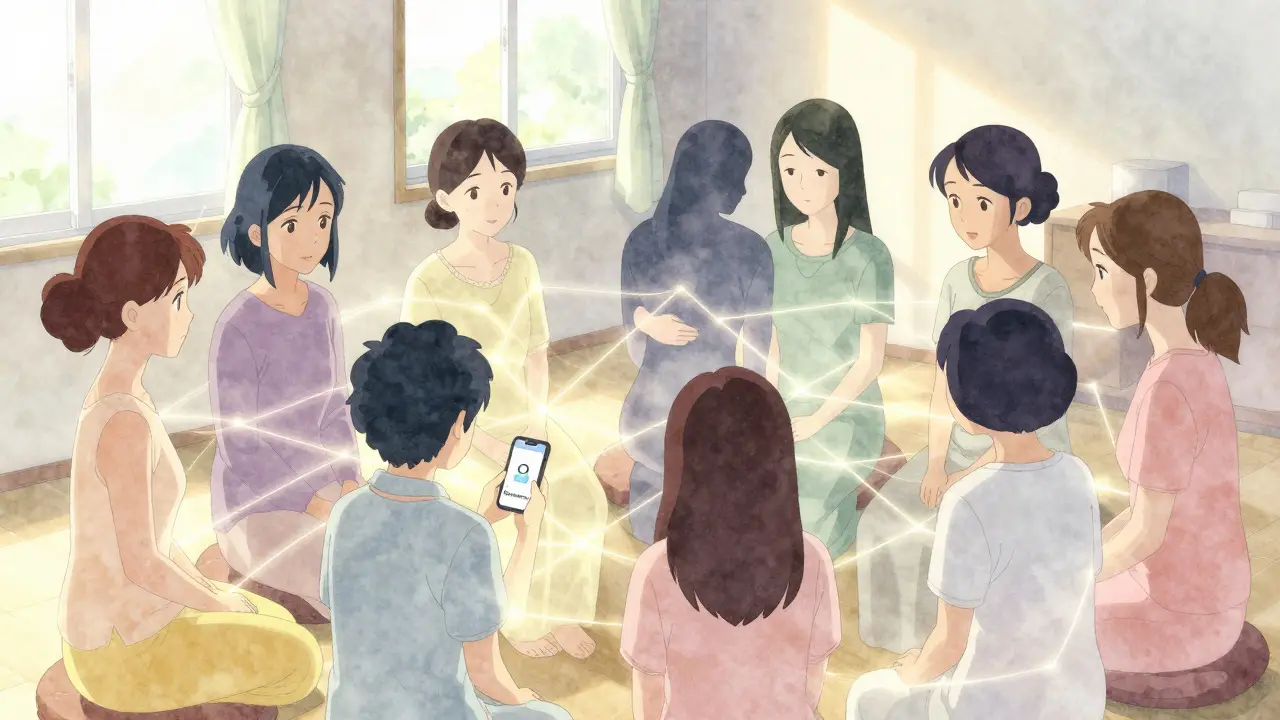
Programs like The Women’s Place at Texas Children’s Pavilion for Women offer more than therapy. They offer community. New mom groups, peer support, and medication management - all under one roof. Women who join these groups are 58% more likely to stick with treatment.
You don’t have to go it alone. Online groups, local parenting centers, and even text-based support apps like MoodMission - an FDA-cleared tool that delivers CBT exercises - can be lifelines. In a trial of 328 women, MoodMission reduced anxiety symptoms by 53% over eight weeks.
Why So Few Get Help - And What’s Changing
Only 15% of women with postpartum anxiety get proper care. Why?
Stigma. Lack of screening. No access. Rural hospitals? Only 17% offer specialized perinatal mental health services. Insurance? Coverage jumped from 38% to 79% after new billing codes were added in 2021 - but many providers still don’t know how to use them.
But things are shifting. Universal screening is now used in 67% of obstetric practices - up from just 12% in 2015. The American College of Obstetricians and Gynecologists pushed for this change in 2018. Hospitals are hiring perinatal mental health specialists. And more insurance plans are covering therapy and medication.
By 2027, the American Psychiatric Association predicts a 25% increase in specialized services. The demand is there. The data is clear. The solutions exist.
You’re Not Broken - You’re Healing
If you’re reading this and nodding along, you’re not failing. You’re not weak. You’re not a bad mom. You’re someone who needs support - and you deserve it.
Postpartum anxiety doesn’t mean you’ve lost control. It means your body is trying to protect you - but it’s stuck in the wrong mode. And like any system that’s malfunctioning, it can be recalibrated.
Start with one step: Tell someone. Your partner. Your doctor. A friend. A text to a stranger in a mom group. Just say: "I’m not okay."
That’s the first dose of healing.
Is postpartum anxiety the same as postpartum depression?
No. While they often occur together, they’re different. Postpartum depression is marked by sadness, hopelessness, and loss of interest. Postpartum anxiety is defined by excessive worry, racing thoughts, panic attacks, and physical symptoms like a racing heart or nausea. One is about feeling down; the other is about feeling overwhelmed and on edge.
Can I take medication while breastfeeding?
Yes, many medications are safe. Sertraline is the most commonly prescribed SSRI for breastfeeding mothers because only 0.3% of the dose passes into breast milk. Other options like escitalopram are also considered low-risk. Always work with a psychiatrist who specializes in perinatal care - they’ll match the medication to your needs and your baby’s safety.
How long does postpartum anxiety last?
Without treatment, it can last up to a year - or longer. But with proper care, most women see significant improvement within 8 to 12 weeks. Some feel better in just a few weeks with therapy and lifestyle changes. The key is early intervention. The longer it goes untreated, the harder it is to reverse.
Are intrusive thoughts dangerous?
No. Intrusive thoughts - like imagining your baby falling or getting sick - are a hallmark of postpartum anxiety, not a sign you’ll act on them. In fact, the fact that these thoughts upset you so much proves you’re not a threat. People with postpartum psychosis, a rare and different condition, may not feel distress about these thoughts. If you’re horrified by your thoughts, you’re not alone - and you’re not dangerous.
Can I prevent postpartum anxiety?
You can’t always prevent it - especially if you have a history of anxiety or trauma. But you can reduce your risk. Talk to your provider before birth if you’ve had anxiety before. Build a support plan. Prioritize sleep, movement, and connection. Don’t wait until you’re overwhelmed to ask for help. Early screening and proactive care make a huge difference.
Where can I find help?
Start with your OB-GYN or midwife - ask for a mental health screening. Many hospitals now have perinatal mental health programs. Online, organizations like Postpartum Support International offer free helplines and local resource directories. Apps like MoodMission provide CBT tools on your phone. You don’t need to figure this out alone.
What Comes Next
If you’re struggling, don’t wait for it to get worse. Call your provider. Text a friend. Download an app. Go to a group. Healing doesn’t start with a miracle. It starts with one small step - and you’ve already taken it by reading this.
You’re not alone. And you’re not broken. You’re a new parent - and you deserve care, not silence.
Virginia Seitz
December 16, 2025 AT 11:24Thank you for this. I didn’t know I wasn’t crazy. Just tired. And scared. And alone. 🙏
Brooks Beveridge
December 16, 2025 AT 21:36You’re not broken. You’re not failing. You’re just human. And this? This is one of the most important things I’ve read all year. If you’re reading this and nodding - you’ve already taken the first step. Now reach out. Someone’s waiting to say, ‘Me too.’
Steven Lavoie
December 18, 2025 AT 05:46The data here is meticulously cited and clinically grounded. I appreciate the distinction between EPDS scores for anxiety-only versus comorbid anxiety-depression. The 14.7 threshold is particularly telling. It underscores the necessity of dual-symptom screening protocols in perinatal care - something still underutilized in rural clinics. The inclusion of GAD-7 alongside updated EPDS is a significant advancement. We need standardized implementation across OB-GYN workflows, not just in academic centers.
Naomi Lopez
December 18, 2025 AT 22:11So many women are told to ‘just relax’ or ‘it’s just hormones.’ But this isn’t about being dramatic - it’s about neurobiology. The fact that intrusive thoughts are a symptom, not a character flaw, needs to be screamed from rooftops. I’m glad someone finally wrote this with clarity.
Sachin Bhorde
December 19, 2025 AT 06:26Bro, sertraline is low-risk for breastfeeding? Yeah, but what about the long-term neurodevelopmental data? I read a meta-analysis last month that showed subtle motor delays in kids exposed to SSRIs in utero + postpartum. Not saying don’t take it - but we need more transparency. Also, CBT? Great. But what if you’re broke and can’t afford 16 sessions? Access is still a joke.
Peter Ronai
December 20, 2025 AT 02:15Oh please. Another ‘postpartum anxiety is real’ PSA. Newsflash: EVERYONE is stressed after a baby. My wife cried for three weeks because she couldn’t find her damn socks. She didn’t need therapy - she needed a nap and a coffee. Stop medicalizing normal exhaustion. This is just woke culture turning motherhood into a pathology.
Chris Van Horn
December 21, 2025 AT 20:21While your article is commendably thorough, it lacks critical engagement with the epistemological framework of postpartum mental health discourse. The conflation of phenomenological experience with diagnostic taxonomy - particularly the uncritical adoption of the EPDS as a proxy for anxiety - perpetuates a biomedical hegemony that pathologizes adaptive maternal vigilance. One must interrogate the neoliberal underpinnings of ‘screening protocols’ that reduce embodied trauma to quantifiable metrics. Moreover, the privileging of SSRIs as ‘first-line’ ignores the ontological violence of pharmacological intervention in the lactating body. A phenomenological, hermeneutic approach - grounded in maternal testimony rather than DSM criteria - is urgently required.
Marie Mee
December 22, 2025 AT 01:29Did you know the government is using these anxiety screenings to track moms and take kids away? I heard it on a podcast. They put a chip in the EPDS form. They’re building a database. That’s why they push it so hard. Don’t let them trick you. Your baby is safe. You’re not broken. You’re being watched.
Salome Perez
December 22, 2025 AT 05:47This is a masterpiece of compassionate, evidence-based writing. The clarity with which you distinguish anxiety from depression - especially the visceral descriptions of racing heart versus crushing heaviness - is nothing short of art. The inclusion of community-based interventions like MoodMission and The Women’s Place offers not just hope, but actionable pathways. This should be required reading for every OB-GYN, pediatrician, and doula in the country. Thank you for refusing to let silence win.
Michael Whitaker
December 22, 2025 AT 11:18As someone who studied neuroendocrinology at Stanford, I must say: the article’s reliance on self-reported EPDS scores is methodologically unsound. Without cortisol assays or HRV monitoring, we’re measuring perception, not physiology. And while SSRIs are ‘safe’ in breast milk, the pharmacokinetic variability across lactating women is rarely accounted for. I’ve seen cases where 0.3% became 2.1% due to CYP2D6 polymorphisms. This isn’t just ‘trust your doctor’ - it’s precision medicine territory. Why aren’t we talking about genetic screening before prescribing?
Anu radha
December 23, 2025 AT 17:16I had this after my baby. No one understood. I thought I was bad mom. I just smiled and nodded. Now I know. I’m not alone. Thank you.
Jigar shah
December 24, 2025 AT 08:11Interesting. In India, we rarely talk about postpartum anxiety - it’s usually dismissed as ‘maan ki takleef’ or ‘stress from in-laws.’ But the physical symptoms you describe - the racing heart, the nausea - match what my cousin experienced. She was told to drink turmeric milk and ‘stop overthinking.’ I’ll share this with her. Maybe it’ll help her ask for real help.
Joe Bartlett
December 24, 2025 AT 16:56Yep. We need more of this. In the UK, they’ve started training midwives in basic anxiety screening. Took ages, but it’s happening. Still, GPs act like it’s a phase. It’s not. My sister had panic attacks every time her baby cried. She thought she was losing it. Turned out she just needed CBT and a bloody listening ear.
Kent Peterson
December 24, 2025 AT 23:22...This article... is... *too*... thorough... I mean... really... I mean... it’s... overwhelming... like... the whole thing... is... just... a... marketing... ploy... by... Big... Pharma... and... the... therapy... industrial... complex... to... sell... more... drugs... and... sessions... and... apps... and... you... know... what... I... think... we... just... need... to... stop... overthinking... and... let... nature... take... its... course... right?...?
amanda s
December 25, 2025 AT 04:57So you’re telling me a woman who can’t sleep because she’s terrified her baby will stop breathing is ‘normal’? That’s not anxiety - that’s a failure of society. We don’t have paid parental leave. We don’t have childcare. We don’t have support. We have a 10-minute OB visit and a pamphlet. This isn’t a mental health issue - it’s a systemic failure. And you’re just telling women to take a pill and do yoga? That’s not care. That’s negligence dressed up as compassion.