

Postpartum Anxiety: Recognizing Symptoms, Screening Tools, and Effective Care Paths
 Dec, 15 2025
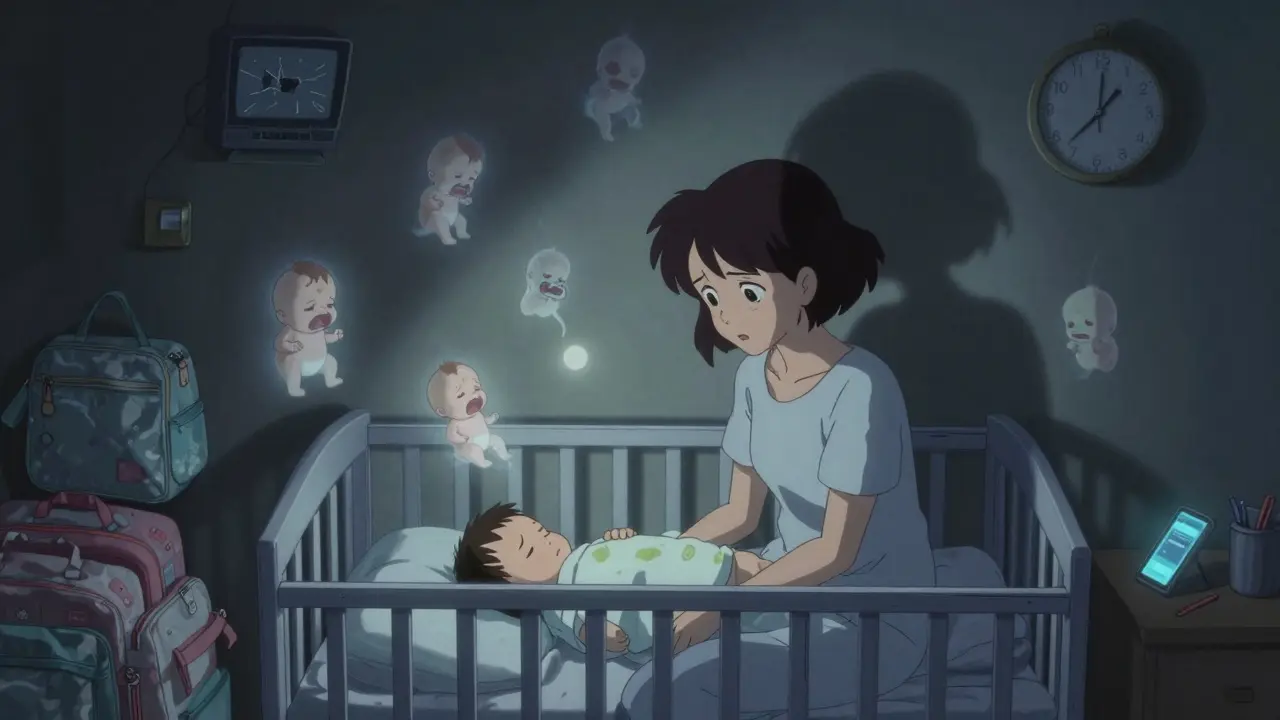
One in five new mothers experiences postpartum anxiety-yet most don’t realize what they’re going through. It’s not the fleeting worry of a sleepless night or the occasional tearful moment after birth. This is a persistent, overwhelming sense of dread that doesn’t fade. It’s the heart racing at 3 a.m. even when the baby is sleeping. It’s the panic when the baby cries too long-or not at all. It’s the intrusive thoughts that feel impossible to shake. And it’s far more common than people admit.
What Postpartum Anxiety Actually Feels Like
Postpartum anxiety isn’t just being tired or overwhelmed. It’s a clinical condition that lasts beyond two weeks and interferes with daily life. Unlike the baby blues, which peak around day five and fade by two weeks, postpartum anxiety sticks around. It can start within days of delivery-or even months later. Some women notice it after a difficult birth, others after a premature baby’s hospital stay, and some with no obvious trigger at all. Common symptoms include:- Constant racing thoughts, especially about the baby’s safety
- Physical signs like heart palpitations (reported in 62% of cases), nausea (47%), or dizziness
- Trouble sleeping-even when the baby is asleep
- Irritability or anger over small things
- Panic attacks (28-35% of cases), sometimes with chest tightness or feeling like you’re choking
- Loss of appetite or constant need to check on the baby
- Intrusive thoughts about harm coming to the baby, even though you’d never act on them
How It’s Different From Baby Blues and Postpartum Depression
It’s easy to confuse postpartum anxiety with other postpartum conditions. Here’s how they differ:- Baby blues: Mood swings, crying spells, fatigue. Lasts under two weeks. Affects 70-80% of new mothers. No need for treatment-just time and support.
- Postpartum depression: Persistent sadness, hopelessness, loss of interest, guilt. Often includes fatigue and trouble bonding with the baby.
- Postpartum anxiety: Dominated by worry, physical tension, panic, and obsessive thoughts. Sleep may be disrupted not from exhaustion, but from racing thoughts. Physical symptoms are more prominent than sadness.
Screening: The Edinburgh Scale and Beyond
There’s no blood test or brain scan for postpartum anxiety. Diagnosis comes from asking the right questions. The Edinburgh Postnatal Depression Scale (EPDS) is the most widely used tool. But here’s what most providers don’t tell you: the original EPDS was designed for depression. Women with pure anxiety score around 9.8 on average-higher than the normal range (6.2) but lower than depression-only cases (11.3). When anxiety and depression are both present, scores jump to 14.7. In 2023, the EPDS was updated to include a separate anxiety subscale. This improves accuracy-now it correctly identifies anxiety in 89% of cases. Another tool gaining traction is the Generalized Anxiety Disorder-7 (GAD-7). It’s shorter and more focused on anxiety symptoms. It catches 89% of cases with 84% accuracy-better than the EPDS alone. Despite these tools, 63% of cases go undetected. Why? Because many women don’t recognize their symptoms as anxiety. They think they’re just "stressed" or "overreacting." Providers sometimes miss it too, assuming all postpartum distress is depression.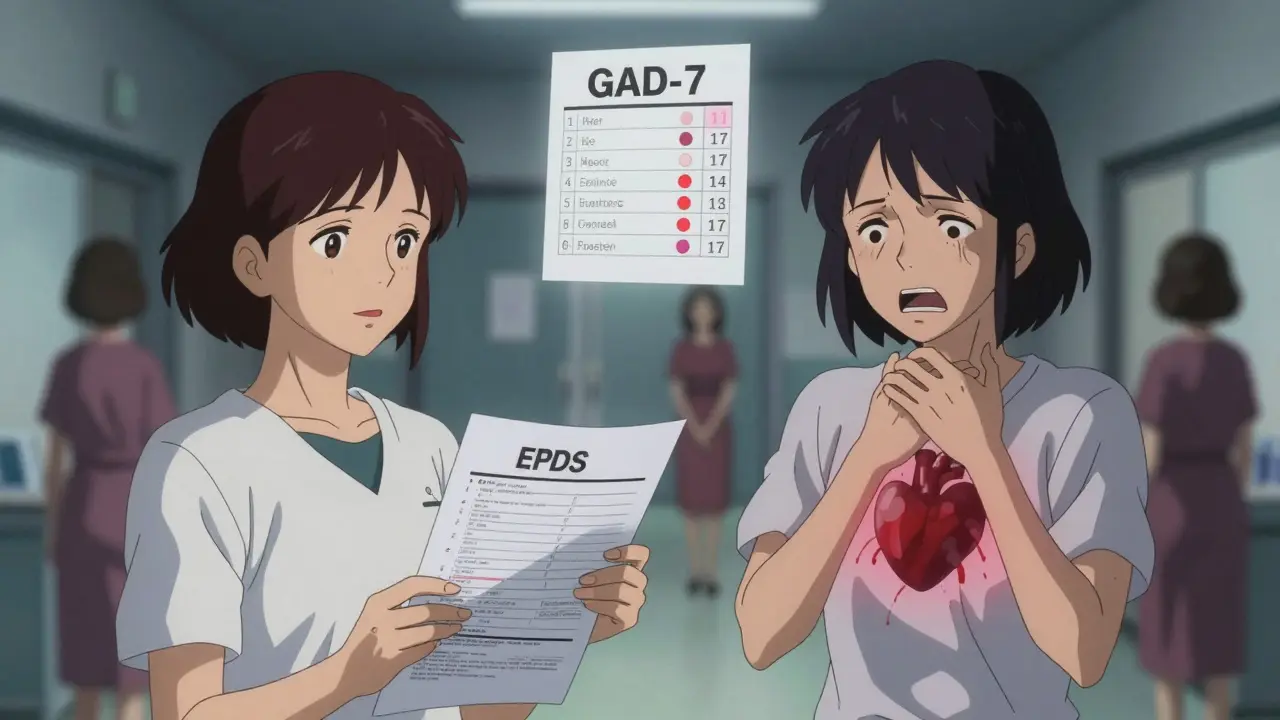
Risk Factors: Who’s Most Likely to Experience It
Some women are at much higher risk:- Previous anxiety disorder: 3.2 times more likely
- History of pregnancy loss: 2.7 times more likely
- Previous infant medical complications: 2.4 times more likely
- Previous postpartum depression: 3.8 times more likely
How It’s Treated: From Therapy to Medication
Treatment isn’t one-size-fits-all. It’s based on severity, measured by EPDS scores:- Mild (EPDS 10-12): Therapy and lifestyle changes. Daily 30-minute walks reduce anxiety by 28% in eight weeks. Yoga lowers symptoms by 33% in clinical trials. Mindfulness apps like MoodMission-FDA-cleared and tested on 328 postpartum women-cut anxiety by 53%.
- Moderate (EPDS 13-14): Cognitive Behavioral Therapy (CBT). Twelve to sixteen sessions with a trained therapist show 57% effectiveness. CBT helps rewire thought patterns: "What if the baby stops breathing?" becomes "I’ve checked three times. The monitor is working. This is anxiety talking."
- Severe (EPDS ≥15): Medication + therapy. SSRIs like sertraline are first-line. Though not FDA-approved specifically for postpartum anxiety, they’re used because they’re safe in breastfeeding. Only 0.3% of the dose passes into breastmilk. Response rate: 64% by eight weeks. It takes 4-6 weeks to work, so therapy and mindfulness help bridge the gap.
What’s Changing in Care
The field is evolving fast. In 2015, only 12% of U.S. hospitals screened for postpartum anxiety. By 2023, that number jumped to 67%, thanks to guidelines from the American College of Obstetricians and Gynecologists (ACOG). Insurance coverage has improved too. With new CPT billing codes (90834, 90837), 79% of cases are now covered-up from 38% in 2021. New treatments are on the horizon. Brexanolone (Zulresso), approved for postpartum depression, is being studied for anxiety. Early trials show a 72% response rate in just 60 hours-far faster than SSRIs. Digital tools are filling gaps. Apps like MoodMission offer CBT exercises on your phone. Online support groups reduce isolation. Hospitals like Texas Children’s Pavilion for Women now offer full programs: psychiatric consults, medication management, and peer-led new mom groups. Women in these programs stick with treatment 58% more often.
Why So Few Get Help
Despite all this progress, only 15% of women with postpartum anxiety get proper care. Why?- Stigma: Fear of being seen as unfit or "crazy."
- Underdiagnosis: Symptoms get dismissed as "normal stress."
- Access: Only 17% of rural hospitals offer perinatal mental health services.
- Wait times: Average treatment gap is six months.
What You Can Do Now
If you’re struggling:- Don’t wait for your six-week checkup. Call your provider now.
- Ask: "Could this be postpartum anxiety?" Mention specific symptoms: racing heart, panic, intrusive thoughts.
- Request the EPDS or GAD-7 screening.
- Start small: 10 minutes of walking, one breathing exercise, one text to a friend.
- Find support: Postpartum Support International (PSI) offers free helplines and local groups.
- Don’t say, "You’re just tired." Say, "I’ve noticed you seem really overwhelmed. I’m here."
- Help with chores, meals, or baby care so she can rest-or just sit quietly.
- Encourage her to talk to a professional. Offer to make the call with her.
Recovery Is Possible
Postpartum anxiety doesn’t mean you’re failing as a mother. It means your body and mind are under pressure-and they need support. With the right care, symptoms improve. Many women report feeling like themselves again within weeks. Bonds with their babies grow stronger. Sleep returns. The panic fades. This isn’t about being perfect. It’s about being human. And asking for help isn’t weakness-it’s the bravest thing you can do.Is postpartum anxiety the same as postpartum depression?
No. While they often occur together, they’re different. Postpartum depression is marked by sadness, hopelessness, and loss of interest. Postpartum anxiety is defined by excessive worry, physical tension, panic attacks, and intrusive thoughts. A woman can have one, both, or neither. Screening tools now look for both conditions separately to ensure accurate treatment.
Can I take medication for postpartum anxiety while breastfeeding?
Yes. SSRIs like sertraline are considered safe for breastfeeding. Only about 0.3% of the maternal dose passes into breastmilk-far below levels shown to affect infants. The benefits of treating anxiety usually outweigh the minimal risks. Always discuss options with your provider, but don’t avoid treatment out of fear-untreated anxiety can impact bonding and infant development more than medication.
How long does postpartum anxiety last?
It can last up to a year if untreated. But with proper care, most women see improvement within 4-8 weeks. Therapy and medication help rewire the brain’s stress response. Some symptoms fade faster with lifestyle changes like walking, yoga, or mindfulness. Recovery isn’t linear-some days are harder-but the trend is upward with consistent support.
Can postpartum anxiety harm my baby?
Untreated, yes. Chronic maternal anxiety can affect infant development, including emotional regulation and attachment. Babies of anxious mothers may cry more, have trouble sleeping, or show delays in social responses. But treatment reverses these risks. When anxiety is managed, bonding improves, and infants thrive. Getting help isn’t just for you-it’s for your child too.
What if I’m adopted a baby? Can I still get postpartum anxiety?
Absolutely. Postpartum anxiety isn’t tied to childbirth-it’s tied to becoming a parent. The hormonal shifts, sleep deprivation, and intense responsibility are the same whether you gave birth or adopted. Studies show adoptive parents experience similar rates of anxiety. Screening and treatment apply equally.
Why isn’t there a pill specifically approved for postpartum anxiety?
There’s no FDA-approved medication labeled specifically for "postpartum anxiety," but that’s because most drugs are tested for general anxiety disorders. SSRIs like sertraline and escitalopram are used off-label and have strong evidence for safety and effectiveness in perinatal women. The FDA is currently reviewing brexanolone for this use, which could change things soon. The real issue isn’t lack of options-it’s lack of awareness and access.
Can I prevent postpartum anxiety?
You can’t always prevent it, especially if you have risk factors like prior anxiety or trauma. But you can reduce your chances. Talk to your provider before birth if you’ve struggled before. Build a support system. Plan for help after delivery. Practice mindfulness or breathing techniques during pregnancy. Early screening and quick action after birth make the biggest difference.
Jane Wei
December 16, 2025 AT 14:50Been there. Three a.m. heart pounding like I was running from something. Turned out it was just my brain screaming at me over a sneeze.
Salome Perez
December 17, 2025 AT 00:48What a profoundly necessary piece-this is not merely medical information, but a cultural reckoning with how we silence maternal distress. The EPDS update alone deserves a standing ovation in every OB-GYN’s office. We must normalize asking, ‘Is this anxiety?’-not ‘Are you okay?’
For those reading this and feeling shame: your nervous system is not broken. It is hyper-alert, honed by evolution to protect the vulnerable. You are not failing. You are surviving.
And to providers: stop treating postpartum distress as a monolith. Anxiety isn’t depression with extra caffeine. It’s a different language-and we must learn to listen.
Jody Patrick
December 18, 2025 AT 09:16Stop overmedicating moms. This is just stress. You’re making it worse.
Josh Potter
December 19, 2025 AT 02:58bro i had this so bad i started checking the baby’s chest every 10 mins like a paranoid robot. then i downloaded moodmission and now i breathe like a zen monk. also i cried during a commercial for laundry detergent. it’s fine. you’re fine.
Naomi Lopez
December 19, 2025 AT 06:36It’s fascinating how the medical establishment only began to take postpartum anxiety seriously after it became quantifiable-after the EPDS was revised, after insurance codes were created. The human experience was always there. But until it could be coded and billed, it was invisible.
And yet, we still treat it as a niche concern. It’s not. It’s a systemic failure of care infrastructure, not a personal failure of resilience. The fact that 63% go undiagnosed isn’t a statistic-it’s an indictment.
Let’s not romanticize ‘toughing it out.’ We don’t tell someone with a broken leg to walk it off. Why do we do this with anxiety?
Victoria Rogers
December 21, 2025 AT 02:57everyone's so quick to say 'it's anxiety' now. i had a friend who just didn't like her baby and called it postpartum anxiety. it's not a catch-all for bad parenting. people need to stop blaming biology for their choices.
Evelyn Vélez Mejía
December 21, 2025 AT 07:17The conflation of maternal suffering with moral failure is not accidental-it is structural. We have constructed a myth of the effortlessly joyful mother, and those who deviate from it are either pathologized or punished.
Postpartum anxiety is not a deviation from motherhood. It is a legitimate physiological response to an unprecedented biological and social rupture.
When we reduce it to a checklist of symptoms and a pill, we ignore the deeper truth: that motherhood, in its current form, is an unregulated, under-supported, emotionally lethal labor.
Medication helps. Therapy helps. But until we redesign the postpartum experience-to include paid leave, community care, and the dismantling of the ‘supermom’ ideal-we are merely bandaging a wound we refuse to stop inflicting.
Nishant Desae
December 22, 2025 AT 05:25as a dad from india, i read this and felt so much. my wife went through this after our daughter was born, but no one talked about it. we thought she was just tired. i didn't know what to do. i just held her at night while she cried. now i know it was anxiety. thank you for writing this. i wish more men knew this. even in my village, people say 'women cry after baby, it's normal'. but it's not always normal. it's okay to ask for help. i wish i knew sooner.
Kaylee Esdale
December 22, 2025 AT 07:45my sister had this. she didn't tell anyone for months. she thought she was just being dramatic. then one day she said, 'i'm scared of my own thoughts'. that's when we got her help. it changed everything. you're not alone. just say it out loud. even once. it helps.
Philippa Skiadopoulou
December 22, 2025 AT 23:15The data presented is compelling and aligns with recent UK perinatal mental health guidelines. The GAD-7’s sensitivity in this population is particularly valuable given its brevity and cultural neutrality. However, accessibility remains the critical barrier. Without universal screening protocols and trained personnel in primary care, even the most accurate tools remain ineffective.
Meghan O'Shaughnessy
December 23, 2025 AT 18:58my cousin adopted a baby last year. she had the exact same symptoms. no hormones, no birth trauma, just pure overwhelming fear. no one told her it could happen to her. she felt so alone. this article should be mandatory reading for all adoptive parents.
Radhika M
December 24, 2025 AT 15:13in india, we don't talk about this. moms are told to just pray and rest. but my friend had panic attacks after her baby was born. she went to a doctor and they gave her medicine. she felt better in weeks. it's okay to need help. you're not weak.
Kent Peterson
December 25, 2025 AT 07:33Why are we giving women pills for normal stress? This is just a liberal medicalization of motherhood. Back in my day, we didn't have apps or therapists-we had grit. Now we’re turning every tear into a diagnosis. The real problem? Too many women are being told they’re broken when they’re just tired.