

Patient Trust: Building Confidence in Generic Medications
 Feb, 16 2026
More than 9 out of 10 prescriptions filled in the U.S. are for generic medications. Yet, many patients still hesitate-wondering if the cheaper version really works the same. Why does this gap exist when science says generics are just as safe and effective? The answer isn’t about chemistry. It’s about trust.
What Generic Medications Really Are
Generic drugs aren’t knockoffs. They’re not second-rate. They’re exact copies of brand-name drugs in every way that matters: same active ingredient, same dose, same way of taking it, same effect on your body. The FDA requires them to deliver between 80% and 125% of the brand’s performance in your bloodstream. That’s not a guess. It’s a strict, measurable standard. If a generic doesn’t meet this, it doesn’t get approved.
For example, if you switch from brand-name Lipitor to generic atorvastatin, your cholesterol levels won’t change because the drug in your blood is identical. The same goes for blood pressure meds like lisinopril, diabetes drugs like metformin, or even antidepressants like sertraline. The FDA doesn’t approve generics based on hope. It’s based on hard data from clinical tests.
Why People Don’t Trust Them
Trust issues aren’t about science-they’re about perception. Many patients believe generics are less effective because they look different. A blue pill today might be white tomorrow. The shape changes. The imprint on the pill is different. That’s because generics use different inactive ingredients-fillers, dyes, coatings-that don’t affect how the drug works but do change how it looks.
One study found that 42.7% of patients who switched to generics felt uneasy simply because the pill looked unfamiliar. Others worry about side effects. A Reddit user wrote, “My generic Lyrica made me nauseous when the brand never did.” But here’s the catch: that nausea might not be from the active drug. It could be from a new filler or coating. Still, the brain links the new feeling to the new pill-and that’s enough to make someone refuse to take it again.
Older adults are more likely to trust generics-71.4% of those over 60 say they’re safe. But younger people? They’re more skeptical. Why? Maybe because they’ve seen more ads for brand-name drugs. Maybe because they’ve heard stories. Or maybe because they don’t understand how the FDA approves these drugs in the first place.
The Role of Doctors and Pharmacists
Who you trust matters more than what you read. A 2024 study showed that 87.6% of a patient’s decision to accept a generic comes down to whether their doctor recommended it. If your doctor says, “This generic is just as good,” you’re far more likely to believe them than a billboard or a TV ad.
But not all providers are equally confident. Some doctors still default to brand-name prescriptions out of habit-even when a generic is available. That sends a message: “I don’t fully trust this either.”
Pharmacists play a huge role too. In states where pharmacists can substitute generics automatically, patients often don’t even know they got a different pill. That’s fine-if they trust the system. But if they’re surprised when they pick up their prescription and the pill looks different, that’s when confusion and distrust creep in.
Health systems like Kaiser Permanente and Mayo Clinic have tackled this head-on. Kaiser’s “Generic Medication Education Toolkit” uses simple visuals-side-by-side comparisons of brand and generic pills, diagrams of how the drug works in the body, and real patient stories. Result? A 37% drop in patients refusing generics. Mayo Clinic trains pharmacists to spend 10-15 minutes with each patient explaining bioequivalence. Satisfaction? 92%.
Cost Isn’t Just Money-It’s Peace of Mind
Generics cost 80-85% less. That’s not a small difference. For someone on Medicare, switching from brand-name Eliquis to generic apixaban can save over $1,200 a year. For a family on a tight budget, that’s rent, groceries, or a co-pay for a child’s asthma inhaler.
But cost alone doesn’t build trust. You can’t just say, “It’s cheaper,” and expect people to feel better. You have to show them why it’s just as good. One patient on Reddit shared: “I switched my mom from brand Synthroid to generic levothyroxine. Her TSH stayed stable for two years. We saved $300 a year.” That’s the kind of story that sticks.
The problem? Most people don’t hear these stories. They hear the fear: “What if it doesn’t work?” “What if I have a reaction?” That’s why education has to be personal, not just pamphlets in a waiting room.
What’s Being Done to Fix This
The FDA launched “Know Your Options” in January 2024-a $15 million campaign to clear up myths. One myth they’re tackling: “Generics only have 80% of the active ingredient.” That’s false. The FDA requires 90-110% equivalence. That’s tighter than many brand-name drugs are held to.
Pharmacy chains are stepping up too. CVS is testing AI tools that look at your prescription history and send you a personalized message: “You’ve taken this generic for 6 months with no issues. Here’s what that means for you.”
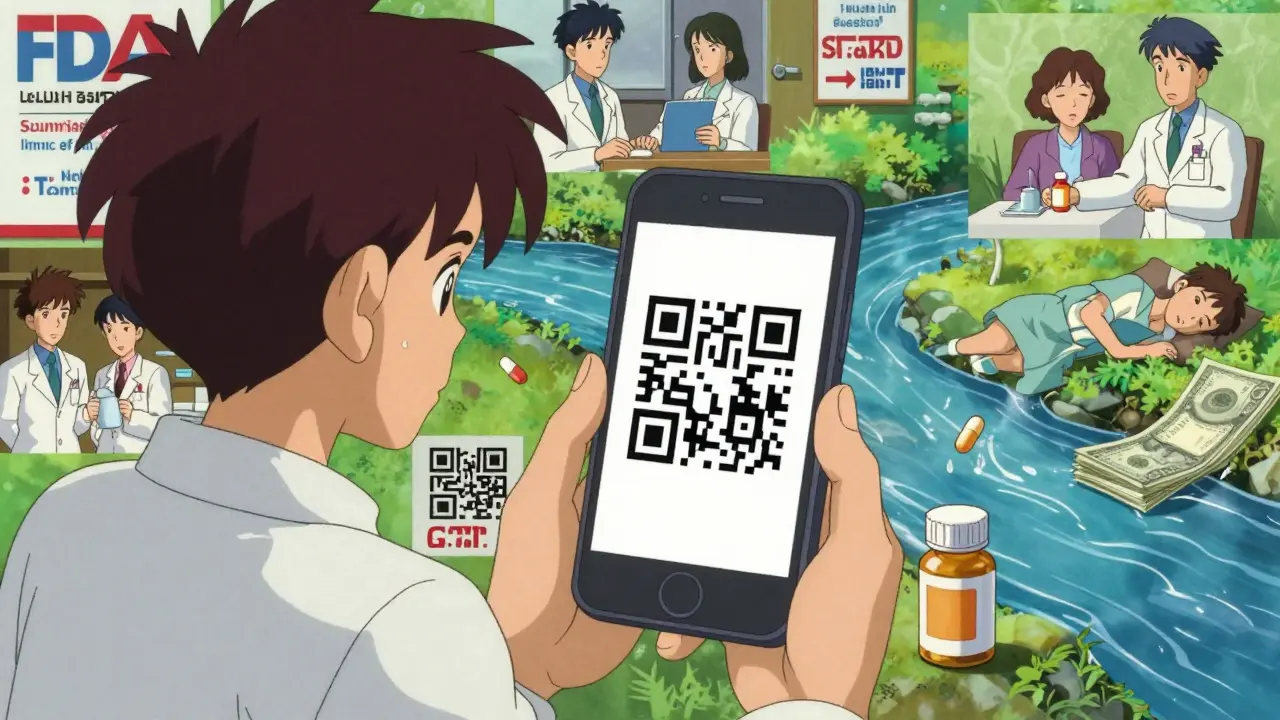
Manufacturers are adding QR codes to pill bottles by 2025. Scan it, and you’ll see the drug’s FDA approval number, the manufacturing site, and even a short video explaining how generics work. Transparency is becoming part of the product.
How to Build Your Own Trust
If you’re unsure about a generic:
- Ask your doctor: “Is this generic exactly the same as the brand?”
- Ask your pharmacist: “Why does this pill look different?”
- Check the FDA’s website: They list approved generics with links to the original brand.
- Monitor how you feel: If your symptoms stay controlled and you have no new side effects, it’s working.
- Don’t assume a change in pill appearance means a change in effect.
Most people who switch and stick with generics find no difference. The data is clear. The science is solid. The savings are real. What’s missing is the confidence to believe it.
The Bigger Picture
Generics aren’t just a cost-saving trick. They’re a lifeline. In 2023, they saved Americans over $300 billion in healthcare spending. That’s money that goes to other care-mental health visits, cancer screenings, insulin for children.
But if patients keep refusing them because of myths, we lose that potential. The goal isn’t to push generics. It’s to make sure people understand them. When trust is built-not forced-people choose generics not because they have to, but because they know they’re getting the same medicine, at a fraction of the price.
Are generic medications as safe as brand-name drugs?
Yes. The FDA requires generic drugs to meet the same strict safety and effectiveness standards as brand-name drugs. They must contain the same active ingredient, in the same strength, and work the same way in the body. The only differences are in inactive ingredients like color, shape, or flavor-which don’t affect how the drug works. Over 90% of prescriptions in the U.S. are for generics, and millions of people use them safely every day.
Why do generic pills look different from brand-name ones?
Generic manufacturers use different inactive ingredients-like dyes, fillers, or coatings-to avoid copying the brand’s exact appearance, which is protected by trademark law. These differences don’t affect how the drug works. A blue pill and a white pill with the same active ingredient will have the same effect. If you notice a change in appearance, it’s normal and doesn’t mean the drug is weaker or less safe.
Can switching to a generic cause side effects?
Rarely. If you experience new side effects after switching, it’s likely due to a change in inactive ingredients, not the active drug. For example, someone might be sensitive to a dye in the generic version. In those cases, talk to your doctor or pharmacist. They can try a different generic manufacturer or switch back to the brand. But for most people, there’s no change in how they feel-just how much they pay.
Do doctors prefer brand-name drugs over generics?
Most doctors know generics are just as effective and often prescribe them by default. But some still prescribe brand-name drugs out of habit, lack of awareness, or concern about patient reactions. The key is communication: if your doctor says a generic is a good option, it’s because they trust the science. Ask them why they recommend it-they’ll likely explain the bioequivalence data.
How can I check if my generic drug is FDA-approved?
Visit the FDA’s Drugs@FDA database (https://www.accessdata.fda.gov/scripts/cder/daf/) and search for your drug’s active ingredient. You’ll see a list of all approved brands and generics, including the manufacturer and approval date. All generics listed there have passed the same rigorous testing as the original brand. If your pharmacy gives you a generic not listed there, ask them to verify its approval.
guy greenfeld
February 16, 2026 AT 21:59Let me tell you something they don’t want you to know. The FDA doesn’t test generics themselves. They approve them based on data submitted by the manufacturers. That’s right - the same companies that make the brand-name drugs also make the generics. Same labs. Same paperwork. Just a different label. And don’t get me started on the inactive ingredients. Those are the real villains. Dyes. Fillers. Binders. Who knows what’s really in there? I’ve seen people go from stable to suicidal after switching. Coincidence? I think not.
Adam Short
February 17, 2026 AT 22:11Oh for heaven’s sake. This is why Britain left the EU - because we didn’t want to be forced into accepting American pharmaceutical nonsense. Our NHS has standards. Real ones. Not this ‘80% to 125%’ nonsense. If it’s not exactly the same, it’s not the same. And don’t even get me started on how American companies outsource manufacturing to India and China now. You think your ‘generic’ metformin is safe? You’re one contaminated batch away from a hospital stay.
Steph Carr
February 19, 2026 AT 16:19Look. I used to be one of those people who refused generics because the pill looked ‘wrong.’ Then my mom got diagnosed with hypothyroidism and we switched from Synthroid to levothyroxine. We saved $400 a month. She didn’t feel a thing. No side effects. No crashes. No weird dreams. Just… normal. And honestly? That’s the story no one tells. The FDA doesn’t lie. The science doesn’t lie. But the fear? The fear is real. And it’s sold to us every day by ads that make us feel like we’re getting ‘premium’ medicine. Spoiler: it’s not. It’s just more expensive.
My advice? Try it. Track how you feel. If nothing changes - and 9 times out of 10 it won’t - then ask yourself: why did I pay twice as much for the same thing?
Brenda K. Wolfgram Moore
February 21, 2026 AT 00:54I work in a rural clinic. We have patients who drive 45 minutes just to get their meds. Many of them choose between insulin and groceries. Generics aren’t a luxury - they’re survival. I’ve seen people cry when they find out they can switch and save $1,000 a year. No one’s ever cried because their pill changed color. But they’ve cried because they couldn’t afford the brand. So yes, the science is solid. But the real issue isn’t chemistry. It’s dignity. People need to feel like they’re not being given scraps. We need to talk about this like the moral issue it is - not a pharmacology lecture.
Agnes Miller
February 22, 2026 AT 05:42just wanted to say i switched my dad from brand name lipitor to generic atorvastatin last year. he had zero issues. no muscle pain, no fatigue, his cholesterol is still perfect. i think the big thing is telling people: if your doctor says its fine, its fine. also, the pill looks different because its made by a different company - not because its weaker. its not magic. its science. and its cheap. and thats good.
John Haberstroh
February 23, 2026 AT 21:46Here’s the thing nobody says out loud: the brand-name drugs aren’t ‘better.’ They’re just more polished. Like buying a Tesla with leather seats vs. a Toyota with cloth. Same engine. Same transmission. One just has a fancier dashboard and a bigger logo. The ads make you think the leather seats improve performance. They don’t. They just make you feel like you’re worth more. And that’s the real marketing trick - selling status, not science.
Also, the fact that pharmacists can swap generics without telling you? That’s either brilliant or terrifying. Depends on whether you trust the system. I do. But I get why others don’t.
Logan Hawker
February 25, 2026 AT 02:12Oh, please. Let’s not pretend this is about science. It’s about capital. The pharmaceutical industry is a $1.5 trillion racket. Generics? They’re the only thing keeping the system from collapsing under its own greed. But don’t be fooled - the FDA’s ‘80-125%’ range is a loophole. It’s not ‘equivalence.’ It’s a tolerance for mediocrity. And let’s not forget: the same conglomerates that own the brand-name drugs also own the generic manufacturers. This isn’t competition. It’s a shell game. The real question isn’t whether generics work - it’s who’s profiting from your trust.
Sam Pearlman
February 27, 2026 AT 01:55Wait - so you’re telling me I’ve been overpaying for 15 years because I was scared of a different-colored pill? I’m not mad. I’m just… disappointed. Like I got scammed by a Walmart version of my own health. But hey - if it works, it works. I’m switching my next script. And if my blood pressure drops? I’m buying a beer. If it spikes? I’m blaming the dye.
Jonathan Ruth
February 27, 2026 AT 03:04Generics work fine. I’ve been on them for years. But the system is broken. Why? Because doctors don’t explain it. Pharmacists don’t explain it. The FDA doesn’t explain it. People get a new pill. It looks different. They panic. And no one tells them why. So they stop taking it. Then they end up in the ER. That’s not a drug failure. That’s a communication failure. Fix the message. Not the medicine.
Haley DeWitt
February 28, 2026 AT 00:30My mom took generic metformin for 8 years. No issues. No side effects. Saved $500 a year. I used to be skeptical too - until I saw how much it helped her. Now I tell everyone: if your doctor says it’s fine, trust them. And if you’re worried? Call your pharmacist. They’ll walk you through it. Seriously. They’re the unsung heroes here. 🙌
James Lloyd
March 1, 2026 AT 20:13Let’s cut through the noise. The FDA’s bioequivalence standards are stricter than most brand-name drugs. The manufacturing quality control for generics is often superior because they’re produced at scale with automated systems. The reason people feel differences? Psychological priming. Placebo effect in reverse. A 2022 meta-analysis showed that when patients were told they were switching to a generic, 38% reported worsening symptoms - even though the pill was identical. When told it was the brand? No change. The problem isn’t the drug. It’s the narrative. And we’re the ones selling it.