

How to Keep a Medication List for Safer Care and Fewer Errors
 Mar, 14 2026
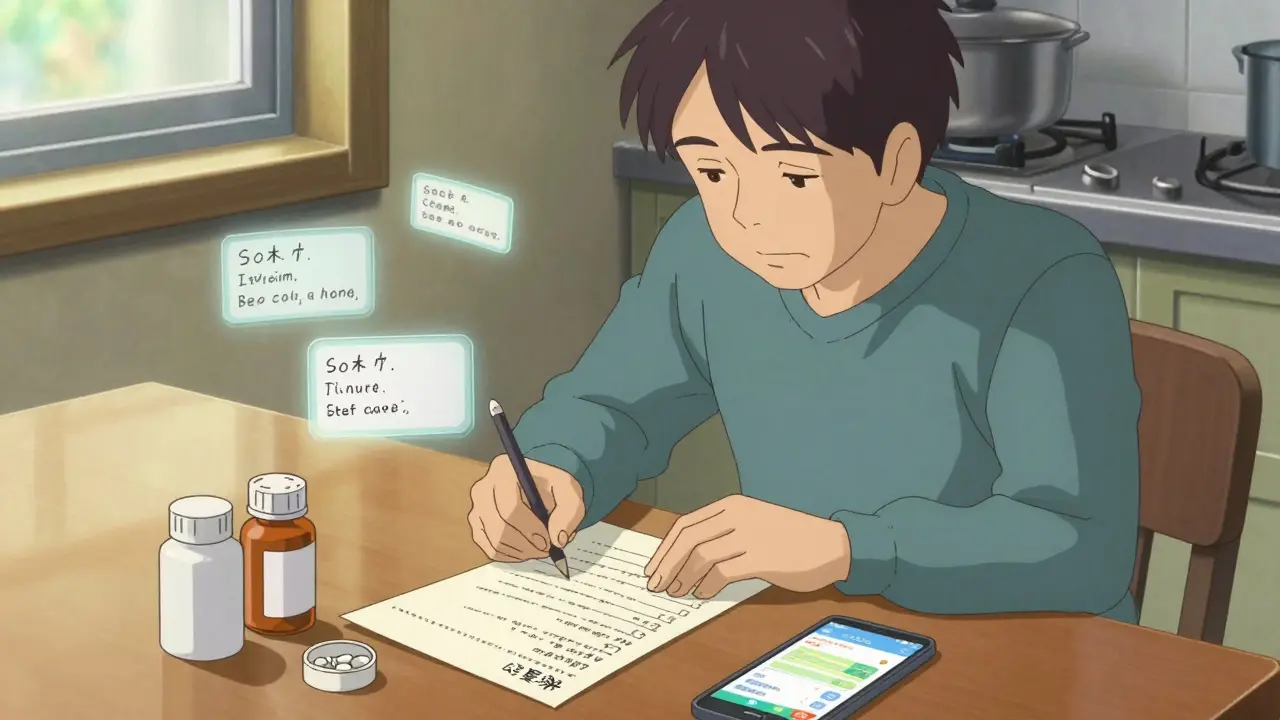
Every year in the U.S., around 7,000 people die from medication errors. Many of these deaths aren’t caused by bad drugs or bad doctors-they’re caused by simple mistakes: a missed pill, a forgotten supplement, or an outdated list. The fix? A clear, accurate, and up-to-date medication list. It’s not just a piece of paper or a note in your phone. It’s a lifeline. If you take even one prescription, or if you’re on vitamins, herbal supplements, or over-the-counter painkillers, you need this list. Not because your doctor told you to. Not because it’s a rule. But because it’s the single most effective way to avoid a dangerous mix, a missed dose, or a deadly interaction. You don’t need to be sick or old to benefit. People in their 30s and 40s on multiple medications for anxiety, high blood pressure, or diabetes are just as at risk. And if you’re caring for a parent or loved one, this list could be the difference between a hospital visit and a safe recovery. Here’s how to build and keep a medication list that actually works.
What Belongs on Your Medication List
A good list doesn’t just say "ibuprofen." It tells the full story. The FDA’s "My Medicines" template is a solid starting point, and here’s what you need to include for every item:
- Drug name - Both brand and generic. If you take Lisinopril, write "Lisinopril (Zestril)." Some pharmacies use brand names; doctors use generics. Both matter.
- Strength and dose - Not "take one," but "10 mg once daily." If you take different doses on different days, write it out: "5 mg Mon-Wed, 10 mg Thu-Sun."
- Frequency - "Twice daily" is too vague. Write "8 AM and 8 PM." If you take it with food or on an empty stomach, add that too.
- Route - Is it swallowed, injected, applied to skin, or inhaled? Most are oral, but if you use an inhaler, patch, or eye drops, specify it.
- Purpose - Why are you taking it? "For blood pressure" or "for occasional heartburn" helps doctors spot duplicates or unnecessary drugs.
- Last taken - When was the last time you had this? Especially after a hospital stay or ER visit. If you skipped a dose last week, note it.
- Prescribing provider - Who wrote the prescription? Dr. Lee? The urgent care clinic? This helps if there’s a conflict between providers.
Don’t forget:
- Over-the-counter (OTC) drugs - Pain relievers like Tylenol or Advil, antacids like Tums, sleep aids like melatonin, and cold medicines. These are often left off lists, but they interact with prescriptions.
- Vitamins and supplements - Even if you think they’re "natural" or "safe," they can interfere. Fish oil thins blood. Vitamin K reverses warfarin. Magnesium can lower blood pressure too much when mixed with certain drugs.
- Herbal remedies - St. John’s Wort, ginkgo, garlic supplements, and echinacea aren’t regulated like drugs. But they can cause serious reactions. One study found 38% of seniors taking herbal supplements didn’t tell their doctors.
- Allergies and reactions - Not just "allergic to penicillin." Write what happened: "Rash after penicillin," "swelling and trouble breathing after sulfa." Details save lives.
Choose Your Format: Paper, App, or EHR
You have options. No single method works for everyone. Pick what fits your life.
Paper Lists
Paper is simple. No battery, no login, no tech skills needed. The FDA’s "My Medicines" template is free and printable. Many clinics hand them out. But here’s the catch: 43% of paper lists are outdated according to a 2022 JAMA study. If you don’t update it after every change, it’s worse than useless-it’s misleading.
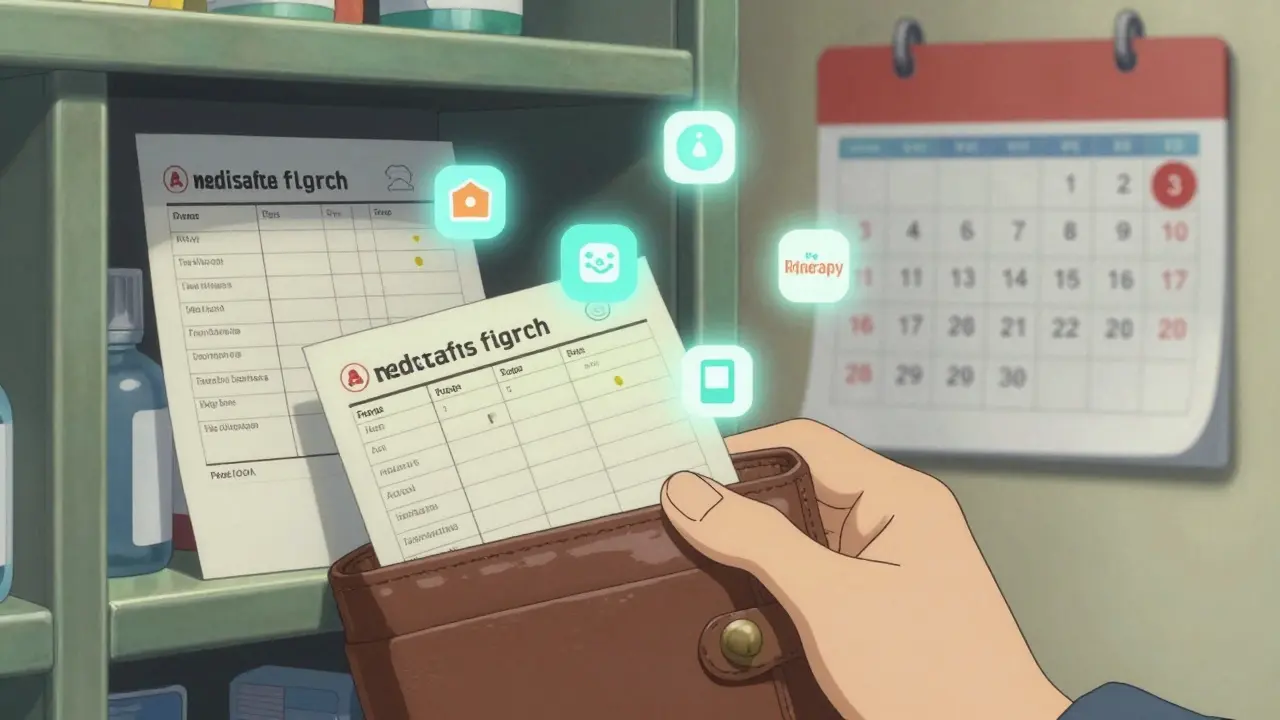
Pro tip: Keep two copies. One in your wallet or purse. One at home. Tape it inside your medicine cabinet. If you’re admitted to the hospital, they’ll ask for it. Don’t make them guess.
Smartphone Apps
Apps like Medisafe is used by over 6 million people, MyTherapy, and CareZone offer reminders, refill alerts, and even share lists with family or caregivers. They reduce missed doses by 28% according to a 2023 BMJ Open study.
But here’s the problem: Only 35% of adults over 65 use medication apps regularly. If you’re not comfortable with phones, or if your eyesight or dexterity is declining, these can become frustrating-not helpful.
Try this: Use the app for reminders, but keep a paper backup. Take a photo of your pill bottles and store them in your phone’s Notes app. It’s low-tech, low-pressure, and works.
EHR-Integrated Lists
If you’re a patient at a large health system like Epic MyChart, Kaiser Permanente, or Mayo Clinic, you likely have a digital list built into your patient portal. These are updated automatically when your doctor prescribes a new drug or your pharmacy fills a prescription.
But they’re not perfect. Only 58% of primary care practices have full integration, and many still rely on patients to report changes. If your list says "Lisinopril 10 mg" but you switched to 20 mg last month, and your doctor hasn’t updated it, you’re still at risk.
Bottom line: Use your EHR list as a tool-not a replacement-for your own record. Always review it before each visit.
When and How to Update Your List
Updating your list isn’t a one-time task. It’s a habit.
Here’s when to update:
- After every doctor visit - Even if you didn’t get a new prescription. If your dose changed, you stopped a drug, or your doctor said "don’t take that anymore," write it down.
- After a hospital stay or ER visit - This is the most dangerous time. Studies show 68% of patients fail to update their list after discharge. You might come home with new meds, or old ones might have been stopped. Don’t assume the hospital told your doctor.
- After starting or stopping any OTC drug, vitamin, or supplement - That new turmeric capsule? The extra-strength Tylenol for your headache? Add it.
- Every 3 months - Even if nothing changed, review it. Did you forget a drug? Is the dose still right? Is the purpose still accurate?
Make it part of your routine. Pick a day-like the first Sunday of each month-and sit down with your pills, your list, and your phone. Do it while you’re watching TV or drinking coffee. It takes 5 minutes.
One trick that works: The "brown bag method." Once a year, gather every pill bottle, box, and supplement container you have. Bring them to your doctor. Lay them out on the table. Let them check what you’re actually taking. It’s messy, but it’s the most accurate way to catch hidden drugs or expired ones.

Share It With Your Care Team
A list is useless if no one sees it.
Bring your list to every appointment-primary care, specialist, dentist, even the ER. Don’t wait to be asked. Say: "Here’s my current medication list. Can you check it against what’s in your system?"
Pharmacists are your allies. If you fill prescriptions at a pharmacy, ask them to print out a copy of your full medication history. Most will do it for free. Medicare Part D covers medication therapy management services-this includes a pharmacist reviewing your entire list for interactions and duplication.
Share it with family. If you live alone, give a copy to a neighbor, friend, or adult child. If you have a caregiver, make sure they know where to find it. In an emergency, they might be the only one who can tell paramedics what you’re taking.
And if you use a digital app, enable sharing. Most apps let you email or text your list to someone. Set it up now, before you need it.
Common Mistakes and How to Avoid Them
Even good lists fail if they’re built wrong.
- Mistake: Only listing prescriptions. Solution: Include every OTC, vitamin, and herb-even if you think it’s "harmless."
- Mistake: Writing "as needed" without specifying when. Solution: Write "for headaches, up to 2 tablets per day, max 6 per week."
- Mistake: Using abbreviations like "BID" or "QHS." Solution: Write "twice daily" and "at bedtime." Doctors and nurses may know them, but emergency staff won’t.
- Mistake: Assuming your doctor knows what you’re taking. Solution: Doctors see 20 patients a day. They forget. You must remind them.
- Mistake: Not updating after a change. Solution: Set a phone reminder for every refill. When the pharmacy calls to refill, use it as a cue to check your list.
One big warning: Never trust your memory. A 2021 study found that 56% of patient-reported lists had at least one critical error. You might swear you stopped the blood thinner, but your pharmacy record says otherwise. Your list must be written, not recalled.
Why This Matters More Than You Think
Medication errors cost the U.S. system over $42 billion a year. But the real cost is human.
A 2023 review of 47 studies found that when pharmacists led medication reconciliation, adverse events dropped by 31.2%. When doctors did it alone, the drop was half that. Why? Pharmacists spend time checking every detail. Doctors are rushed.
At Kaiser Permanente, using structured medication lists cut readmissions by 22% in just 18 months. That’s thousands of people avoiding hospital stays.
And it’s not just about safety. It’s about control. When you have a clear list, you stop feeling like a passive patient. You become part of your own care. You can ask: "Why am I on this?" "Is this still needed?" "Can we cut one?"
Dr. Scott Gottlieb, former FDA commissioner, said it plainly: "Accurate medication lists are the single most important tool for preventing adverse drug events in polypharmacy patients."
You don’t need to be a doctor. You don’t need to be perfect. You just need to be consistent.
Start Today
Here’s your action plan:
- Grab a piece of paper or open your notes app.
- Write down every medication, supplement, and OTC drug you’ve taken in the last 30 days.
- For each, fill in the six key details: name, dose, frequency, route, purpose, provider.
- Add your allergies and reactions.
- Print two copies. Put one in your wallet. Put one in your medicine cabinet.
- Set a calendar reminder: "Review meds" every first Sunday of the month.
Do it now. Not tomorrow. Not next week. Today.
Because the next time you see a doctor, walk into the ER, or get admitted to the hospital, someone will ask: "What are you taking?"
Don’t make them guess.
Do I need to list vitamins and supplements?
Yes. Vitamins, herbal remedies, and supplements can interact with prescription drugs. For example, St. John’s Wort can reduce the effectiveness of birth control and antidepressants. Fish oil can thin your blood, which is dangerous if you’re also on warfarin. Even common ones like calcium or vitamin D can affect kidney function or blood pressure meds. Always include them.
How often should I update my medication list?
Update it after every change-new prescription, stopped drug, new OTC, or supplement. At minimum, review it every 3 months. Set a monthly reminder to check it. After any hospital stay or ER visit, update it immediately-this is when errors are most likely.
Can I use a smartphone app instead of paper?
Yes, if you’re comfortable with technology. Apps like Medisafe, MyTherapy, and CareZone offer reminders and can share your list with family. But always keep a paper backup. In emergencies, responders may not have access to your phone. A printed list is universal.
What if I see different doctors and get prescriptions from multiple sources?
This is exactly why you need a list. When you have multiple providers, it’s easy for drugs to overlap or conflict. Bring your list to every appointment. Ask each provider to review it. If possible, ask your pharmacist to run a drug interaction check. Many pharmacies offer this for free under Medicare Part D.
Is it okay to write "as needed" for medications?
Only if you add details. Instead of "as needed," write: "For headaches, take 1 tablet every 6 hours, max 4 per day." This helps doctors understand your usage patterns and spot potential overuse or misuse.
What if I forget to update my list after a change?
You’re not alone. Most people do. The key is to build habits. Use refill reminders as triggers. When the pharmacy calls to refill, that’s your cue to check your list. Keep a pen and paper next to your pill organizer. Update it right after you take your pills. Small, consistent actions prevent big mistakes.
Can my pharmacist help me maintain my list?
Yes. Pharmacists are trained in medication safety. Under Medicare Part D, you’re eligible for Medication Therapy Management (MTM) services, where a pharmacist reviews your entire list for interactions, duplications, and unnecessary drugs. Ask your pharmacy if they offer this service. It’s free and takes about 20 minutes.
Rosemary Chude-Sokei
March 15, 2026 AT 12:54I’ve been keeping a medication list for years now, ever since my mom had that scary hospital mix-up. It’s not glamorous, but it’s saved me more than once. I print two copies-one for my purse, one taped inside my medicine cabinet. I update it every Sunday night while watching the news. Even if nothing changed, I check. Sometimes I realize I forgot a supplement I started six months ago. Small habit, huge safety net.
And yes, I include everything-even the turmeric capsules. I once had a pharmacist catch a dangerous interaction between my blood pressure med and a ‘natural’ heart health blend. She said, ‘If it’s in your cabinet, it belongs on the list.’ Wise words.
Noluthando Devour Mamabolo
March 15, 2026 AT 16:08As a pharmacovigilance specialist, I can’t stress this enough: polypharmacy is the silent epidemic. The data is irrefutable-medication non-adherence and unreported OTC use account for >60% of preventable ADEs in ambulatory care. The brown bag method? Gold standard. It’s not just about compliance-it’s about systems thinking. Your pill organizer is a microsystem; your list is the metadata layer. Without it, you’re operating blind in a high-risk environment.
Pro tip: Use the RxNorm standard for drug naming. It eliminates brand/generic ambiguity. And please, stop using ‘as needed.’ Codify frequency with temporal parameters. This isn’t opinion-it’s clinical best practice.
Leah Dobbin
March 16, 2026 AT 11:21Of course they say ‘just keep a list.’ Like that’s the real issue. The system is rigged. Pharmacies don’t update EHRs in real time. Doctors don’t cross-reference. And don’t get me started on how insurance companies incentivize prescribing over reviewing.
My aunt died because her cardiologist didn’t see she’d been taken off warfarin after a fall. The hospital record said one thing. The pharmacy log said another. Her list? Updated. But no one bothered to look. So now I keep three copies. One in my wallet. One with my sister. One in a locked drawer labeled ‘DO NOT THROW OUT-LIFE OR DEATH.’
And yes, I’ve emailed every doctor I’ve ever seen. They all say ‘thank you.’ Then they forget. Again.
Ali Hughey
March 16, 2026 AT 23:30THIS IS A GOVERNMENT TRAP. 🚨
They want you to ‘list your meds’ so they can track you. Did you know the CDC uses EHR data to build behavioral profiles? I found a leaked memo from 2021-‘Medication List Integration Initiative’-it’s all about predictive analytics on elderly populations. They’re not trying to save lives. They’re trying to control them.
And don’t trust apps! Medisafe? Owned by a subsidiary of a defense contractor. MyTherapy? Linked to a data broker that sells health info to insurers. Your ‘life-saving list’ is just a honeypot.
I use a handwritten list… on acid-free paper… stored in a Faraday cage. I update it using a pen made from recycled nuclear submarine parts. Because trust no one. Not even your pharmacist. Especially not your pharmacist.
Alex MC
March 17, 2026 AT 09:15I’ve been using Medisafe for about a year now. It’s been a game-changer. I used to forget my blood pressure meds twice a week. Now I get a gentle ping at 8 a.m. and 8 p.m. And I love that I can share the list with my daughter-she lives across the country, but she gets alerts if I miss a dose.
Still, I keep a paper copy in my purse. Just in case. I don’t trust tech completely, but I trust it enough. It’s not perfect, but it’s better than nothing. And honestly? It’s made me feel more in control. Like I’m not just taking pills-I’m managing my health.
Also, yes, include the melatonin. I didn’t at first. Then I got dizzy. Turns out, it was interacting with my beta-blocker. Who knew?
Kathy Leslie
March 18, 2026 AT 14:02My grandma used to carry a shoebox full of pill bottles. Every time we visited, she’d dump them on the table like a game of bingo. We’d laugh, but then she’d say, ‘One of these is going to kill me.’
So I helped her make a list. Took 20 minutes. We wrote everything-even the ‘just for fun’ supplements. She died last year at 89. No ER visits. No mix-ups. Just quiet, safe days.
Don’t wait until you’re old. Start now. Even if you think you’re healthy. You’re not. You’re just not sick yet.
Amisha Patel
March 19, 2026 AT 17:24Elsa Rodriguez
March 20, 2026 AT 04:33I used to think this was just another boring doctor thing. Then I had a panic attack in CVS because I forgot whether I took my Xanax. I stood there for 10 minutes, shaking, staring at 17 different bottles.
That’s when I lost it. I cried in the aisle. I had to call my sister. She came and helped me make a list. Now I have it on my fridge. In glitter pen. Because if I’m going to survive this, I’m doing it with style.
Also, I added my CBD gummies. My therapist said ‘yes, include them.’ So I did. And now I feel… seen. Like my mental health matters too.
Serena Petrie
March 20, 2026 AT 18:37Buddy Nataatmadja
March 22, 2026 AT 06:55As someone who’s lived in three countries, I can say this: the U.S. system is weirdly obsessed with lists. In Indonesia, your doctor just asks, ‘What are you taking?’ and you say it. No forms. No apps. Just talk.
But here? You need a spreadsheet. A backup. A QR code. A notarized copy.
Maybe it’s because we’re so disconnected from our care. Maybe we’ve forgotten how to trust. Or maybe-just maybe-we’re finally realizing that no one else is going to keep track of our pills but us.
So yeah. Make the list. It’s not about bureaucracy. It’s about being your own advocate.