

How to Involve Grandparents and Caregivers in Pediatric Medication Safety
 Feb, 2 2026
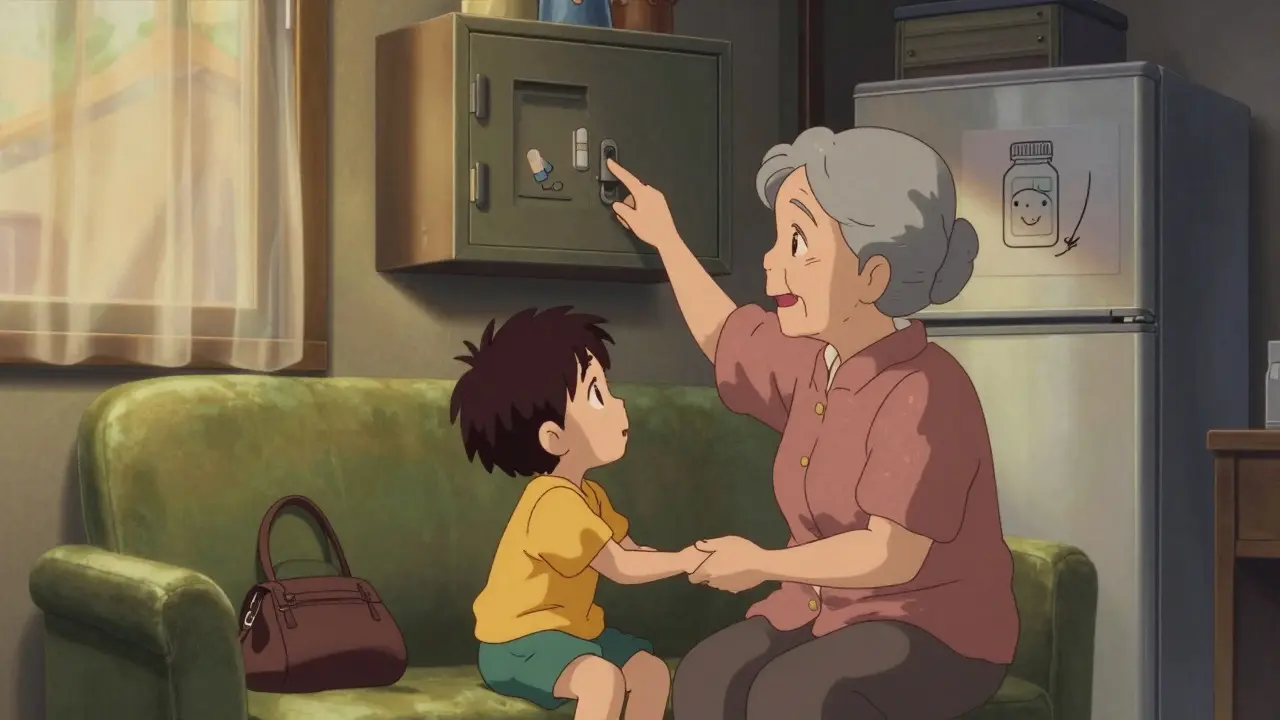
Every year, pediatric medication safety becomes more urgent-not because kids are getting into more drugs, but because the people caring for them are taking more. Grandparents are raising more children than ever. In the U.S., over seven million grandparents live with their grandchildren. And nearly one in three of them takes daily prescription medications. That’s a lot of pills in a lot of homes. The problem? Kids don’t know the difference between candy and medicine. And too often, the medicine is sitting right where a child can reach it-on a nightstand, in a purse, or in a half-open cabinet.
Why Grandparents Are at the Center of This Problem
Grandparents aren’t being careless. They’re just not thinking about medicine the way parents do. Parents know to lock up pills because they’ve been warned since their first child was born. Grandparents? Many grew up in a time when medicine was kept in a drawer, not a locked box. They don’t see the risk. But the data doesn’t lie: 38% of all pediatric medicine poisonings that require an ER visit involve a grandparent’s medication.
Here’s what’s happening in real homes: 29% of caregiving grandparents transfer pills into weekly pill organizers, which have no child-resistant caps. 12% leave their meds on the nightstand or dresser. And 31% keep them in purses or bags-right where a curious toddler can grab them. One grandma shared on Reddit: “My 3-year-old found my blood pressure pills in my purse. Thank goodness I caught him before he swallowed one.” That’s a near-miss. One second longer, and it could’ve been a tragedy.
The Safe Storage Rules That Actually Work
It’s not about being perfect. It’s about being consistent. The CDC and the PROTECT Initiative have spent over a decade testing what works. And here’s what they found: if you want to keep kids safe, you need to store medicine in one place-high, locked, and in the original container.
- Store above 4 feet. Most children under 5 can’t reach shelves higher than that. A locked cabinet in the closet or a high kitchen cabinet works best.
- Use child-resistant caps. Don’t remove them. Even if they’re hard to open, they slow kids down. And never transfer pills to unmarked containers like candy jars or vitamin bottles.
- Lock it. A simple cabinet lock costs under $10. Use it. Even if you think your grandchild “isn’t that curious,” 30% of 4-year-olds can open child-resistant caps in under 5 minutes.
- Keep it in one place. No more medicine in the car, the purse, the bathroom, or the kitchen counter. One spot. Always.
When grandparents followed these rules after a 15-minute educational session, safe storage jumped from 39% to 78% within 90 days. That’s not magic. That’s simple, clear action.
How to Talk to Grandparents Without Making Them Feel Guilty
One of the biggest barriers? Shame. Many grandparents hear “you’re putting the kids at risk” and shut down. That’s why the most successful programs avoid blame. Instead, they say: “We’re all trying to keep our grandkids safe.”
Here’s how to start the conversation:
- “I know you’re doing your best. I just want to make sure we’re both doing everything we can to keep [grandchild’s name] safe.”
- “I read that a lot of kids get into medicine at grandmas’ houses. Can we talk about where you keep yours?”
- “I brought this little lockbox for your meds. It’s easy to use. I’ll show you.”
Don’t say: “You need to lock your medicine.”
Do say: “Let’s make sure we both have a safe spot for your pills.”
Grandparents respond better when they feel like partners, not problems. And 87% of them say they’re deeply worried about their grandchildren’s safety-that’s your opening.
Teach Kids Too-But the Right Way
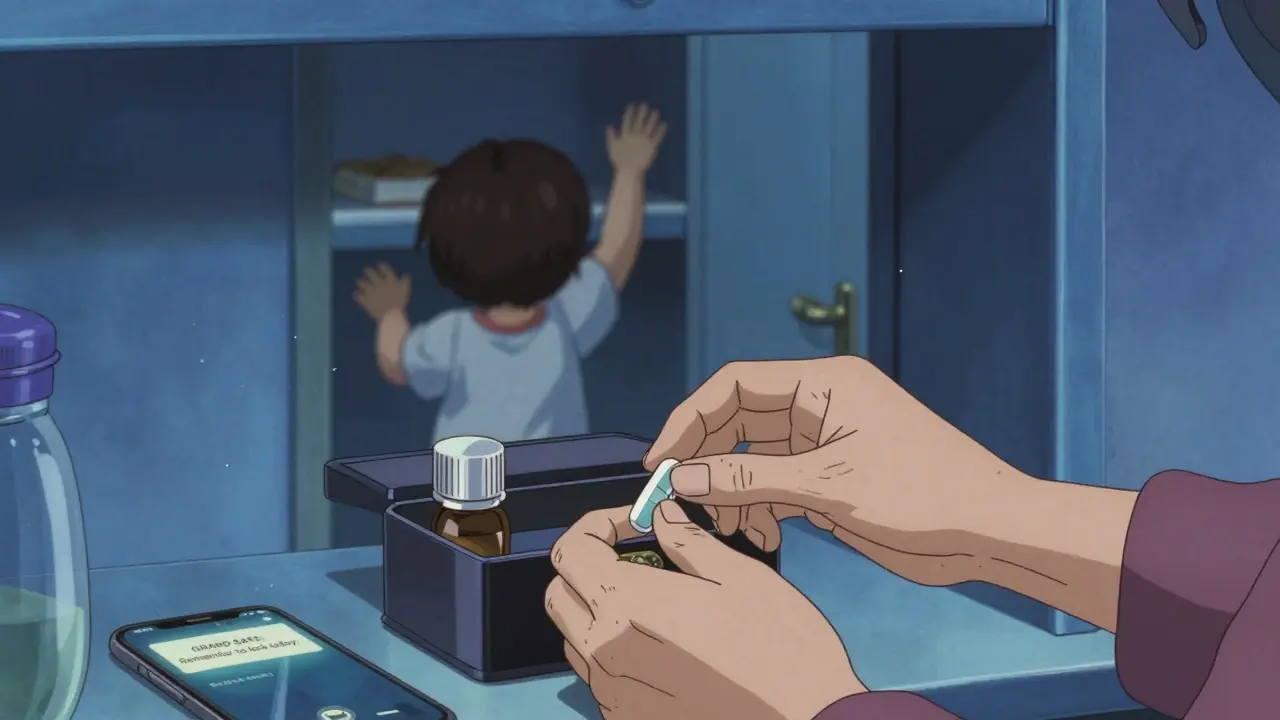
You might think, “Why teach a 2-year-old about medicine?” But here’s the truth: kids don’t need to understand chemistry. They need to understand rules.
The CDC’s “Safety Talk” works because it’s simple:
- “Medicine is not candy.” Say it every time you take a pill.
- “Only adults give medicine.” Even if Grandma says, “Here, take this,” it’s not okay unless Mom or Dad says so.
- “If you find medicine, tell an adult immediately.” Make it a game. “If you see a pill on the floor, run and tell me. I’ll give you a high-five.”
One grandparent started drawing pictures with her grandson: “Here’s medicine. Here’s the lockbox. Here’s Grandma’s hand putting it away.” She hung the drawing on the fridge. Now, when the boy sees a pill, he points and says, “Lockbox!”
What to Do When Grandparents Resist
Not everyone will say yes. Some say, “I’ve been doing this for 40 years.” Others think locking up meds is insulting. One grandpa told his daughter, “You think I’m dumb?”
Here’s how to handle it:
- Use a third party. Ask the pharmacist to say it. Pharmacists are trusted. They can say, “I see a lot of grandkids get into meds. Here’s a free lockbox for you.”
- Make it easy. If arthritis makes child-resistant caps hard to open, ask for an easy-open cap. Many pharmacies offer them for free.
- Start small. Don’t demand a full lockbox. Start with one bottle. “Let’s just lock your blood pressure pill tonight.”
- Use incentives. Some pharmacies give free lockboxes to seniors who pick up prescriptions. AARP offers free safety kits at senior centers. Use those.
And remember: change doesn’t happen overnight. It takes 2-3 gentle reminders. Keep showing up. Keep being kind.
What Families Should Do Together
Grandparents aren’t the only ones who need to step up. Parents need to help too.
Here’s a simple checklist families can use:
- Before a visit: “Where will you keep your meds?”
- During the visit: “Can I help you put your pills in the lockbox?”
- After the visit: “Did you remember to lock them up?”
- Share a list: Make a quick note of what meds each grandparent takes, and where they’re stored.
Only 38% of families do this consistently. That’s a gap we can fix.
Also, keep the Poison Control number (1-800-222-1222) saved in every phone. Post it on the fridge. Say it out loud: “If anyone finds medicine, call this number right away.”
What’s New in 2026
Things are changing. In January 2024, the CDC launched a free digital toolkit with videos in Spanish, Chinese, and English showing exactly how to lock up medicine. Over 85% of grandparents who watched the videos finished them-and 74% said they changed their habits.
There’s also a new mobile app called GRAND SAFE, tested by the NIH, that sends gentle reminders to grandparents before holidays or visits-when the risk is highest. “Don’t forget to lock your meds today,” it says. Simple. No pressure.
And now, Medicare wellness visits are required to ask seniors: “Do you have grandchildren who visit? Do you keep your medicine safe?” That’s huge. It means doctors are now part of the solution.
Final Thought: This Isn’t About Control. It’s About Love.
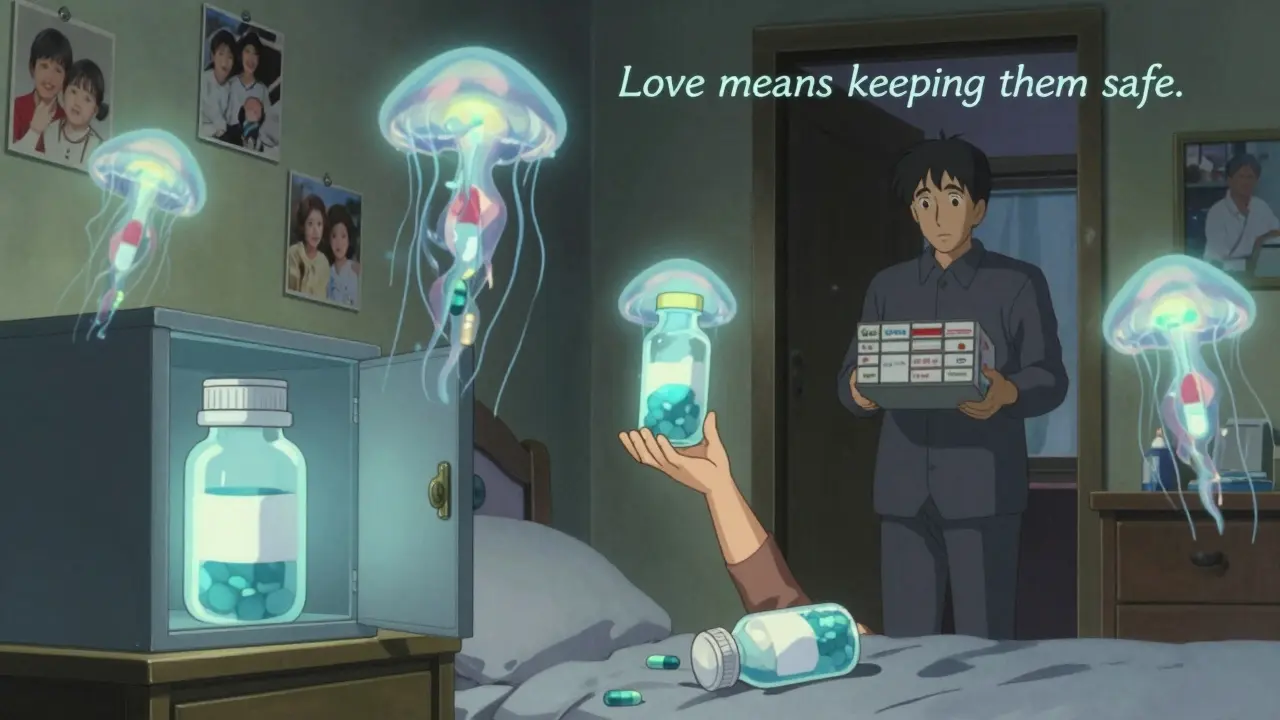
Grandparents want to protect their grandkids more than anything. They just need the right tools and the right words. Locking up medicine isn’t about mistrust. It’s about giving them a way to show love without risk.
One grandma told her daughter: “I didn’t know how dangerous it was. Now I keep my pills in a box on the top shelf. And every time I take one, I say to my grandson, ‘This is for Grandma. You wait till you’re grown.’”
That’s the moment change happens-not in a policy, not in a law, but in a quiet, loving conversation between two people who care more than words can say.
Why are grandparents more likely to cause pediatric medicine poisonings than parents?
Grandparents are more likely to have multiple daily medications-on average 4.7 prescriptions versus 2.1 for parents. They often store pills in convenient spots like nightstands or purses because they don’t see the risk. Many also transfer pills to weekly organizers, which aren’t childproof. Plus, 36% believe child-resistant caps are enough, even though 30% of 4-year-olds can open them in under 5 minutes.
What’s the safest place to store medicine at a grandparent’s house?
The safest spot is a locked cabinet above 4 feet, using the original container with the child-resistant cap still on. Avoid bathrooms, kitchens, bedrooms, and purses. A simple cabinet lock costs under $10 and can be installed in minutes. Many pharmacies give them away for free.
Should I lock up over-the-counter medicine too?
Yes. Nearly half of all pediatric poisonings involve OTC meds like ibuprofen, cough syrup, or allergy pills. These are often kept in open drawers or on counters. Treat them the same as prescriptions: locked, high, and in original containers.
What if my grandparent has arthritis and can’t open child-resistant caps?
Ask the pharmacist for an easy-open cap. Most pharmacies offer them at no extra cost. You can also use a pill organizer with a lockbox lid, or keep the original bottle locked and transfer pills daily. Never remove child-resistant caps unless you replace them with another secure method.
How can I get my grandparent to take this seriously without making them feel criticized?
Focus on teamwork: “We both want to keep [grandchild’s name] safe.” Offer help, not judgment. Bring a free lockbox from the pharmacy. Say, “I saw this and thought of you.” Use stories from other grandparents. Avoid words like “you’re dangerous” or “you’re careless.” Most grandparents care deeply-they just didn’t know the risk.
Are there free resources to help grandparents with medicine safety?
Yes. The CDC’s “Grandparent Guardian” toolkit has free multilingual videos. AARP offers free safety kits at senior centers. Most major pharmacy chains give away free lockboxes to seniors who pick up prescriptions. The Poison Control hotline (1-800-222-1222) offers free advice anytime. And many community health centers provide free in-home safety assessments.
What should I do if my grandchild finds medicine?
Call Poison Control immediately at 1-800-222-1222. Don’t wait for symptoms. Don’t try to make them vomit. Keep the medicine container handy-pharmacists need to know exactly what was taken. Even if the child seems fine, some effects can be delayed. Always treat it as an emergency.
Alec Stewart Stewart
February 4, 2026 AT 06:53Demetria Morris
February 5, 2026 AT 08:10Geri Rogers
February 5, 2026 AT 15:30Caleb Sutton
February 6, 2026 AT 19:58Jamillah Rodriguez
February 8, 2026 AT 12:23Susheel Sharma
February 10, 2026 AT 00:52Janice Williams
February 10, 2026 AT 10:06Roshan Gudhe
February 12, 2026 AT 08:57Rachel Kipps
February 13, 2026 AT 09:28Wendy Lamb
February 13, 2026 AT 17:15Amit Jain
February 14, 2026 AT 14:15