

How to Ask About Drug Interactions When Getting a New Prescription
 Jan, 31 2026
Getting a new prescription shouldn’t feel like a gamble. You’re trusting your doctor to help you feel better, but what if that new pill messes with something else you’re already taking? Drug interactions are more common than most people realize-and they can turn a simple treatment into a serious health risk. In the U.S., medication errors linked to interactions send over 1.3 million people to the emergency room every year. That’s not a small number. It’s not rare. It’s happening to people just like you.
What Exactly Is a Drug Interaction?
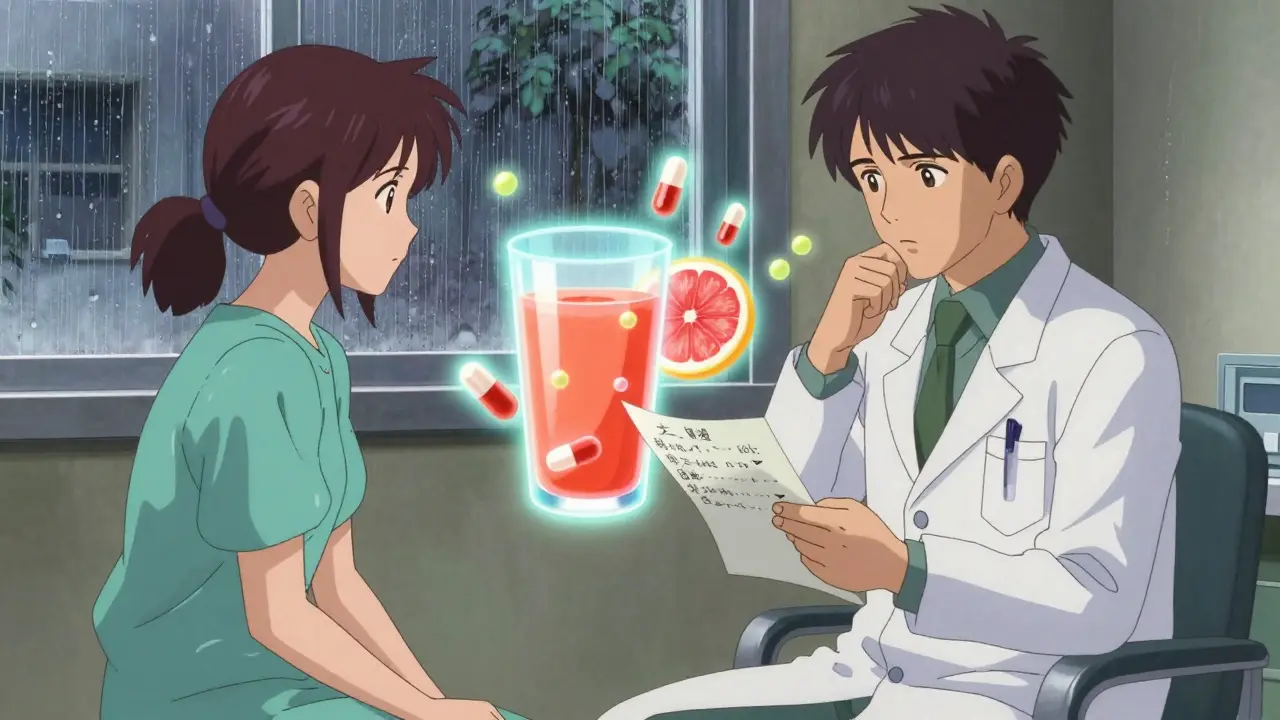
A drug interaction happens when something changes how a medicine works in your body. It’s not just about two pills clashing. It can be a food, a supplement, an herbal remedy, or even a health condition you already have. For example, grapefruit juice can make cholesterol-lowering statins too strong, leading to muscle damage. Calcium supplements can block the absorption of thyroid medication like Synthroid. Over-the-counter decongestants like pseudoephedrine can spike your blood pressure if you already have hypertension. These aren’t edge cases-they’re well-documented, preventable dangers.The FDA tracks about 300 serious drug-drug interactions that require warning labels, and 150 of those can be life-threatening. And that’s just prescription drugs. When you add in vitamins, herbal supplements, and OTC pain relievers, the number of possible combinations jumps into the tens of thousands. WebMD’s database alone lists over 24,000 prescription and OTC medications, 4,000 supplements, and 800 foods that can interact.
Why You Can’t Rely on Your Doctor Alone
Your doctor is focused on treating your main condition. They might not remember every medication you’ve taken over the past year, especially if you’ve seen multiple providers. That’s why you need to take charge. A 2021 study found preventable drug interactions cost the U.S. healthcare system $30 billion a year. Most of those costs come from hospitalizations and ER visits that could’ve been avoided with a simple conversation.Pharmacists are your real safety net. According to the American Pharmacists Association, 92% of pharmacists check for interactions before handing over a prescription. They catch 37% of dangerous combinations before they ever reach you. That’s not luck-it’s their job. But they can only do it if you give them the full picture.
Seven Questions to Ask Before Leaving the Office
Don’t just nod and say thank you. Walk out with answers to these seven key questions:- Will this interact with my other medications, supplements, or vitamins? This is the most important. Don’t assume your doctor knows about your fish oil, melatonin, or turmeric capsules. Many people don’t even think of them as "medications," but they absolutely can interfere.
- Should I avoid certain foods, drinks, or other products while taking this? Grapefruit juice, alcohol, caffeine, and even dairy can change how your body absorbs or breaks down drugs. Ask specifically about your usual diet.
- What side effects should I watch for-and which ones mean I need to call 911 or go to the ER? Not all side effects are equal. Drowsiness might be annoying. Bleeding, chest pain, or sudden confusion? That’s urgent.
- Will this make my other health problems worse? If you have kidney disease, heart failure, diabetes, or glaucoma, some medications can make those conditions harder to control. Antihistamines, for example, can worsen breathing problems or enlarge the prostate.
- Can I take this with my other prescriptions? Sometimes doctors prescribe something without realizing you’re already on a similar drug. Double-check for overlapping effects, like two blood pressure meds that could drop your pressure too low.
- Why this drug instead of another one for my condition? There might be a cheaper, safer, or more effective alternative. Ask if there’s a version with fewer interactions or one that’s been studied more in people your age or with your other conditions.
- Do you use pharmacogenetic testing? Could my genes affect how I respond to this? This is newer but growing fast. About 28% of new drugs approved in 2023 included genetic info in their labeling, up from just 5% in 2015. Your body’s ability to metabolize drugs is partly genetic. Some people break down blood thinners too slowly, others too fast. Testing can help avoid dangerous dosing.
Prepare Before Your Appointment
You won’t remember everything if you walk in cold. Take five minutes before your visit to get organized:- Write down every medication you take: prescriptions, OTC pills, vitamins, herbal teas, CBD, or supplements.
- Include dosages and how often you take them. Don’t say "I take a pill for my blood pressure." Say "Lisinopril 10 mg, once daily."
- Bring the actual bottles or a photo of the labels. Pharmacists can scan barcodes and cross-reference databases instantly.
- Don’t forget alcohol, tobacco, or recreational drugs. Your provider needs to know if you drink wine every night or smoke marijuana. These aren’t judgment calls-they’re safety checks.
- Keep a printed copy of your list at home and carry one in your wallet. Over two-thirds of medication errors happen because the provider didn’t have a complete list.
When You Get Your Prescription: Talk to the Pharmacist
Don’t just grab your pills and leave. Wait a minute. Ask the pharmacist:- "Is there anything I should avoid with this?"
- "Do you have a printed package insert I can take home?"
- "Do you have a drug interaction checker app or tool I can use?"
Most major pharmacies now use advanced screening software. Express Scripts, CVS, and Walgreens all have pharmacists trained to flag risky combinations. If they see a problem, they’ll call your doctor before you even leave the store. That’s your backup system. Use it.
Real Risks You Can’t Ignore
Here’s what happens when people skip these steps:- A 68-year-old man on warfarin started taking ciprofloxacin for a UTI. Within days, he had internal bleeding. He needed a blood transfusion. The interaction was well-known. The doctor didn’t ask about his other meds.
- A woman with high blood pressure took an OTC decongestant for a cold. Her systolic pressure jumped to 210. She had a stroke. Her pharmacy had flagged the risk-but she never told them she was taking it.
- Someone taking levothyroxine started calcium supplements at breakfast. Their thyroid levels stayed low for months. They didn’t realize the calcium was blocking absorption until their endocrinologist asked about their supplement routine.
The CDC reports that drug interactions cause 700,000 ER visits and 100,000 hospitalizations every year. Most of these are preventable. You don’t need to be a medical expert. You just need to be prepared.
What’s Changing in 2026
The field is evolving. More pharmacies now use AI-powered screening tools that check for interactions across hundreds of variables-including your age, kidney function, and genetic profile. Genomind and other precision medicine companies are offering at-home genetic tests that show how your body processes over 100 common drugs. By 2026, it’s expected that nearly half of all high-risk prescriptions will come with a genetic interaction alert built into the system.But here’s the catch: technology doesn’t replace conversation. The FDA says 83% of serious drug interactions could be avoided with better communication. No app can tell your pharmacist you’ve been drinking two glasses of wine every night. No algorithm knows you’ve been skipping your blood pressure meds because they make you dizzy.
That’s why your voice matters.
What to Do If You’re Still Unsure
If you leave the appointment and still feel uneasy:- Call your pharmacy. They’re required to answer questions about your meds.
- Use WebMD’s Drug Interaction Checker-it’s free, updated quarterly, and easy to use.
- Ask for a medication review with a clinical pharmacist. Many insurance plans cover this as part of chronic disease management.
- Don’t stop or change your meds on your own. If something feels off, call your doctor or pharmacist first.
Medications are powerful tools. But they’re not harmless. The best way to protect yourself isn’t to memorize every possible interaction. It’s to ask the right questions, bring the right information, and trust your instincts when something doesn’t feel right.
Can I just rely on the warning label on my prescription bottle?
No. Warning labels only list the most common or severe interactions. They don’t cover everything, especially combinations involving supplements, foods, or your specific health conditions. For example, a label might warn about alcohol, but not about grapefruit juice or St. John’s Wort. Always ask your pharmacist or doctor for a full review.
Do I need to tell my doctor about vitamins and herbal supplements?
Yes. Many people think supplements are "natural" so they’re safe. That’s not true. St. John’s Wort can make birth control, antidepressants, and blood thinners stop working. Garlic and ginkgo can increase bleeding risk when taken with aspirin or warfarin. Vitamin K can counteract blood thinners. Always list everything you take, even if you think it’s harmless.
What if I forget to ask about interactions during my appointment?
Call your pharmacy as soon as you get the prescription. Pharmacists are trained to answer these questions and can reach out to your doctor if needed. You can also use WebMD’s Drug Interaction Checker to run your list of meds against the new prescription. Don’t wait until you feel sick.
Can drug interactions happen even if I’ve taken the same meds for years?
Absolutely. Your body changes over time. Your liver and kidneys may not process drugs the same way at 65 as they did at 45. You might develop a new condition like high blood pressure or kidney disease. You might start taking a new supplement. Even small changes can turn a safe combo into a dangerous one. Always review your full list with your provider at least once a year.
Are over-the-counter drugs really that risky?
Yes. Acetaminophen (Tylenol) can damage your liver if you drink alcohol or take other liver-metabolized drugs. Ibuprofen can raise blood pressure and harm your kidneys, especially if you’re on heart or kidney meds. Decongestants like pseudoephedrine can spike your blood pressure. Many people don’t realize OTC drugs are still drugs-and they interact just like prescriptions.
What if my doctor says "it’s fine" but I’m still worried?
Get a second opinion. Ask to speak with a pharmacist at your pharmacy. Or request a medication therapy management (MTM) session-many insurance plans cover this. You have the right to understand your treatment. If something feels off, trust that feeling. A good provider will welcome your questions.
franklin hillary
February 1, 2026 AT 18:41Let me tell you something real - I used to think my fish oil and turmeric were harmless. Then I ended up in the ER with a bleeding ulcer after starting a new blood thinner. No one asked me about my ‘natural remedies.’ Turns out, ‘natural’ just means the FDA doesn’t regulate it. Your body doesn’t care if it’s a pill or a tea - if it changes how your meds work, it’s dangerous. Don’t be that guy who says ‘I didn’t think it mattered.’
June Richards
February 2, 2026 AT 22:39Wow this is sooo basic. Everyone knows you ask your pharmacist. Why is this even an article? I’ve been doing this since I was 18 and on birth control + antibiotics. Also stop saying ‘supplements’ like they’re magic. They’re just unregulated junk. 🙄
Naresh L
February 4, 2026 AT 19:03I’ve been thinking a lot about how we treat medicine like a transaction - you show up, get a script, leave. But health isn’t a product you buy. It’s a conversation you keep having with your body, your doctor, your pharmacist. That list of meds? It’s not a formality. It’s your life speaking. And if you’re too tired or embarrassed to share your wine habit or your CBD gummies, you’re silencing the very thing that could save you. Maybe we need to stop seeing doctors as gatekeepers and start seeing them as allies in a shared mission.
Ishmael brown
February 6, 2026 AT 05:27So let me get this straight - you’re telling me I need to ask 7 questions and bring my pill bottles and check WebMD and maybe get a genetic test just to take a pill? 😂 Bro, I’m not a lab rat. My grandpa took 12 pills a day and never asked a single question. Lived to 92. Maybe the system’s not broken - maybe you’re just overthinking it. 🤷♂️
Lu Gao
February 7, 2026 AT 06:11Actually, the FDA doesn't track ‘300 serious drug-drug interactions’ - that number is outdated. The real count is closer to 400+, and the 150 life-threatening ones are just the tip of the iceberg. Also, ‘WebMD’s database’ is a marketing term - their tool is decent but incomplete. You should use Micromedex or Lexicomp if you’re serious. And no, St. John’s Wort doesn’t make birth control ‘stop working’ - it reduces efficacy by 50-70%. Precision matters. 📊
Chris & Kara Cutler
February 9, 2026 AT 05:06Just ask. Just bring the bottles. Just say ‘I’m scared.’ That’s it. 💪 You don’t need a checklist. You need courage. And if your doctor rolls their eyes? Find a new one. You’re not being annoying - you’re being alive.
Rachel Liew
February 9, 2026 AT 09:00i just want to say thank you for writing this. i used to be scared to talk to my dr. i thought they’d think i was dumb for asking. but last month i brought my list and asked about my gummy vitamins and my dr actually cried and said ‘thank you for being so honest.’ we changed my meds and i feel like a new person. you’re not being annoying. you’re being brave. ❤️
Lilliana Lowe
February 10, 2026 AT 05:26The article’s tone is dangerously condescending. It implies that patients are ignorant automatons who need a 12-step guide to survive basic healthcare. In reality, most people who suffer from drug interactions are elderly or low-income - populations systematically failed by a fragmented, profit-driven system. Blaming the patient for not asking ‘the right questions’ ignores structural failures: 12-minute appointments, underpaid pharmacists, and insurance barriers to medication reviews. This isn’t about personal responsibility - it’s about healthcare reform.
vivian papadatu
February 11, 2026 AT 10:26I’m from India, and here, people rarely ask questions - they trust their doctor completely. But after my cousin had a bad reaction to a combo of antibiotics and a traditional herbal tonic, we started talking. Now I teach my family to write down every pill, even the ones from the village healer. Culture matters, but safety matters more. This isn’t just an American problem. It’s a human one.
Melissa Melville
February 12, 2026 AT 17:41Oh wow, so I need to become a pharmacist just to take a Zpack? 😂 My grandma used to say ‘if it’s in the bottle, it’s fine.’ She also used to say ‘don’t eat that, it’s too cold.’ She’s dead now. Just saying.
Deep Rank
February 13, 2026 AT 14:09ok but like… why are we even doing this? i mean, if you’re gonna die from a drug interaction, you were gonna die anyway right? like, you’re gonna be dead, so what’s the point of asking 7 questions? and also, i’ve been taking melatonin and ibuprofen for years and i’m fine, so why are you making me feel guilty? also, your article is so long i got bored and started checking my phone. also, why does everyone think they’re so smart now? i mean, i’ve been on 5 different meds and i didn’t even know what a statin was until last week. also, i think you’re all overreacting. i’m not gonna bring my pill bottles. i’m just gonna take the pill. and if i die, i die. it’s not that deep.