

How Generic Medications Save Thousands on Healthcare Costs
 Dec, 10 2025
Every year, Americans spend over $600 billion on prescription drugs. But here’s the surprising part: generic medications are responsible for 90% of all prescriptions filled - and yet they make up only 1.5% of total drug spending. That’s not a typo. You’re paying 9 times less for the same medicine when you choose a generic.
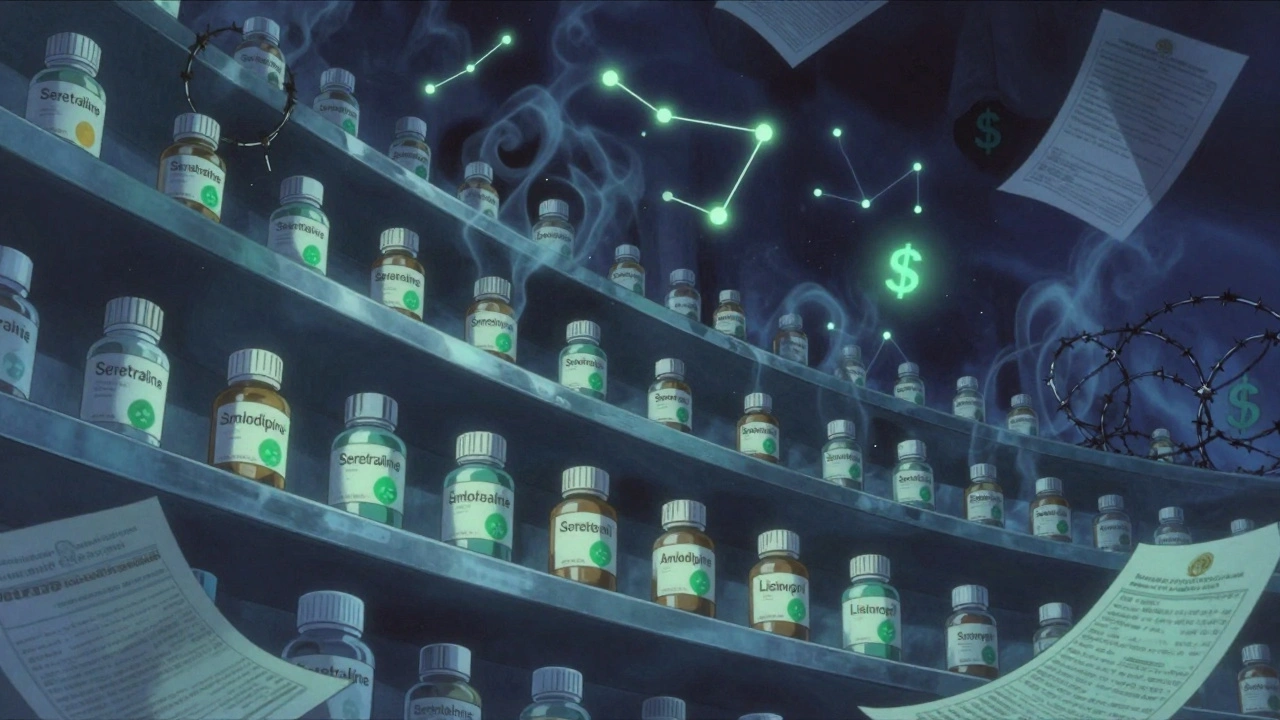
Take sertraline, the generic version of Zoloft. A 30-day supply of the brand name might cost $450 out-of-pocket. The generic? Around $9. That’s not just a savings - it’s a life-changing difference for someone on a fixed income or managing chronic depression. This isn’t rare. It’s the norm.
Why Generics Cost So Much Less
Generic drugs aren’t cheaper because they’re lower quality. They’re cheaper because they don’t have to repeat the billion-dollar clinical trials that brand-name drugs do. When a brand-name drug’s patent expires - usually after 10 to 12 years - other companies can make the same medicine. All they have to prove to the FDA is that their version works the same way in the body. That’s called bioequivalence.
The FDA requires generics to deliver the same active ingredient, in the same strength, and at the same rate as the brand. The body absorbs them the same way. The only differences? The color, shape, or inactive ingredients like fillers. These don’t affect how the drug works. The FDA approves over 800 generic drugs every year. In 2022 alone, 831 new generics hit the market - the second-highest number ever.
Here’s what happens when a generic enters the market: prices drop fast. Within the first year, the cost of the drug typically falls 80% to 85%. Add a second or third generic manufacturer, and prices fall even further. A 2022 study found that when multiple generic versions of a drug became available, the average price dropped to just 12% of the original brand price.
Real Numbers: How Much You’re Saving
The numbers don’t lie. In 2022, generic and biosimilar drugs saved the U.S. healthcare system $408 billion. That’s more than the entire annual budget of the Department of Education. Over the last decade, generics have saved Americans $2.9 trillion.
Break it down by pocketbook:
- Average generic copay: $6.16
- Average brand-name copay: $56.12
- Generics are 9.1 times cheaper at the pharmacy counter
- 93% of generic prescriptions cost under $20
- Only 59% of brand-name prescriptions cost under $20
For Medicare beneficiaries, the savings are even more critical. In 2022, generics saved Medicare $130 billion. For private insurers, it was $194 billion. And yet, despite all this, many people still pay too much for generics - not because the drugs are expensive, but because their insurance plans have high copays or don’t cover them well.
Therapeutic Substitution: The Hidden Savings
Most people think savings come from swapping a brand-name drug for its generic. But there’s another layer most don’t know about: therapeutic substitution.
Imagine you’re prescribed a high-cost generic for high blood pressure - say, amlodipine. But there’s another generic, lisinopril, that works just as well and costs 95% less. Your doctor doesn’t need to change your diagnosis. You’re still treating the same condition. You’re just choosing a cheaper version of a different drug in the same class.
A 2022 study in Colorado looked at the top 1,000 most-prescribed generics. They found 45 that had cheaper, equally effective alternatives. In 62% of those cases, the cheaper option was just a different strength or form of the same drug - like switching from a 10mg tablet to a 5mg tablet taken twice a day. The average savings? 94.9%.
This isn’t theoretical. It’s happening in clinics and pharmacies every day. And it’s one of the biggest untapped opportunities to cut drug costs without sacrificing care.
Why Some People Still Hesitate
Despite all the evidence, some patients worry that generics don’t work as well. They’ve heard stories - a friend’s thyroid meds didn’t seem right, or their seizure medication felt different after switching.
These concerns aren’t entirely baseless. For drugs with a narrow therapeutic index - where even a tiny change in dose can cause harm - like levothyroxine (for thyroid), warfarin (for blood clots), or certain epilepsy drugs - doctors may be more cautious. About 15% of patients on these drugs report issues after switching, though most of those cases aren’t due to the generic itself. Often, it’s because the patient’s body is sensitive, or the switch wasn’t monitored closely.
But here’s the key: the FDA says 98% of approved generics are rated AB - meaning they’re therapeutically equivalent to the brand. That’s the highest rating possible. If your doctor says a generic is safe to use, they’re not guessing. They’re relying on data.
Harvard Medical School surveyed doctors in 2023. When they explained the FDA’s bioequivalence standards to patients, 87% of patients stopped worrying. The fear wasn’t about the science. It was about not understanding it.
What’s Holding Back Even More Savings?
Generics are a success story - but they’re not a magic fix. The U.S. still pays 2.78 times more for prescription drugs than other wealthy countries. Why? Because brand-name companies use tactics to delay generics.
One common trick? Filing dozens of patents on minor changes - like a new pill coating or a different time-release method. The FTC found that brand manufacturers file an average of 17.5 patents per drug to block competition. That’s called “evergreening.”
Another problem? Drug shortages. In September 2023, there were 312 active shortages in the U.S. - and 78% of them involved generic drugs. Why? Because generic manufacturers often operate on thin margins. If a drug costs 5 cents to make and sells for 15 cents, there’s no room for error. A factory shutdown, a raw material delay, or a regulatory hiccup can wipe out supply.
And then there’s the insurance system. Some plans charge higher copays for generics if they’re not on the lowest tier. Others require prior authorization. Some pharmacists can’t switch a brand to a generic without the doctor’s okay - even if the law allows it.
What You Can Do Right Now
You don’t need to wait for policy changes to save money. Here’s what works:
- Ask your doctor: “Is there a generic version of this?” If they say no, ask why. Sometimes it’s just habit.
- Ask your pharmacist: “Is there a cheaper therapeutic alternative?” They know which generics cost less and still work.
- Use the FDA’s Orange Book online (free, no login needed) to check if your drug has an approved generic and its rating.
- Compare prices at different pharmacies. A generic that costs $15 at CVS might be $3 at Walmart or Costco.
- If you’re on Medicare, check if your plan covers the generic you need. The Inflation Reduction Act caps out-of-pocket drug costs at $2,000 a year starting in 2025 - and generics will help you stay under that limit.
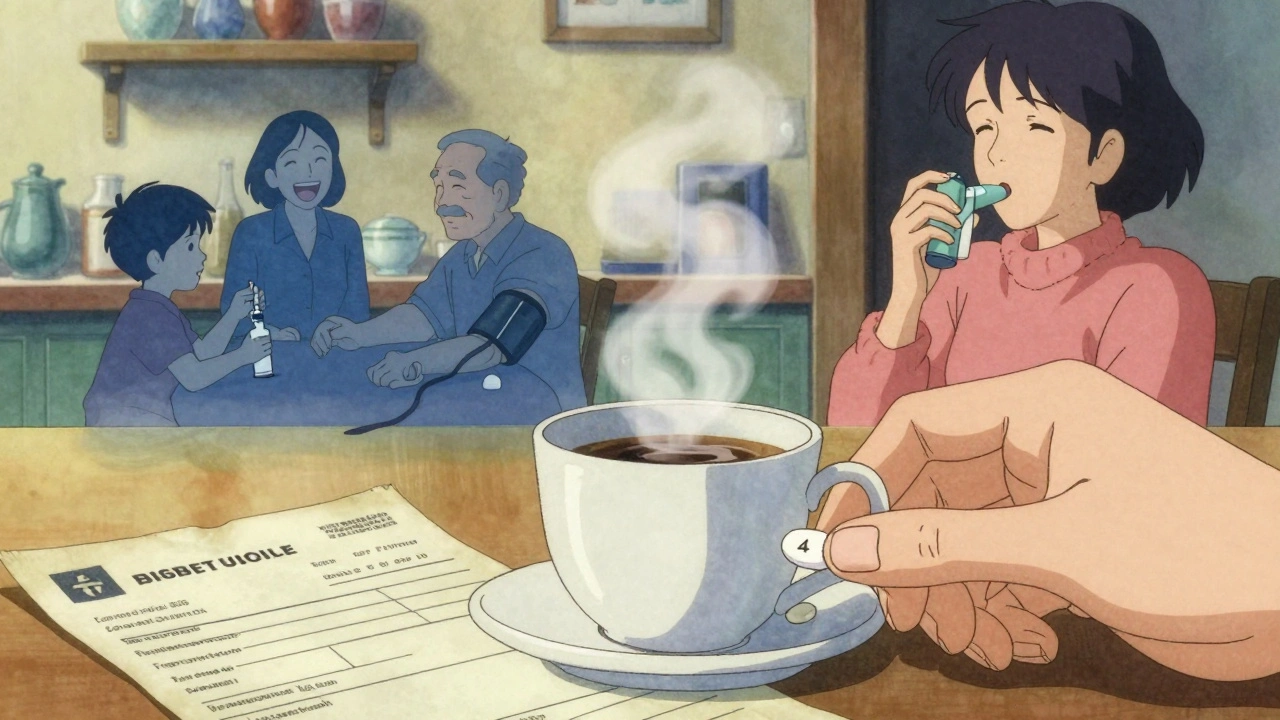
One woman in Boston told her pharmacist she was skipping her blood pressure pills because she couldn’t afford them. Her brand-name medication was $120 a month. The generic? $4. She started taking it. Her blood pressure stabilized. She didn’t need to go to the ER anymore. That’s the real impact.
The Bigger Picture
Generics aren’t just about saving money. They’re about access. They’re about letting someone with diabetes afford insulin. Letting a veteran with PTSD get their antidepressant. Letting a single parent keep their asthma inhaler stocked.
When you choose a generic, you’re not just saving yourself money. You’re helping the whole system. Every dollar saved on a generic is a dollar that doesn’t get passed on to your insurance premiums, your taxes, or your employer’s healthcare costs.
The system isn’t perfect. Drug prices are still too high. Shortages still happen. But generics are the most powerful tool we have to fight back - and they’re already working. You just have to ask for them.
Are generic medications as safe and effective as brand-name drugs?
Yes. The FDA requires generics to have the same active ingredient, strength, dosage form, and route of administration as the brand-name drug. They must also prove bioequivalence - meaning they work the same way in the body. Over 98% of FDA-approved generics are rated AB, the highest therapeutic equivalence rating. Generics are held to the same manufacturing standards as brand-name drugs.
Why do some people say generics don’t work as well?
Some patients report differences when switching, especially with drugs that have a narrow therapeutic index - like levothyroxine, warfarin, or seizure medications. These drugs require very precise dosing, and even small changes in absorption can affect outcomes. However, studies show these issues are rare and often tied to switching between different generic manufacturers, not the generic vs. brand issue itself. If you notice a change after switching, talk to your doctor or pharmacist - it may just need a small adjustment.
Can pharmacists automatically substitute a generic for a brand-name drug?
In 49 states, pharmacists can substitute a generic for a brand-name drug unless the doctor writes "dispense as written" or "no substitution." New York is the only exception, requiring the prescriber to explicitly allow substitution. Even then, pharmacists can suggest therapeutic alternatives - cheaper generics that treat the same condition - with your doctor’s approval.
Why are some generics more expensive than others?
Generics from different manufacturers can vary in price due to production costs, supply chain issues, or market competition. If one manufacturer has a shortage, prices for their version may rise. Sometimes, a generic that’s been on the market longer costs more because newer, cheaper versions have entered. Always ask your pharmacist if there’s a lower-cost generic option - even if you’re already taking one.
Do insurance plans cover generics better than brand-name drugs?
Yes. Most insurance plans put generics on the lowest cost-sharing tier, meaning lower copays or coinsurance. Brand-name drugs often require prior authorization or higher out-of-pocket payments. Some plans even charge you the full price for a brand-name drug if a generic is available - unless your doctor specifically says otherwise.
Will choosing a generic affect my treatment outcomes?
For the vast majority of medications, no. Multiple large studies have shown no difference in effectiveness or safety between generics and brand-name drugs. The CDC, FDA, and major medical associations all support generic use. The only exceptions are a small number of drugs with narrow therapeutic windows, where close monitoring may be needed after a switch. For 95% of prescriptions, choosing a generic won’t change your health outcome - but it will change your wallet.
If you’re paying more than $20 a month for a prescription, ask if a generic exists. Ask if there’s a cheaper alternative. Ask your pharmacist. Ask your doctor. You’re not being difficult - you’re being smart. And you’re not alone. Millions of Americans do this every day - and save thousands because of it.
Jean Claude de La Ronde
December 11, 2025 AT 23:04Courtney Blake
December 12, 2025 AT 01:25Kristi Pope
December 12, 2025 AT 08:10Doris Lee
December 13, 2025 AT 20:44Frank Nouwens
December 15, 2025 AT 04:02Kaitlynn nail
December 15, 2025 AT 13:18Aileen Ferris
December 15, 2025 AT 21:34Michelle Edwards
December 17, 2025 AT 21:01john damon
December 19, 2025 AT 02:59matthew dendle
December 19, 2025 AT 12:15Taylor Dressler
December 20, 2025 AT 16:25Aidan Stacey
December 21, 2025 AT 07:49Lisa Stringfellow
December 22, 2025 AT 15:46Aman deep
December 23, 2025 AT 22:22Sylvia Frenzel
December 25, 2025 AT 14:43