

Hemochromatosis: How Iron Overload Damages Your Liver and How Phlebotomy Fixes It
 Jan, 1 2026
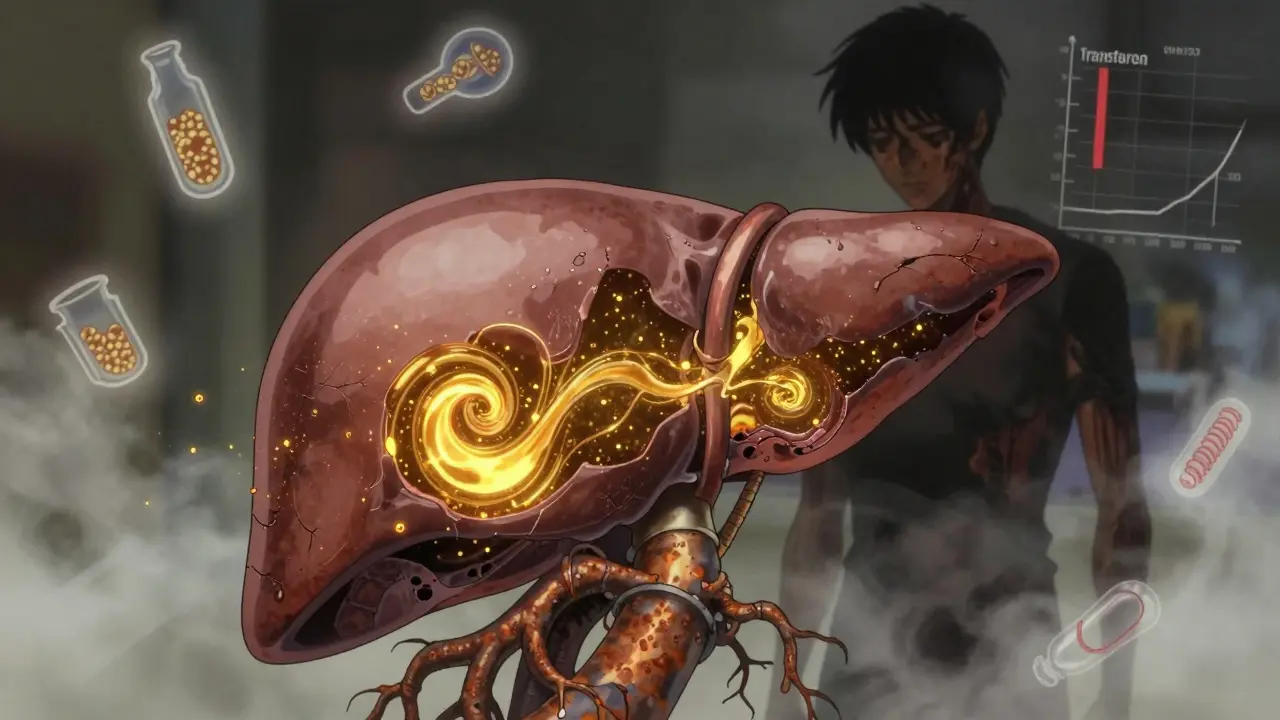
Most people think too much iron is a good thing-until their body starts storing it like a hoarder storing old newspapers. Hemochromatosis isn’t about eating too many steak dinners. It’s a genetic condition where your body absorbs iron like it’s going out of style, even when you don’t need it. Over time, that extra iron piles up in your liver, heart, pancreas, and joints. Left untreated, it can lead to cirrhosis, diabetes, heart failure, and even liver cancer. The good news? There’s a simple, proven treatment that reverses most of the damage if caught early: phlebotomy.
Why Your Body Keeps Taking More Iron Than It Needs
Every cell in your body needs iron. It’s how your blood carries oxygen. But your body doesn’t have a built-in off switch for iron absorption. Normally, your liver makes a hormone called hepcidin that tells your gut to slow down iron uptake when levels are full. In hemochromatosis, a faulty gene-usually the HFE C282Y mutation-breaks that signal. Your gut keeps absorbing iron like there’s no tomorrow. Your liver, the main storage site, gets overwhelmed.
This isn’t rare. About 1 in 200 people of Northern European descent carry two copies of the C282Y mutation. That’s over a million Americans. Yet, only 10 to 15% of them know they have it. Why? Because symptoms show up slowly. By the time you feel tired, have joint pain, or notice your skin turning grayish-brown, you’ve been absorbing extra iron for decades.
What Symptoms Tell You It’s Not Just Aging or Stress
People with hemochromatosis often go to doctors for years with complaints that get brushed off as depression, arthritis, or just getting older. But there’s a pattern. The three most common early signs are fatigue, joint pain (especially in the knuckles), and loss of sex drive. Men usually show symptoms between 30 and 50. Women often don’t notice anything until after menopause, because monthly blood loss used to help them shed excess iron.
Later on, things get more serious. About 25% develop diabetes because iron destroys insulin-producing cells in the pancreas. Around 45% develop skin discoloration-gray or bronze, like a bad tan that won’t fade. Abdominal pain, heart palpitations, and unexplained weight loss follow. By then, the liver is often already scarred.
Here’s the kicker: your blood tests might look normal if your doctor only checks hemoglobin. But if they don’t check serum ferritin and transferrin saturation, they’re missing the diagnosis. Ferritin above 300 ng/mL in men or 200 ng/mL in women? Transferrin saturation over 45%? That’s your red flag.
Phlebotomy: The Treatment That’s Been Working Since the 1950s
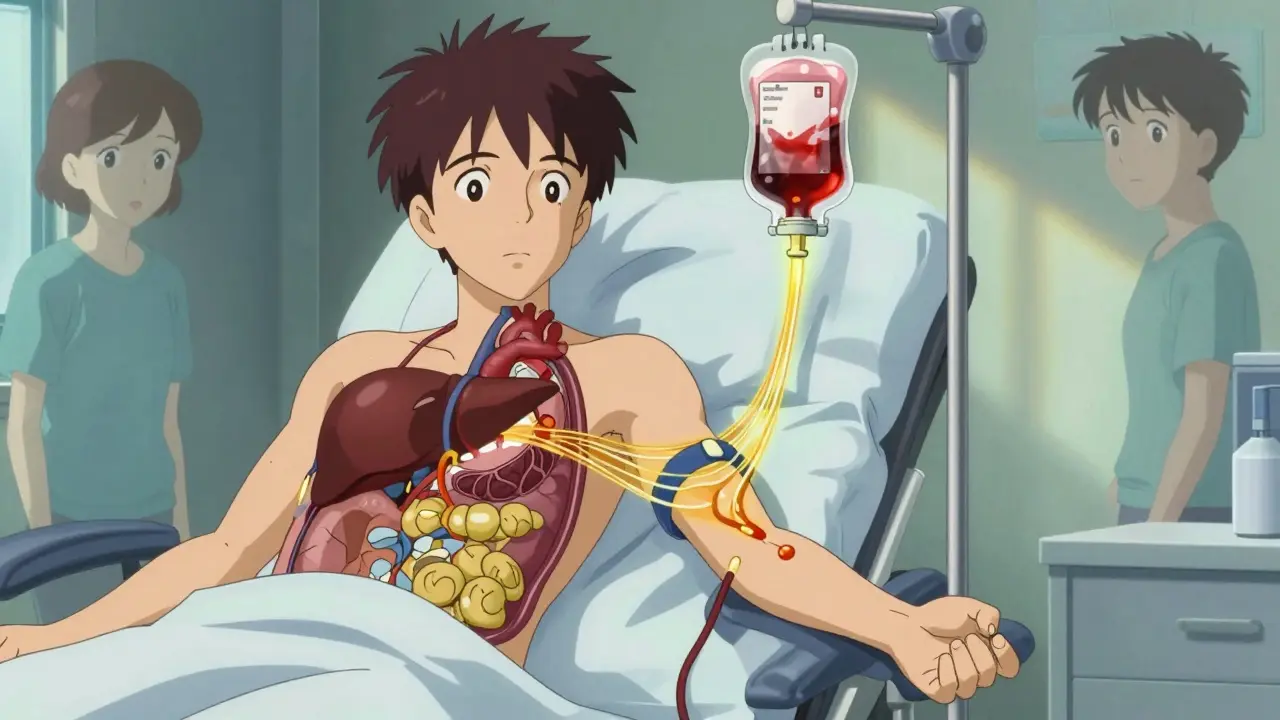
There’s no pill for hemochromatosis. But there’s a treatment older than most modern drugs: blood removal. Phlebotomy is simple-about 450 to 500 milliliters of blood (roughly one unit) is taken out weekly or every other week. Each pint removes about 200 to 250 milligrams of iron. Your body replaces the blood volume quickly, but it has to pull iron from your organs to make new red blood cells.
This isn’t donation. It’s therapy. Most insurance covers it. You don’t need to pay out of pocket. Blood centers that accept therapeutic phlebotomy often charge less than $50 per session, compared to iron-chelating drugs that cost $25,000 to $35,000 a year.
The goal isn’t just to feel better. It’s to get your ferritin down to 50-100 ng/mL and keep it there. That’s the sweet spot where iron stops damaging organs but doesn’t cause anemia. For someone with ferritin at 2,000 ng/mL, that can take 30 to 60 sessions over 12 to 18 months. One patient in Boston, diagnosed at 42 with ferritin at 2,850, needed 62 sessions over 15 months. He now feels like he did in his 20s.
What Happens If You Wait Too Long
Time is the enemy here. Once ferritin hits 1,000 ng/mL, your risk of cirrhosis jumps to 50-75%. Once cirrhosis sets in, phlebotomy can’t reverse the scarring. Your liver can’t regenerate. Your chances of liver cancer rise. Survival drops from 95% over 10 years if treated early to under 60% if you wait.
And it’s not just the liver. Iron in the heart causes arrhythmias and heart failure. Iron in the pancreas causes diabetes. Iron in the pituitary gland shuts down testosterone and estrogen production. These aren’t side effects-they’re direct consequences of iron overload.
That’s why experts say: if you’re diagnosed before ferritin hits 1,000, you can prevent almost all long-term damage. That’s 99% of cases. But if you wait until you’re already cirrhotic? Phlebotomy helps, but it won’t undo what’s done.
What Comes After the Initial Treatment
Phlebotomy isn’t a one-time fix. Once you reach your target ferritin level, you switch to maintenance. That means getting a pint of blood every 2 to 4 months, depending on how fast your body re-accumulates iron. Some people need it every 6 months. Others need it more often.
Here’s where people slip up. They feel fine. They stop. Then, years later, they’re back in the hospital with high ferritin again. Maintenance isn’t optional. It’s lifelong. Skipping it is like stopping blood pressure meds because you don’t feel dizzy.
Some patients struggle with vein access as they age. Others have trouble scheduling with blood banks that don’t offer therapeutic phlebotomy. That’s why it’s important to find a hematologist or liver specialist who knows how to coordinate care. Some clinics have dedicated phlebotomy programs just for hemochromatosis patients.
Testing Your Family Could Save Their Lives
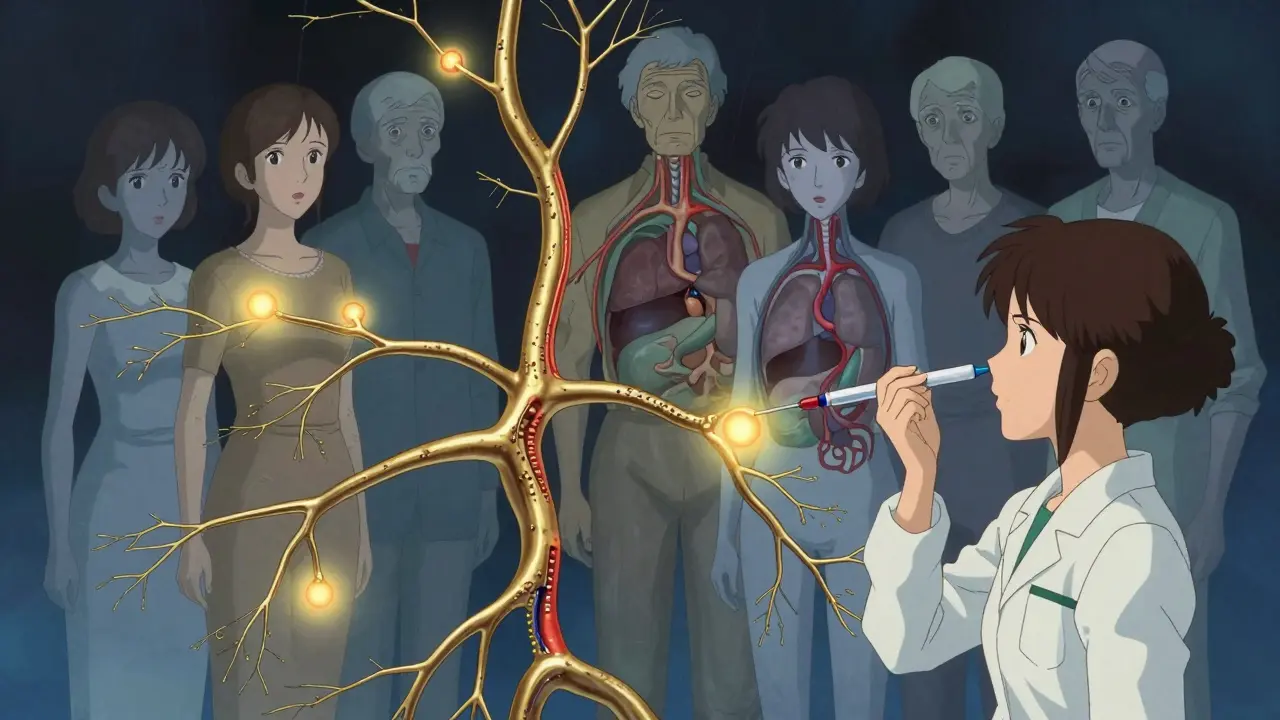
Hemochromatosis is inherited. If you have it, your siblings have a 25% chance of having two faulty copies. Your children have a 50% chance of carrying one copy. That doesn’t mean they’ll get sick-but they’re at risk.
Genetic testing for HFE mutations costs as little as $150 now. It’s simple: a cheek swab or blood test. The American Hemochromatosis Society says 70% of diagnosed patients are found because a relative got tested first. Cascade screening-testing family members after one person is diagnosed-is the most effective public health tool we have for this condition.
If you’re diagnosed, tell your parents, siblings, and children. Get them tested. It’s not just about you. It’s about breaking the cycle.
What About Diet and Supplements?
You don’t need to give up red meat entirely. But you should avoid iron supplements, vitamin C pills (which boost iron absorption), and alcohol. Alcohol makes iron damage worse in the liver. It’s not just about quantity-it’s about synergy. Iron + alcohol = faster liver damage.
Tea and coffee can help. Tannins in them block some iron absorption. Eating calcium-rich foods with meals can also reduce uptake. But none of this replaces phlebotomy. Diet is a side note, not a solution.
The Future: New Drugs and Better Screening
Researchers are working on drugs that mimic hepcidin-the hormone your body can’t make properly. One experimental drug, PTG-300, reduced iron levels by over 50% in early trials. If approved, it could mean fewer blood draws. But it’s still years away.
Right now, the best tool is still the same: blood tests. Yet only 12% of primary care doctors routinely check transferrin saturation in patients with fatigue or joint pain. That’s a gap. If you’re over 30, have unexplained fatigue, joint pain, or high liver enzymes, ask your doctor for ferritin and transferrin saturation. Don’t wait for them to bring it up.
Screening programs are starting to change. The CDC now recommends testing everyone with unexplained cirrhosis. That’s catching people who’ve been suffering for years. But early detection? That’s still up to you.
Can hemochromatosis be cured?
Hemochromatosis can’t be cured, but it can be completely managed. With regular phlebotomy, iron levels stay low, organs stop getting damaged, and life expectancy returns to normal. Most people live full, healthy lives once treatment starts.
Is phlebotomy safe?
Yes, it’s very safe when done properly. Each session is like donating blood. You might feel a little lightheaded afterward, but most people recover quickly. Serious side effects are rare. The risk is far lower than the damage caused by untreated iron overload.
Can women get hemochromatosis?
Absolutely. Women are less likely to show symptoms early because they lose iron during menstruation. But after menopause, their risk rises sharply. Many women are diagnosed only after they stop having periods. Don’t assume it’s a "man’s disease."
Do I need a liver biopsy?
No, not anymore. In the past, doctors used liver biopsies to measure iron in the liver. Now, a non-invasive MRI called R2* can measure liver iron concentration accurately and safely. Biopsies are only done if there’s suspicion of advanced liver disease and other tests are unclear.
What if I can’t tolerate phlebotomy?
If you have severe anemia, heart failure, or can’t access veins, iron-chelating drugs like deferasirox are an option. But they’re expensive, have side effects, and are less effective than phlebotomy. They’re only used when phlebotomy isn’t possible.
How do I know if I have the HFE gene mutation?
A simple genetic test can detect the C282Y, H63D, and S65C mutations. It’s usually ordered after abnormal iron tests. If you have a family history of hemochromatosis, you can get tested even if your iron levels are normal. Early detection saves lives.
Next Steps If You Suspect Hemochromatosis
If you’re tired all the time, have joint pain, or have a family history of liver disease, don’t wait. Ask your doctor for two simple blood tests: serum ferritin and transferrin saturation. If either is high, get genetic testing. If you’re diagnosed, find a specialist who understands maintenance therapy. And tell your family.
This isn’t a condition you can ignore. But it’s one you can beat-if you act before the damage becomes permanent. The treatment is cheap, effective, and has been saving lives for 70 years. You just need to ask for it.
Kristen Russell
January 3, 2026 AT 08:19Just had my first phlebotomy last week-felt like a superhero after it. No more brain fog, no more joint pain. Why isn’t this common knowledge?
Lee M
January 5, 2026 AT 05:30Iron isn’t the villain-it’s the system that lets it run wild. We evolved to hoard it. Now we’re just victims of our own biology. The real tragedy? We knew this in the 50s and still treat it like a mystery.
Dusty Weeks
January 5, 2026 AT 08:55lol i just took an iron supplement last month 😅 guess im gonna die now
Sally Denham-Vaughan
January 6, 2026 AT 02:33My dad was diagnosed at 58 after collapsing at work. They thought it was a heart thing. Turns out his ferritin was 3,200. He’s been doing phlebotomy every 8 weeks for 6 years now. Feels like a new man. Tell your doc to check ferritin. Seriously.
Bill Medley
January 6, 2026 AT 10:13Therapeutic phlebotomy remains the gold standard for hereditary hemochromatosis management, with an evidence base extending over seven decades.
Richard Thomas
January 7, 2026 AT 05:14It’s fascinating how evolution designed us to survive famine but left us utterly unprepared for abundance. We’re the only species that hoards nutrients until they poison us. Iron absorption-once a lifeline-now quietly kills us in silence. We don’t lack knowledge. We lack urgency. The body doesn’t scream until it’s too late. And by then, the damage is written in scar tissue, not symptoms. I wonder how many people die every year from this, quietly, while doctors chalk it up to ‘aging’ or ‘stress.’ We need a cultural shift-not just medical tests. We need to listen to our bodies before they break.
Ann Romine
January 8, 2026 AT 04:01I’m from Nigeria, and we don’t talk about this much here. But my cousin in the UK got diagnosed after her liver enzymes spiked. She had no idea. I just shared this with my family. Maybe someone else needs to hear it too.
Phoebe McKenzie
January 9, 2026 AT 20:43OF COURSE the medical industry doesn’t want you to know about this. Phlebotomy costs $50. A pill costs $30K. They’d rather keep you on lifelong drugs than fix you for free. Wake up. This is profit-driven medicine, not science.
gerard najera
January 11, 2026 AT 18:03My ferritin was 1,800. Now it’s 85. No magic. Just blood draws. Stop overthinking it.
Stephen Gikuma
January 12, 2026 AT 11:07They say it's genetic... but who funded the gene research? Big Pharma? The government? They want you weak so you need their drugs. This whole thing is a setup.
Bobby Collins
January 13, 2026 AT 18:18wait so if i drink tea with my steak... does that mean i'm already curing myself? 🤔
Donna Peplinskie
January 15, 2026 AT 14:05I’m so glad this was posted-my sister was misdiagnosed for 8 years with ‘chronic fatigue.’ She finally got tested after I begged her. Ferritin was 2,400. Now she’s on maintenance, and she’s laughing again. Please, if you’re tired and it’s ‘unexplained’-ask for ferritin and transferrin saturation. It’s not a stretch. It’s basic.
jaspreet sandhu
January 16, 2026 AT 07:30in india we dont have this problem because we eat mostly rice and lentils not steak. this is a white people problem. also why do you think your liver is so special? everyone has one. stop acting like this is unique.
Alex Warden
January 17, 2026 AT 06:03They’re gonna make you pay for phlebotomy soon. Mark my words. First they let you do it cheap, then they make you pay $500 a session. This is how they control us.
LIZETH DE PACHECO
January 18, 2026 AT 13:20If you’ve been told you’re just ‘getting older’ and you’re under 50-push back. This isn’t normal. You deserve to feel good. Ask for the tests. You’ve got nothing to lose but the fatigue.