

Generic Drug Interactions: How Digital Consultation Tools Keep You Safe
 Dec, 27 2025
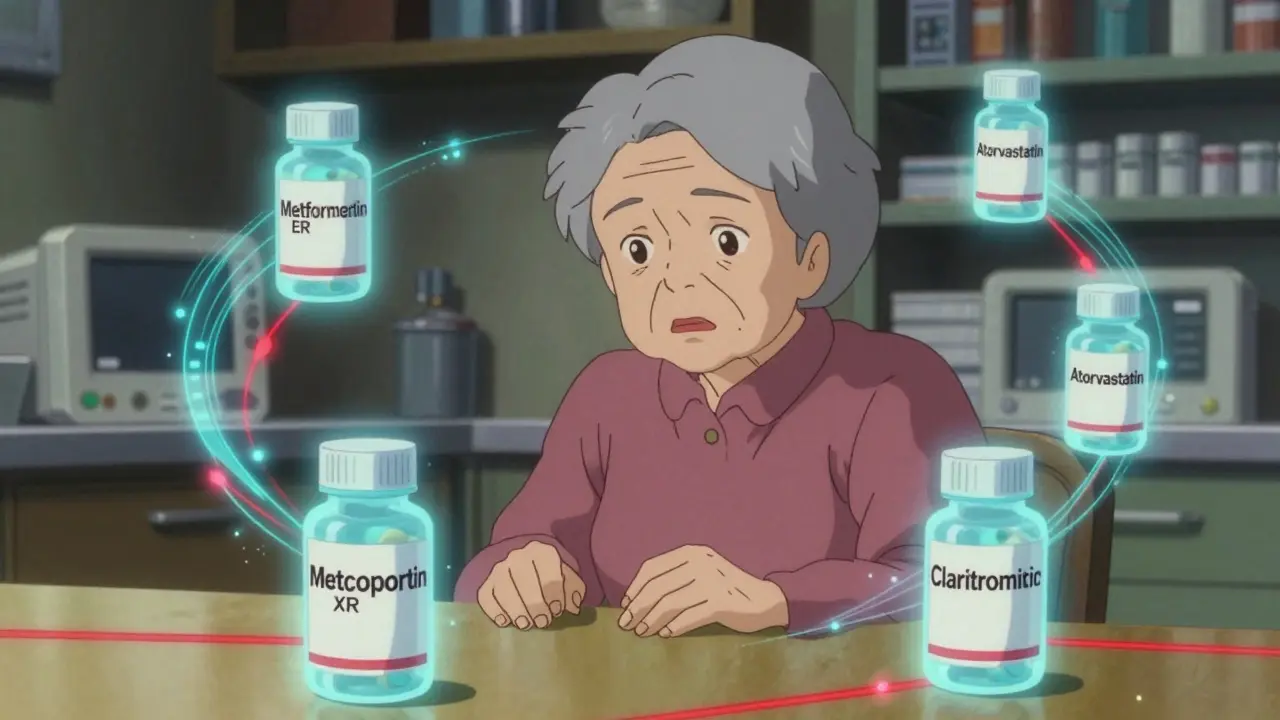
When you’re taking multiple medications-especially generics-your risk of dangerous drug interactions goes up fast. The average person over 65 takes nearly five prescriptions. Add over-the-counter painkillers, supplements, and herbal remedies, and you’ve got a chemical cocktail that could backfire. That’s where digital consultation tools come in. These aren’t just fancy apps. They’re life-saving systems that scan your meds and flag hidden dangers before they hurt you.
Why Generic Drugs Make Interactions Harder to Spot
Generic drugs are chemically identical to their brand-name cousins. But that doesn’t mean they’re easy to track. A patient might take metformin for diabetes, then pick up a cheaper version labeled “Glucophage XR” at one pharmacy and “Metformin ER” at another. The names change. The packaging changes. The database doesn’t always catch it. That’s where digital tools step in. They don’t care what the brand name is. They look at the active ingredient. If you’re taking atorvastatin and clarithromycin together, the system knows that combo can cause muscle damage-even if one drug is called Lipitor and the other is sold under a store brand. Generic versions are often sourced from different manufacturers, and their absorption rates can vary slightly. Digital tools account for those tiny differences by cross-referencing thousands of clinical studies and FDA reports.How Digital Tools Actually Work
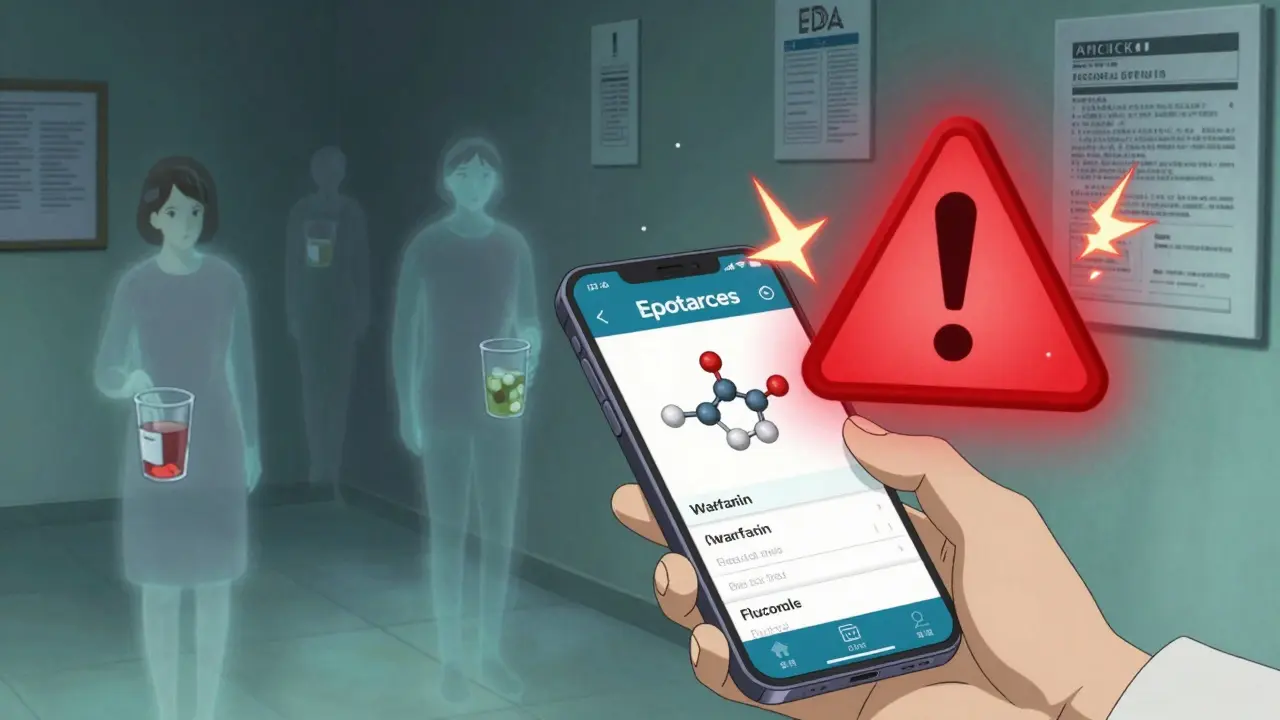
These aren’t magic. They’re built on massive databases that map out how drugs behave in the body. Every interaction is classified by severity: minor, moderate, or major. A major interaction could mean hospitalization-or death. For example, mixing warfarin (a blood thinner) with ibuprofen (a common painkiller) can cause dangerous bleeding. Most people know ibuprofen is risky with blood thinners. But what about fluconazole, a fungal infection pill? It’s a generic drug many don’t think twice about. Yet it can boost warfarin levels by 40%. That’s not minor. That’s a red flag. Tools like Epocrates, Micromedex, and DDInter scan your full list-prescription, OTC, supplements-and compare every drug against every other. They don’t just say “possible interaction.” They tell you why: “This combo inhibits liver enzyme CYP3A4, increasing blood levels of drug X by 2.3 times.” That level of detail matters.Top Tools You Can Use Right Now
Not all tools are made the same. Here’s what actually works in real-world settings:- Epocrates: The most popular app among doctors and pharmacists. Lets you check up to 30 drugs at once-including herbs and supplements. Free version is powerful enough for most people. Used by 76% of U.S. outpatient providers.
- Micromedex: Used in hospitals. Handles IV compatibility, overdose protocols, and complex drug comparisons. Integrates directly with electronic health records. Not free, but if you’re on five or more meds, it’s worth it.
- DDInter: Free, open-source, built by researchers. Great for checking up to five drugs. Shows detailed mechanisms-like how one drug affects liver metabolism. Not user-friendly, but perfect for curious patients or students.
- DrugBank: Excellent for research. Free version lets you see basic interactions, but blocks detailed severity ratings unless you pay. Frustrating for daily use.
- mobilePDR: Official source from Prescriber’s Digital Reference. Updates within a week of new drug info. Solid for quick lookups, but weak on herbal interactions.
Epocrates wins for most people because it’s fast, free, and covers everything from Adderall to turmeric. If you’re in a hospital or managing complex conditions like heart failure or kidney disease, Micromedex is the gold standard.
The Dark Side: False Alarms and Alert Fatigue
These tools aren’t perfect. In fact, they’re noisy. A 2023 study in JAMA Internal Medicine found that clinicians ignore between 49% and 96% of interaction alerts. Why? Too many false positives. A tool might flag simvastatin and grapefruit juice as dangerous-which is true-but then also flag simvastatin and black tea as “possible interaction.” There’s no real risk there. That’s noise. Over time, doctors and patients start tuning out. That’s dangerous. If you get 20 alerts a day and 18 are wrong, you’ll stop reading them. That’s why tools like Micromedex let you customize severity thresholds. You can set it to only warn you about major interactions, not minor ones. Also, no single tool catches every interaction. A 2022 report from the American Medical Informatics Association found false negative rates between 8% and 32%, depending on the drug class. That means some dangerous combos slip through-even on the best platforms.Who Should Use These Tools-and How
You don’t need to be a doctor to use them. Here’s how different people benefit:- Seniors on 5+ meds: Use Epocrates. Input every pill, vitamin, and herb you take. Do it every time you get a new prescription.
- Patients with chronic illness: If you have diabetes, heart disease, or depression, use Micromedex (ask your pharmacist for access).
- Caregivers: If you manage meds for a parent or spouse, use DDInter for free, detailed breakdowns. Print the results and bring them to appointments.
- Pharmacists: Use Epocrates for quick checks at the counter. Use Micromedex for complex cases involving IV drips or renal dosing.
Pro tip: Always update your list before every doctor visit. Don’t just say “I take my pills.” List them by name, dose, and frequency. Tools only work if you give them accurate data.

The Future: AI That Predicts, Not Just Warns
The next wave isn’t just about spotting known interactions. It’s about predicting new ones. In early 2024, DDInter added machine learning to forecast interactions that haven’t been documented yet. Merative, the company behind Micromedex, bought a startup called InteracDx to do the same. Their goal? Reduce false positives by 35% and catch interactions before they happen. The FDA is pushing for this. Their 2023 Digital Health Plan says improving interaction algorithms is a top priority. Soon, your tool might not just say “Avoid this combo.” It might say, “Based on your age, kidney function, and other meds, this combo raises your risk of bleeding by 17%.” That’s personalized safety.What to Do Today
You don’t need to wait for AI. Start now:- Download Epocrates (free on iOS and Android).
- Input every medication, supplement, and herbal product you take.
- Run a check every time you get a new prescription or change a dose.
- Bring the results to your next appointment. Ask: “Is this safe with what I’m already taking?”
- If you’re on complex therapy, ask your pharmacist about Micromedex access.
Generic drugs save money. But they don’t save you from risk. Digital tools do that. They’re not optional anymore. They’re part of basic medication safety-like washing your hands before surgery. Skip them, and you’re gambling with your health.
Can I trust free drug interaction checkers?
Yes-some of them. Epocrates and DDInter offer powerful free versions that cover the most common and dangerous interactions. Epocrates is trusted by millions of U.S. clinicians and checks up to 30 drugs at once, including supplements. DDInter is research-grade and completely free, though its interface is clunkier. Avoid tools that constantly push you to upgrade or hide key details behind paywalls. If you’re on multiple meds, don’t rely on random websites or apps without clear medical backing.
Do digital tools catch interactions between generics and supplements?
The best ones do. Epocrates and Micromedex include thousands of herbal supplements and vitamins. Common culprits: St. John’s Wort (interacts with antidepressants), garlic (thins blood), and grapefruit (affects statins). Many free tools miss these. Always check supplements separately-even if you think they’re “natural.”
Why do I get so many alerts when I use these apps?
Because the systems are designed to be cautious. They flag anything even remotely possible. That’s why you’ll see alerts for things like “ibuprofen and high blood pressure”-which isn’t always dangerous. The fix? Customize your settings. In Epocrates, you can set alerts to show only “Major” interactions. In Micromedex, your hospital may already have filters in place. Don’t ignore all alerts-but don’t panic over every one either.
Can these tools replace my pharmacist?
No. They’re tools, not replacements. Pharmacists use these apps too-but they also know your history, allergies, kidney function, and how you react to meds. An app can’t know if you’ve had a bad reaction to a drug before. Always talk to your pharmacist, especially when starting a new generic. Use the app to prepare for the conversation, not replace it.
Are these tools updated regularly?
The top ones are. mobilePDR updates within a week of manufacturer changes. Epocrates and Micromedex update daily or weekly. DDInter is updated by researchers as new studies come out. Avoid tools that don’t say when they last updated. If your app hasn’t updated in months, it’s outdated-and dangerous to trust.
Teresa Marzo Lostalé
December 28, 2025 AT 11:29So I’ve been using Epocrates for my grandma’s meds, and honestly? It’s saved us from a couple of near-misses. One time it flagged St. John’s Wort with her antidepressant-she thought it was ‘just herbal tea.’ Now she carries a printed list to every appointment. 🙏
Also, the fact that it checks supplements? Big win. People act like turmeric is harmless, but nope. It’s basically aspirin with vibes.
ANA MARIE VALENZUELA
December 29, 2025 AT 18:03Let’s be real-these apps are just glorified spam filters. I’ve seen pharmacists ignore 80% of the alerts because they’re useless. And don’t get me started on DDInter-looks like it was coded in 2008. If you’re relying on free apps to keep you alive, you’re already one step from the ER.
Bradly Draper
December 31, 2025 AT 10:29I’m not a doctor or nothing, but my dad’s on like seven things and I use Epocrates with him every time he gets a new script. It’s scary how many things clash. Like, who knew grapefruit juice could mess with his blood pressure med? I just read the alerts out loud to him. He listens better when he hears it plain.
Vu L
January 1, 2026 AT 01:53Wow. A whole post about apps that tell you not to mix drugs. Groundbreaking. Next you’ll tell us not to put butter in the fridge. I’ve been taking metformin and ibuprofen for years. Nothing happened. Maybe the real danger is trusting tech over your own body.
James Hilton
January 1, 2026 AT 22:17So let me get this straight-you’re telling me I need an app to stop me from killing myself with my own meds? Cool. I’ll just download Epocrates and then go buy 12 different ‘natural’ energy boosters from Amazon. Because nothing says ‘I’m responsible’ like a $40 bottle of ‘quantum turmeric.’ 😎
Mimi Bos
January 2, 2026 AT 22:26omg i just used ddinter for the first time and it said my ginkgo biloba might mess with my blood thinner?? i had no idea!! i thought it was just for memory?? i’m gonna print this out and take it to my dr tomorrow lol 🙈
Payton Daily
January 3, 2026 AT 10:59Look, I’ve read every study on this. These tools are based on population averages, not individual biology. Your liver doesn’t care what the FDA says. Your genes do. And no app can scan your DNA. I’ve been on warfarin for 12 years. I know how my body reacts. These apps just create anxiety. And let’s talk about the real problem: pharmaceutical companies push generics without standardizing labels. That’s the real villain-not the apps, not the patients. The system.
Also, if you think Epocrates is the answer, you’ve never tried to use it on an old iPhone. It crashes more than my ex’s texts.
Kelsey Youmans
January 5, 2026 AT 05:04While the utility of digital drug interaction tools is undeniably valuable, one must acknowledge the inherent limitations of algorithmic decision-making in clinical contexts. The reliance on aggregated data sets may overlook individualized physiological variance, particularly in geriatric populations with polypharmacy and comorbidities. Furthermore, the normalization of digital interfaces in patient self-management may inadvertently erode the essential human element of pharmacist-patient rapport, which remains irreplaceable in nuanced clinical judgment. I would therefore advocate for a complementary, not substitutive, integration of these technologies within the broader framework of professional healthcare delivery.