

Future Economic Trends: Forecasts for Generic Drug Markets
 Feb, 7 2026
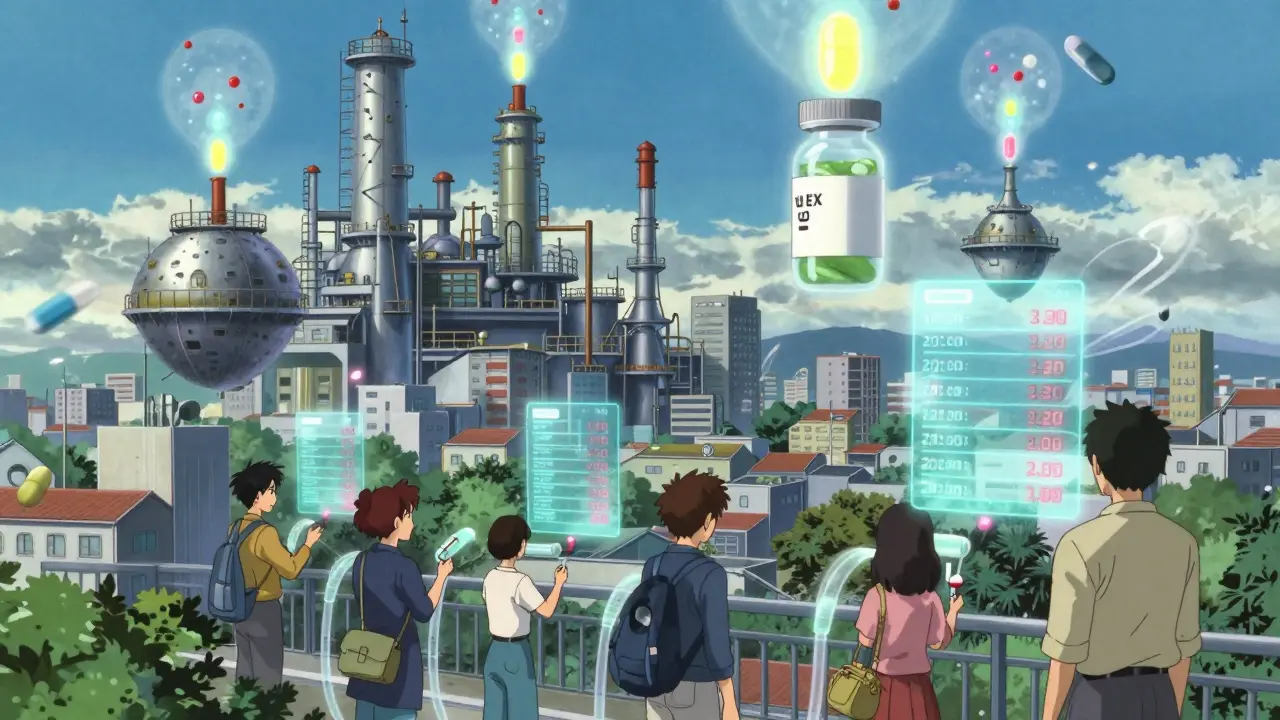
The global generic drugs market isn’t just growing-it’s reshaping how the world accesses medicine. By 2030, it could be worth over $700 billion, with some projections pushing past $900 billion. This isn’t speculation. It’s the result of hundreds of blockbuster drugs losing patent protection, aging populations needing more meds, and governments pushing for cheaper alternatives. Generic drugs aren’t cheap knockoffs. They’re identical in active ingredients, dosage, and effectiveness to their branded counterparts, but cost 80% less. And that difference is changing lives.
Why the Market Is Exploding
Between 2025 and 2030, drugs with combined annual sales of $217 billion to $236 billion will lose exclusivity. That’s not a small number. It’s more than the entire GDP of countries like Norway or the Netherlands. Drugs like ustekinumab and vedolizumab-used for autoimmune diseases-are about to go generic. So are newer treatments for diabetes, obesity, and cancer. When these patents expire, manufacturers in India, China, and elsewhere jump in fast. They don’t need to repeat expensive clinical trials. They just need to prove their version works the same. That’s why the FDA approves over 1,000 generic drugs every year.It’s not just about volume. It’s about value. In the U.S., generics make up 90% of prescriptions but only 15% of drug spending. That’s a massive efficiency. Without them, Medicare and private insurers would be overwhelmed. In Europe, countries like Germany and the U.K. have long used generic substitution policies to control costs. Now, the rest of the world is catching up.
Where the Growth Is Happening
The Asia-Pacific region is leading the charge. India alone supplies 20% of all generic drugs worldwide and 60% of global vaccine demand. Its manufacturers have built supply chains that are faster, cheaper, and more scalable than anywhere else. China, meanwhile, uses volume-based procurement to drive prices down. When the government buys in bulk, prices collapse. That forces global manufacturers to compete on cost-and that benefits patients everywhere.The U.S. market is still the largest by revenue, but growth is slowing. Why? Because the low-hanging fruit-simple pills like statins and blood pressure meds-has already been picked. The next wave is harder. Biosimilars, which are generic versions of complex biologic drugs, are where the real action is. These aren’t pills you swallow. They’re injectables made from living cells. Think drugs like Humira or Enbrel. They cost tens of thousands per year. Biosimilars cut that in half. The market for biosimilars is growing at 8.2% annually, far faster than traditional generics.
The New Frontiers: Complex Generics and Tech
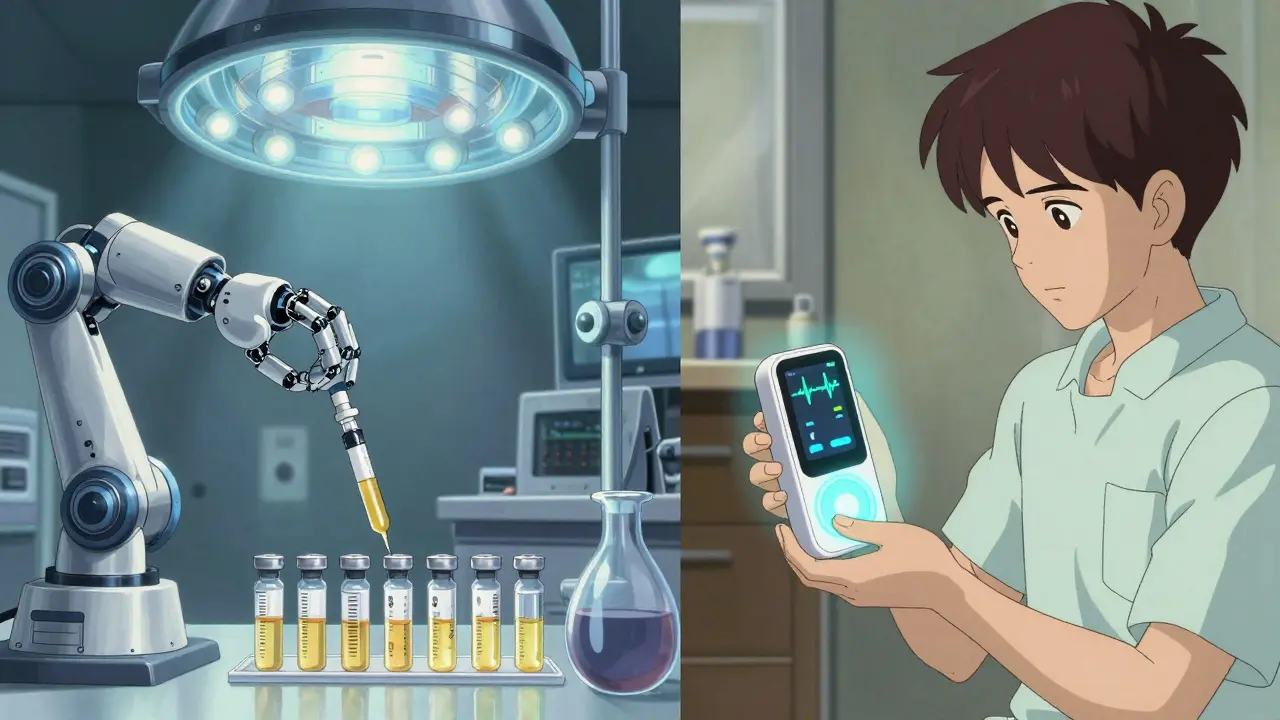
The next big shift isn’t just about more drugs. It’s about harder drugs. GLP-1 agonists-like those used for diabetes and weight loss-are the next frontier. Drugs like liraglutide and semaglutide are still under patent, but once they expire, manufacturers will race to make generics. But these aren’t simple pills. They’re injectables with precise dosing, complex formulations, and strict storage needs. Only a handful of companies have the tech to make them reliably.And it’s not just manufacturing. Technology is changing how generics are delivered. Apps that remind patients to refill prescriptions, automated dispensing systems in pharmacies, and digital adherence tracking are boosting refill rates. Why does that matter? Because if patients don’t take their meds, the whole system fails. If a generic diabetes drug is 90% cheaper but 40% of patients stop taking it, the savings vanish. Tech is helping fix that.
Who’s Winning and Who’s Struggling
The big players in the U.S. are Teva, Viatris (formerly Mylan), Sandoz, and Amneal. They’ve spent years building scale, regulatory expertise, and supply chains. But they’re under pressure. Prices keep falling. Margins are thin. To survive, they’re consolidating. Some are moving production to lower-cost regions. Others are investing in biosimilars.India’s companies-like Sun Pharma, Dr. Reddy’s, and Cipla-are thriving. They’re not just making pills. They’re building end-to-end supply chains, from raw materials to finished products. They’re also investing in automation. Robotic filling lines, AI-driven quality control, and real-time monitoring are cutting waste and improving consistency. That’s how they keep prices low while maintaining quality.
China’s state-backed manufacturers are playing a different game. They don’t need high margins. They’re part of a national strategy to dominate global supply. When China sets a price for a generic drug, it often becomes the global benchmark. If you want to sell in the U.S. or Europe, you have to match it. That’s why prices for common antibiotics and antivirals have dropped 70% in the last decade.
Therapeutic Areas Driving Demand
Not all generics are created equal. Some categories are growing faster than others:- Oncology: Cancer drugs are the most expensive. Once generics hit, they’ll save billions. Drugs like rituximab and trastuzumab are already going generic.
- Diabetes: With over 500 million people worldwide living with diabetes, the demand for insulin and oral meds is relentless. Generic metformin and glimepiride are staples.
- Cardiovascular: High blood pressure and cholesterol meds are the most prescribed drugs globally. Generic versions of atorvastatin and lisinopril are everywhere.
- Autoimmune and Inflammatory: Drugs for rheumatoid arthritis, psoriasis, and Crohn’s disease are next in line. Biologics like Dupixent and Skyrizi will soon face biosimilar competition.
These aren’t niche markets. They’re massive. The global oncology market alone is projected to hit $300 billion by 2030. Even if only half of that is generic, that’s $150 billion in new demand.
The Challenges Ahead
It’s not all smooth sailing. Price pressure is real. In markets like the U.S. and Europe, pharmacy benefit managers (PBMs) and insurers are squeezing margins to the bone. Some manufacturers are walking away from low-margin products. Others are shifting focus to high-value, complex generics.Regulatory delays are another hurdle. Getting approval for a biosimilar can take 5-7 years. That’s a long time to wait for a return on investment. But the EU and Japan are streamlining approvals. Japan just introduced a fast-track pathway for biosimilars. That could cut approval times in half.
Then there’s quality. Not all generics are equal. Some are made in facilities with outdated equipment. Others cut corners on excipients or stability testing. The FDA and EMA are cracking down. But in emerging markets, oversight is still weak. That’s why trusted brands matter-even in generics.
What’s Next?
The future of generic drugs is clear: more complexity, more innovation, more demand. The days of simple, low-cost pills dominating the market are fading. The next decade belongs to biosimilars, complex injectables, and tech-enabled delivery systems.Manufacturers who invest in automation, regulatory expertise, and supply chain resilience will win. Those who rely on low-cost labor and outdated processes will fade out.
For patients, the outcome is simple: better access to life-saving drugs at prices they can afford. For health systems, it’s a lifeline. For governments, it’s the only way to keep healthcare sustainable.
The generic drug market isn’t just a cost-cutting tool. It’s a cornerstone of modern healthcare. And its growth isn’t slowing down-it’s accelerating.
What exactly is a generic drug?
A generic drug is a medicine that contains the same active ingredient, dosage form, strength, route of administration, and intended use as a brand-name drug. It must meet the same quality and performance standards set by regulators like the FDA or EMA. The only differences are in inactive ingredients, packaging, and price. Generics are legally required to be bioequivalent, meaning they work the same way in the body.
Why are generic drugs so much cheaper?
Brand-name drug companies spend years and billions developing a drug, running clinical trials, and marketing it. Once the patent expires, other manufacturers can produce the same drug without repeating those costs. They don’t need to fund R&D or run expensive advertising campaigns. That’s why generics cost 80% less on average. The savings come from eliminating duplication-not cutting corners on quality.
Are biosimilars the same as generic drugs?
No. Biosimilars are generic versions of biologic drugs, which are made from living cells, not chemicals. Biologics are complex proteins used to treat cancer, autoimmune diseases, and rare conditions. Because they’re made from living organisms, biosimilars can’t be exact copies-they’re highly similar, but not identical. That’s why they require more testing and longer approval times than traditional generics. Still, they’re 15-35% cheaper than the original biologic.
Which countries lead in generic drug manufacturing?
India is the world’s largest supplier by volume, providing 20% of global generics and 60% of vaccine demand. China leads in price-setting through volume-based procurement and supplies many raw materials. The U.S. and Europe are major consumers, but rely heavily on imports. Germany and the U.K. have the highest generic use rates due to policy support.
How will patent expirations affect drug prices in the next 5 years?
Between 2025 and 2030, over $200 billion in annual sales from branded drugs will go generic. This will trigger massive price drops-often 70-90%-for drugs treating diabetes, obesity, cancer, and autoimmune diseases. Drugs like semaglutide (Ozempic), adalimumab (Humira), and ustekinumab (Stelara) are next in line. Once generics enter, prices stabilize at a fraction of the original cost. This will ease pressure on insurers and out-of-pocket costs for patients.
Kathryn Lenn
February 8, 2026 AT 04:40Oh wow, $700 billion? Sounds like someone’s been drinking the Big Pharma Kool-Aid. Let me guess-the ‘identical’ generics are just rebranded Chinese factory sludge with 20% less active ingredient and a side of lead paint. You know what they say: if it’s too cheap, it’s probably poisoning you. And don’t get me started on the FDA. They approve 1,000 generics a year? That’s not regulation-that’s a revolving door with a stamp that says ‘bless you.’
John Watts
February 8, 2026 AT 18:09Actually, this is one of the most hopeful things happening in global health right now. Imagine a diabetic in rural Nigeria getting insulin for $5 instead of $300. That’s not economics-that’s dignity. And yeah, India and China are stepping up, not because they’re ‘exploiting’ the system, but because they finally have the tech and the will to make medicine a human right, not a luxury. This isn’t just about cost-it’s about access. And that’s worth cheering for.
Randy Harkins
February 10, 2026 AT 18:02This is honestly one of those rare stories where everyone wins-patients, governments, even the manufacturers who adapt. 💙 I love how tech is helping too-apps that remind people to take their meds? That’s next-level care. It’s not just about making pills cheaper, it’s about making sure they actually get taken. And that’s the real win. So much hope in this space. Keep pushing forward! 🌍💊
Chima Ifeanyi
February 12, 2026 AT 06:40The entire narrative is a neoliberal smokescreen. The ‘cost savings’ are a myth propagated by PBMs who siphon off 30% of the ‘discount’ into their offshore accounts. Meanwhile, the real manufacturers-especially in India-are being strangled by U.S. patent evergreening and TRIPS flexibilities. This isn’t a market revolution; it’s a supply chain weaponization. The U.S. is outsourcing production while maintaining pricing hegemony. The ‘80% cheaper’ claim? It’s a headline. The actual out-of-pocket cost for the patient? Still rising. The data is obfuscated. The system is rigged.
Tori Thenazi
February 12, 2026 AT 09:48Elan Ricarte
February 12, 2026 AT 22:34Let’s be real-this whole ‘generic miracle’ is just Big Pharma letting go of the low-hanging fruit so they can pivot to $100K-a-year biosimilars and call it ‘innovation.’ You think Humira’s going generic? Cool. Now watch them slap a ‘new improved formula’ on the old one and charge $99,000 for it. The game isn’t about saving money-it’s about rebranding the same scam with a new name and a fancy injector. They’re not lowering prices. They’re just moving the goalposts. And we’re still paying.
Angie Datuin
February 14, 2026 AT 21:38I’ve been on a generic blood pressure med for 8 years. Never had an issue. My dad switched from the brand to the generic after Medicare, and his numbers improved. I think the fear around generics is way overblown. The science is solid. The regulators aren’t asleep. And honestly? If it works, it works. No drama. Just medicine.
Camille Hall
February 15, 2026 AT 20:44It’s beautiful, really. People forget that medicine isn’t supposed to be a profit center-it’s supposed to be a lifeline. The fact that we’re finally seeing global collaboration-India making the pills, China supplying the ingredients, U.S. innovating the delivery tech-is what progress looks like. It’s messy, it’s imperfect, but it’s working. And for the first time in decades, patients aren’t the afterthought. That’s worth celebrating.
Ritteka Goyal
February 17, 2026 AT 08:47OMG you guys!! I just want to say that India is the REAL hero here!! 🇮🇳💖 We make 60% of the world's vaccines and 20% of all generics and we do it with like... no fancy robots? Just sweat and chai? And you know what? We don't even charge extra for it! Like, we don't need to be rich to help people!! Meanwhile, America is still arguing about whether generic insulin is 'safe' while we've been giving it to millions since 2010!! And now you say biosimilars? Pfft. We're already making them in Madurai with 3D printed syringes and cow dung fuel!! (Okay maybe not the last part) But seriously-thank you India!! We are the unsung champions of global health!! 🙌🫶
Monica Warnick
February 18, 2026 AT 02:54So… if generics are so perfect… why do I still see ads for ‘premium’ versions? Why do pharmacies still push the brand? Why do doctors still prescribe them? Something’s off. I don’t trust this. It’s too clean. Too neat. Too… convenient. Who benefits? Who owns the factories? Who controls the data? …I’ve seen documentaries. This isn’t medicine. It’s a supply chain puppet show. And we’re all just… watching.