

Common Variable Immunodeficiency: Understanding Antibody Deficiency and Modern Treatment Options
 Jan, 26 2026
Imagine getting sick every few weeks - sinus infections, pneumonia, stomach bugs - and no matter how many antibiotics you take, you just can’t seem to shake it off. For people with Common Variable Immunodeficiency (CVID), this isn’t rare. It’s everyday life. CVID is one of the most common primary immunodeficiencies, yet most people - even many doctors - have never heard of it. The problem isn’t that your body is weak. It’s that it can’t make the right antibodies to fight off germs. And without those antibodies, even harmless bacteria can turn dangerous.
What Exactly Is CVID?
CVID is a genetic disorder where your B cells - the immune system’s antibody factories - don’t work right. You might have plenty of B cells in your blood, but they’re stuck. They can’t mature into the cells that produce immunoglobulins: IgG, IgA, and sometimes IgM. These are the proteins that act like targeted missiles, locking onto bacteria and viruses so your immune system can destroy them. Without enough of them, you’re defenseless.
Diagnosis isn’t simple. Doctors look for three things: IgG levels below 500 mg/dL (normal is 700-1600), IgA levels below 7 mg/dL (normal is 70-400), and a poor response to vaccines like pneumococcus or tetanus. Even then, it takes years for most patients to get diagnosed. On average, people see three or more doctors over eight years before someone finally says, “This isn’t just bad luck - it’s CVID.”
Why Does It Happen?
No single gene causes CVID. Over 20 different gene mutations have been linked to it - TACI, BAFF-R, CD19 - but each one only explains a small fraction of cases. In fact, 80% of people with CVID have no known genetic cause. That’s why doctors call it a syndrome, not a single disease. It’s like a group of different broken machines that all end up with the same symptom: no antibodies.
The core problem? Class-switch recombination. That’s the process where B cells learn to switch from making IgM (their default antibody) to making IgG or IgA, which are better suited for fighting infections in your lungs, gut, and bloodstream. In CVID, that switch doesn’t flip. So your body keeps making the wrong kind of shield.
What Happens When You Have CVID?
It’s not just about getting sick more often. People with CVID get sick differently. They’re hit hardest by encapsulated bacteria - the kind with thick outer shells that normal immune responses can’t penetrate. Streptococcus pneumoniae shows up in nearly 3 out of 10 pneumonia cases. Haemophilus influenzae is behind another third. These aren’t your typical colds. These are infections that land people in the hospital.
And it’s not just the lungs. About half of CVID patients develop gut problems. Chronic diarrhea, weight loss, bloating - often from Giardia lamblia, a parasite that rarely affects healthy people. Some develop autoimmune diseases, like low platelets (ITP) or anemia, where the immune system attacks its own cells. Others get granulomas - clusters of inflamed tissue - in their lungs or liver. And the risk of lymphoma? It’s 20 to 50 times higher than in the general population.
Fatigue is another silent killer. Patients describe it as a constant, crushing tiredness that doesn’t go away with sleep. It’s not just from infections. It’s from your immune system running on high alert 24/7, burning through energy it can’t afford to lose.
How Is CVID Different From Other Immune Disorders?
It’s easy to confuse CVID with other immune problems. But here’s how it stacks up:
- X-linked Agammaglobulinemia (XLA): This hits boys in infancy. Their B cells are almost completely missing. CVID patients usually have normal B cell counts - they just don’t work.
- Selective IgA Deficiency: This is the most common immunodeficiency, but people still make IgG and IgM. Most never even know they have it. CVID means all three major antibodies are low.
- Severe Combined Immunodeficiency (SCID): This is deadly in infancy. Babies can’t fight *any* infection. CVID patients can survive for years - but only with treatment.
That’s why CVID is tricky. It’s not a single disease. It’s a collection of immune failures that look similar on paper but behave very differently in real life.
How Is It Treated?
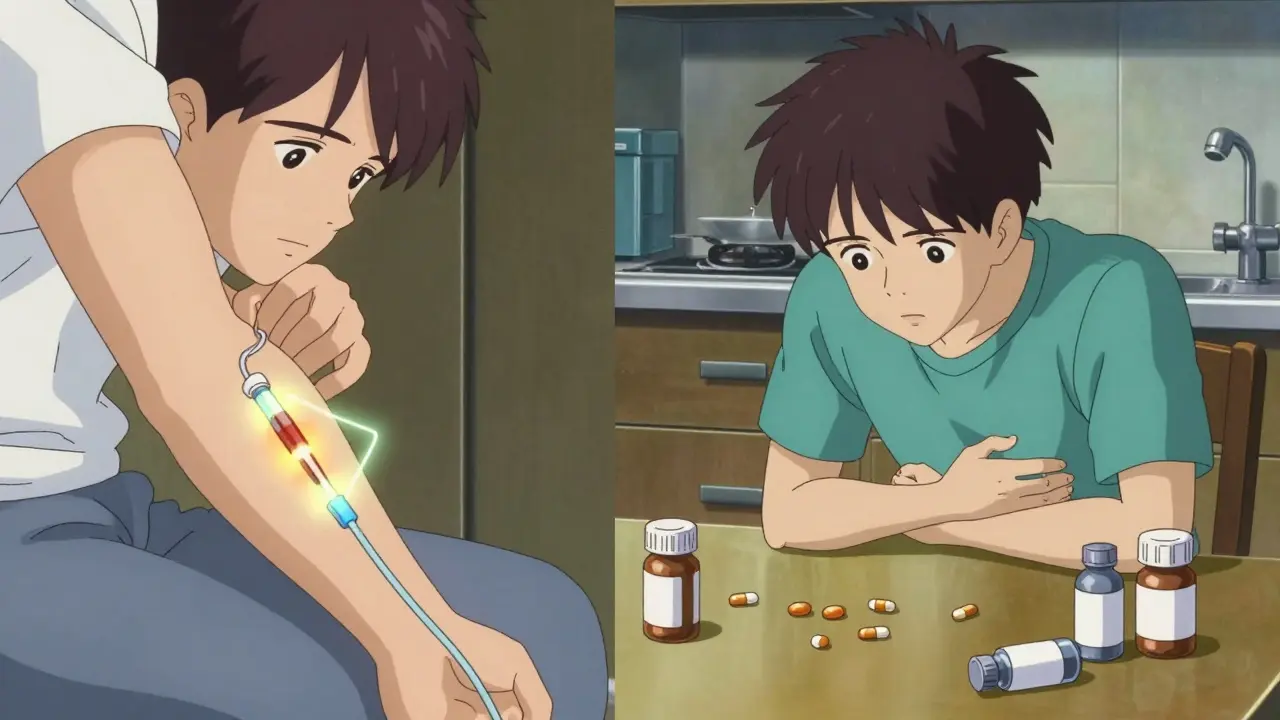
There’s no cure. But there’s a life-saving treatment: immunoglobulin replacement therapy. Since the 1980s, this has been the gold standard. You’re given purified antibodies from healthy donors - your body’s missing weapons, delivered directly into your bloodstream.
There are two main ways to get it:
- IVIG (Intravenous Immunoglobulin): Infused into a vein every 3-4 weeks. Takes 2-4 hours. Done at a clinic or hospital.
- SCIG (Subcutaneous Immunoglobulin): Injected under the skin, usually weekly. Can be done at home after training.
Most patients need 400-600 mg per kilogram of body weight monthly for IVIG, or 100-150 mg weekly for SCIG. The goal? Keep your IgG level above 800 mg/dL. That’s the threshold most doctors agree helps prevent infections.
Studies show patients on regular therapy drop from 10+ infections a year to fewer than 2. Energy levels improve within months. Hospital stays drop. Quality of life skyrockets.
But it’s not perfect. About a third of IVIG users get side effects: headaches, chills, nausea. SCIG causes local swelling or redness at injection sites in up to 40% of people. But those are manageable. Most patients learn to rotate sites, slow the drip rate, or take antihistamines beforehand.
And here’s the hard truth: it’s expensive. In the U.S., IVIG costs $65,000-$95,000 a year. SCIG runs $70,000-$100,000. Insurance covers most of it, but copays and deductibles still hit hard. In low-income countries, only 1 in 3 people with CVID get treatment at all.

What’s New in Treatment?
Researchers aren’t just replacing antibodies anymore. They’re trying to fix the broken system.
One promising drug, atacicept, blocks two proteins (BAFF and APRIL) that confuse B cells in CVID. In early trials, it cut severe infections by 37% when added to immunoglobulin therapy. It’s not a replacement - yet - but it could help those who still get sick despite regular infusions.
Genetic testing is getting better. In the next five years, experts believe we’ll be able to split CVID into subtypes - not just by symptoms, but by the exact gene defect. That means personalized treatments: one drug for TACI mutations, another for BAFF-R issues. No more one-size-fits-all.
There’s also a looming crisis: plasma shortage. Immunoglobulin is made from donated human plasma. Demand is outpacing supply by 12%. Prices are rising. Some predict costs could jump 20% by 2028. That’s why scientists are racing to develop recombinant antibodies - lab-made, not donor-dependent. But those are still in early trials.
Life With CVID: What Patients Say
Reddit threads and patient forums are full of stories. One woman in Ohio says she used to miss two weeks of work every month. Now, after switching to weekly SCIG at home, she’s been to the ER only once in three years. Another man in Texas says he lost 40 pounds before diagnosis - no one believed his stomach pain was immune-related. After starting therapy, he gained it back.
But the emotional toll is real. Many feel isolated. “People think if you’re not in a hospital, you’re fine,” one patient wrote. “They don’t see the fatigue. The constant worry. The fear of the next infection.”
Support groups help. The Immune Deficiency Foundation has over 200 local chapters and 15,000 members. Their annual conference draws 2,500 people - patients, parents, doctors - all sharing tips, stories, and hope.
What’s the Outlook?
Forty years ago, a CVID diagnosis meant a life expectancy of 33 years. Today, with consistent treatment, median survival has jumped to 59. That’s not a cure. But it’s progress.
Early diagnosis is still the biggest hurdle. If you’ve had more than four sinus infections a year, two pneumonia episodes, or chronic diarrhea that won’t go away - and antibiotics don’t fix it - ask for an immune workup. Check your IgG, IgA, and vaccine response. Don’t wait.
CVID isn’t rare. It’s just underdiagnosed. And with better awareness, better testing, and better treatments on the horizon, the future for people with CVID is brighter than ever.
Can CVID be cured?
No, there is currently no cure for CVID. But with lifelong immunoglobulin replacement therapy, most patients can live full, active lives with far fewer infections and improved energy levels. Research into gene therapies and targeted biologics may one day offer a cure, but those are still years away.
Is CVID the same as having a weak immune system?
Not exactly. Everyone’s immune system can be weakened by stress, poor sleep, or illness. CVID is a specific genetic defect where your body can’t make key antibodies - IgG, IgA, sometimes IgM - no matter how healthy you are. It’s not temporary. It’s not caused by lifestyle. It’s a biological malfunction.
Can you outgrow CVID?
No. CVID is a lifelong condition. Symptoms usually appear between ages 20 and 40, but the immune defect is present from birth. It doesn’t get better on its own. Stopping treatment leads to a rapid return of infections and complications.
Are there side effects from immunoglobulin therapy?
Yes, but they’re usually mild. IVIG can cause headaches, chills, nausea, or fever during or after infusion. SCIG often causes redness or swelling at the injection site. Most patients learn to manage these by slowing the infusion rate, taking pain relievers, or switching between IVIG and SCIG. Serious reactions are rare.
How do I know if I have CVID and not just frequent colds?
If you’ve had four or more ear or sinus infections in a year, two or more pneumonias in a year, chronic diarrhea, unexplained weight loss, or infections that don’t respond to antibiotics, it’s time to see an immunologist. A simple blood test for IgG, IgA, and IgM levels - plus a vaccine response test - can confirm or rule out CVID. Don’t assume it’s just bad luck.
Can CVID affect children?
Yes, but it’s less common. Most cases are diagnosed in adults between 20 and 40. Children with CVID often have more severe symptoms and may also have autoimmune issues or gut problems early on. Early diagnosis in kids is critical to prevent permanent lung or liver damage.
What happens if I don’t treat CVID?
Without treatment, infections become more frequent and severe. Chronic lung damage from repeated pneumonia can lead to bronchiectasis - permanent scarring that makes breathing harder. Autoimmune diseases, digestive disorders, and lymphoma risk increase dramatically. Life expectancy drops to around 33 years, compared to nearly 60 with therapy.
Can I get vaccinated if I have CVID?
You can get killed vaccines like flu, pneumonia, and tetanus - but they won’t work well because your body can’t make antibodies. Live vaccines (like MMR or nasal flu) are dangerous and should be avoided. Your doctor will check your antibody levels before and after vaccination to see if your body responded at all.
Joanna Domżalska
January 26, 2026 AT 04:12So let me get this straight - we’re giving people money from other people’s blood to stay alive? And we call this medicine? What if the donor had trauma? Did their fear get bottled up in there too? I’m not saying it doesn’t work - I’m saying it’s witchcraft with a price tag.
Faisal Mohamed
January 27, 2026 AT 02:41TL;DR: CVID = B-cell dysfunction → impaired class-switch recombination → hypogammaglobulinemia → recurrent encapsulated bacterial infections + autoimmune comorbidities + lymphoma risk ↑↑↑. IVIG/SCIG = life-sustaining but not curative. Plasma scarcity = systemic vulnerability. 🤯💉🧬
Josh josh
January 28, 2026 AT 01:17bro i had 5 sinus infections last year and no one believed me until i showed up to the er with a fever and a chest xray that looked like a war zone. now i get my ig at home every week. its not glamorous but its better than dying. thanks for writing this
bella nash
January 28, 2026 AT 02:57It is of paramount importance to underscore the clinical significance of immunoglobulin replacement therapy in the management of Common Variable Immunodeficiency. The persistence of recurrent infections, coupled with the development of autoimmune phenomena and granulomatous disease, necessitates a lifelong, structured therapeutic intervention. Failure to adhere to this regimen results in irreversible pulmonary and hepatic sequelae.
SWAPNIL SIDAM
January 28, 2026 AT 14:02I come from a small village in India where no one knows what CVID is. My cousin’s son got sick for two years. Doctors said it was ‘bad digestion.’ When we finally got him tested, it was too late - his lungs were damaged. I cried for three days. This article? It’s the first time I felt seen.
Betty Bomber
January 29, 2026 AT 14:42Just read this after my third IVIG session. Honestly? I didn’t think I’d live to see 40. Now I’m planning a road trip. Weird how something so simple - getting a bag of blood - can give you back your life.
TONY ADAMS
January 31, 2026 AT 03:10so u just sit there for 4 hours getting a blood transfusion every month and call that living? i mean what if u get a bad batch? what if the donor was a drug addict? u just trust some stranger’s plasma? this is insane. why dont they just make synthetic stuff? this is like 1980s medicine
Neil Thorogood
January 31, 2026 AT 09:05They charge $90k for a vial of magic juice and call it healthcare 😭. Meanwhile, I’m over here getting SCIG at home while watching Netflix and drinking kombucha. The only thing more expensive than this treatment? The guilt of surviving when so many can’t afford it. 💪🩸 #CVIDWarrior
Robin Van Emous
February 1, 2026 AT 00:41I appreciate the clarity here. I’ve known someone with CVID for 12 years. They used to be a musician. Now they play guitar in their living room, safe from crowds. I don’t know if I’d have the strength. Thank you for writing this. It’s not just science - it’s human.
Angie Thompson
February 1, 2026 AT 06:40OMG this is the most real thing I’ve read all week 🥹 I used to think I was just lazy because I was always tired. Turns out my immune system was screaming for help. Now I do SCIG on Tuesdays like it’s yoga. I even got a cute injection bag with cats on it. Who knew being sick could be kinda empowering? 💖
shivam utkresth
February 1, 2026 AT 14:04In India, we call this 'immune failure' - but no one talks about it. My brother was misdiagnosed for 7 years. We spent money on Ayurveda, homeopathy, even spiritual healers. When we finally got the test, it was too late for his lungs. But now he gets SCIG every week. It’s not perfect. But it’s hope. And hope is rare here.
Mohammed Rizvi
February 2, 2026 AT 07:44So we’re paying for human plasma while labs are trying to build synthetic antibodies? Classic. We’re basically running a blood bank on the backs of donors while tech giants sit on AI that could solve this in 5 years. The system’s broken. But at least we’re talking about it now.
Curtis Younker
February 4, 2026 AT 03:53I’ve been on IVIG for 14 years now. I remember the first time I didn’t miss work because of a cold. I cried in the parking lot. I didn’t even know I could feel that kind of normal. Now I coach other patients through their first infusion. I tell them: it’s not a life sentence - it’s a new rhythm. You learn to dance with the drip. And yeah, it’s expensive. And yeah, it’s weird. But it’s yours. And it’s working. So keep going. You’re not alone.