

Chronic Liver Disease: Understanding Cirrhosis Complications and How to Manage Them
 Feb, 24 2026
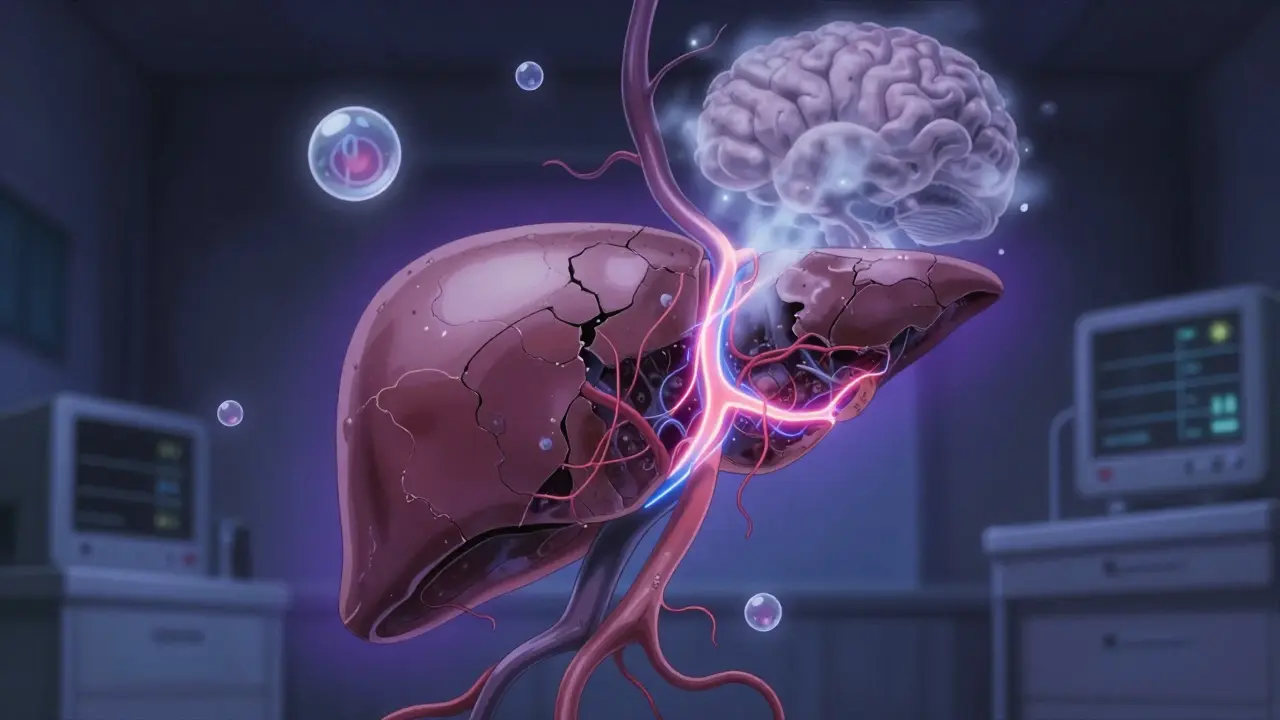
When your liver gets damaged over years - from alcohol, hepatitis, or fat buildup - it doesn’t just heal. It scars. That scarring is called cirrhosis, and once it sets in, the damage is permanent. But while you can’t undo the scars, you can stop them from spreading, manage the life-threatening complications, and even improve your quality of life. This isn’t about hopelessness. It’s about knowing what’s coming and how to fight it.
What Happens When the Liver Turns to Scar Tissue?
The liver is one of the body’s most resilient organs. It regenerates, detoxifies blood, makes proteins, and stores energy. But when injury keeps happening - say, from heavy drinking, untreated hepatitis C, or non-alcoholic fatty liver disease (now called MASH) - the liver tries to repair itself. Each repair creates fibrous tissue. Over time, this tissue piles up, forming knots and bands that block blood flow. That’s cirrhosis. At first, you might feel fine. This is called compensated cirrhosis. Your liver still works well enough to keep you going. But as scarring worsens, blood pressure in the portal vein - the main vessel carrying blood from your gut to your liver - starts to climb. Once it hits 10 mmHg or higher, you’re in trouble. This is portal hypertension, and it’s the root of nearly every serious complication.The Big Four Complications (And How They Show Up)
Once portal hypertension kicks in, four major problems follow. Each one has clear signs, measurable risks, and proven treatments.- Ascites: Fluid leaks into your belly. You might notice your pants feeling tight, or your stomach swelling over weeks. This happens in about half of people with cirrhosis within 10 years. It’s not just uncomfortable - it’s dangerous. The fluid can get infected (spontaneous bacterial peritonitis), and that kills 20-40% of patients during hospitalization.
- Variceal bleeding: The high pressure forces blood to find new paths, often through fragile veins in your esophagus or stomach. These veins swell into varices. When they burst, you vomit blood or pass black, tarry stools. About 1 in 3 people with cirrhosis will have this. Mortality per episode? 15-20%. It’s a medical emergency.
- Hepatic encephalopathy: Your liver can’t filter toxins anymore. Ammonia builds up and hits your brain. You might feel confused, forgetful, or sleepy. Some people slur their speech or act oddly. It’s called “brain fog” by patients - and 30-45% of those with decompensated cirrhosis get it. Lactulose can cut recurrence in half.
- Hepatocellular carcinoma: Cirrhosis turns the liver into a breeding ground for cancer. About 2-8% of people with cirrhosis develop liver cancer each year. That’s why every single person with cirrhosis needs an ultrasound every 6 months. Catching it early means a shot at cure.
These aren’t random events. They’re predictable. And that means they’re preventable - if you catch them early.
How Doctors Measure How Bad It Is
Not all cirrhosis is the same. Two people with the same diagnosis can have wildly different outcomes. That’s why doctors use two scoring systems. The Child-Pugh score looks at five things: bilirubin, albumin, INR (a clotting test), ascites, and brain function. It gives you a grade - A, B, or C. Class A means you have a 100% chance of surviving a year. Class C? Only 45% make it that long. But the real game-changer is the MELD score. It’s calculated from three blood tests: creatinine, bilirubin, and INR. The higher the number, the sicker you are. A MELD score of 15 or above means you’re at high risk of dying within 90 days. That’s when transplant evaluation starts. Here’s the catch: MELD doesn’t measure how awful you feel. Someone with a MELD score of 18 might be sleeping all day from brain fog. Someone else with a MELD of 20 might feel fine but have a tumor. That’s why new liver allocation rules (as of February 2024) now include quality-of-life factors - not just numbers.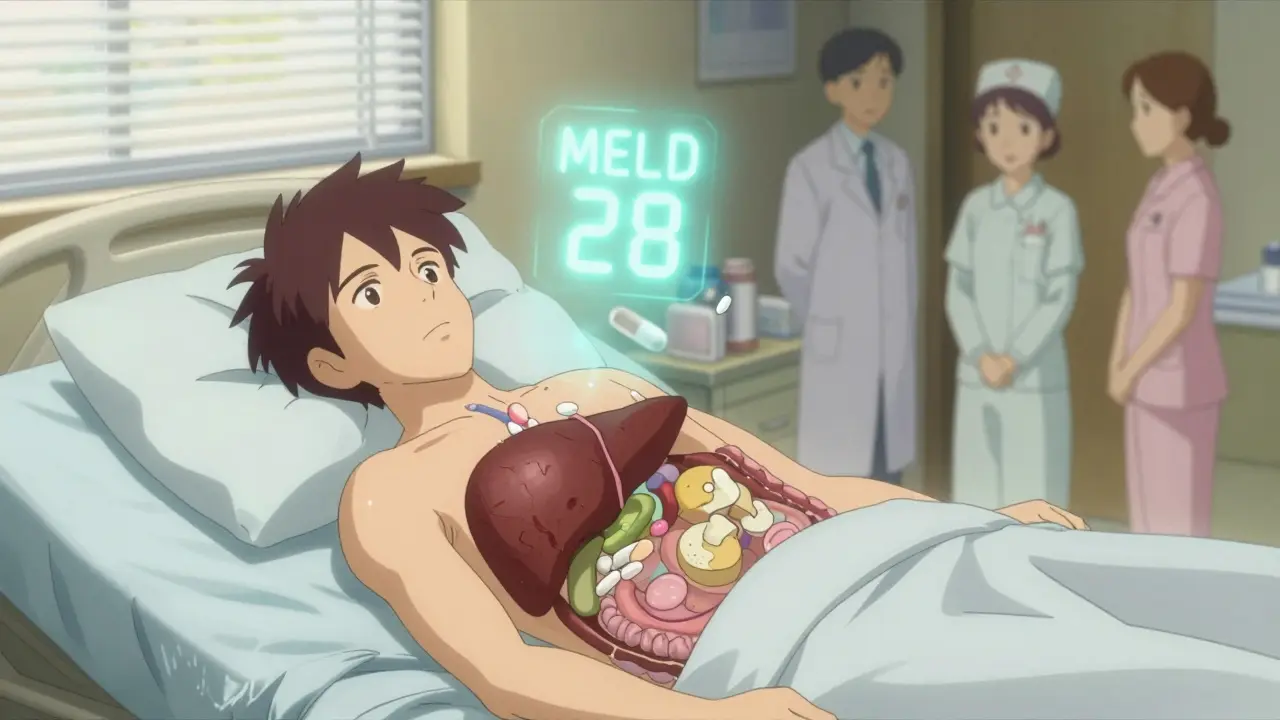
How to Manage Each Complication
Ascites: Start with salt. Eat less than 2 grams a day. No processed food. No canned soup. No soy sauce. Then take spironolactone - usually 100 mg a day. If that doesn’t help, add furosemide. Most people respond. But 1 in 10 develop refractory ascites. For them, doctors drain fluid with a needle (paracentesis). And to keep the body from crashing after drainage, they give albumin - 6 to 8 grams for every liter removed. That cuts complications by 70%. Variceal bleeding: If you have large varices, you’re put on a beta-blocker - propranolol or nadolol. These lower portal pressure by 20-30%. Carvedilol works even better. If you’ve bled before, you get banding during an endoscopy. Then you stay on the beta-blocker for life. Without this, 60% will bleed again in a year. Hepatic encephalopathy: Lactulose is the first line. It pulls ammonia out of your gut. But it causes diarrhea - a lot of it. Some people quit because they can’t leave the house. Rifaximin, an antibiotic that stays in the gut, cuts hospitalizations by 58%. It’s expensive - $1,200 a month without insurance - but it works. Liver cancer: Get an ultrasound every 6 months. That’s non-negotiable. It finds tumors when they’re small. If caught early, you can be cured with surgery, ablation, or transplant. Miss it? Survival drops to under a year.What’s New in Treatment?
For years, cirrhosis was seen as a one-way street. But that’s changing. In March 2024, the FDA approved resmetirom (Rezdiffra) for MASH-related cirrhosis. In trials, it reduced liver scarring by over 22% in a year. It’s not a cure, but it’s the first drug that actually reverses some damage. Artificial intelligence is stepping in too. An algorithm called CirrhoPredict, tested in 2024, used routine lab values to predict who would decompensate in the next 90 days - with 88% accuracy. Imagine getting a heads-up before you start swelling or get confused. And transplant? It’s still the only true cure. But waitlists are long. In 2022, there were 11,346 people waiting and only 8,391 transplants. That’s a 12% death rate on the list. New policies now factor in how sick patients feel - not just their MELD score.
What Patients Really Live With
Behind every number is a person. One man on Reddit said lactulose made him miss 12 family events because he was stuck near the bathroom. Another said brain fog cost him his job. A woman described vomiting blood on her birthday - and being told she’d need a transplant to survive. But there’s hope. One transplant recipient said 18 months later, her MELD score dropped from 28 to 9. She went back to full-time work. Another said her multidisciplinary clinic - with a dietitian, social worker, and nurse - cut her ER visits in half. The message is clear: cirrhosis is brutal. But it’s not a death sentence. With the right care, you can live longer. Better.What You Need to Do Right Now
- If you have cirrhosis: Get an ultrasound every 6 months. No exceptions.
- Check your salt intake. Less than 2 grams a day. Read labels. Cook at home.
- Take your beta-blocker if prescribed. Don’t skip doses.
- Call your doctor if you feel confused, swollen, or vomit blood. Don’t wait.
- Ask about rifaximin if lactulose is too hard to tolerate.
- Get evaluated for transplant if your MELD is 15 or higher - or if you’ve had repeated complications.
Cirrhosis isn’t a mystery. We know what causes it. We know how to stop it. We know how to treat its complications. The hardest part isn’t the medicine. It’s sticking with the plan - every day.
Can cirrhosis be reversed?
Early-stage cirrhosis can sometimes be slowed or partially reversed if the cause is removed - like stopping alcohol or curing hepatitis C. New drugs like resmetirom show promise in reducing scarring. But once extensive scar tissue forms, it can’t be undone. The goal is to stop it from getting worse.
Is a liver transplant the only cure?
Yes - for advanced cirrhosis, a liver transplant is the only treatment that replaces the damaged organ. It’s not for everyone. You need to be healthy enough for surgery, abstain from alcohol, and have a strong support system. But for those who qualify, it can mean returning to a full, normal life.
Why do people with cirrhosis need ultrasounds every 6 months?
Cirrhosis increases liver cancer risk by 2-8% per year. Ultrasounds catch tumors early - when they’re small and treatable. Without screening, cancer is often found too late. Studies show screening finds early-stage tumors in 70% of cases, compared to only 30% without it.
How does MELD score affect transplant eligibility?
MELD score ranks how sick you are based on three blood tests. Higher scores mean higher risk of death in the next 90 days. The sickest get priority. But since February 2024, the system also considers quality of life - like confusion, fatigue, or hospitalizations - so people with severe symptoms but lower scores aren’t left behind.
Can I still drink alcohol if I have cirrhosis?
No. Any alcohol use speeds up liver damage and increases the risk of bleeding, infection, and death. Even small amounts can be harmful. Abstinence is the only safe choice. For transplant candidates, many centers require at least 6 months of sobriety - though some now consider individual cases after 30 days.