

Blue Light and Eye Health: How to Use Screen Filters and Healthy Habits
 Apr, 21 2026
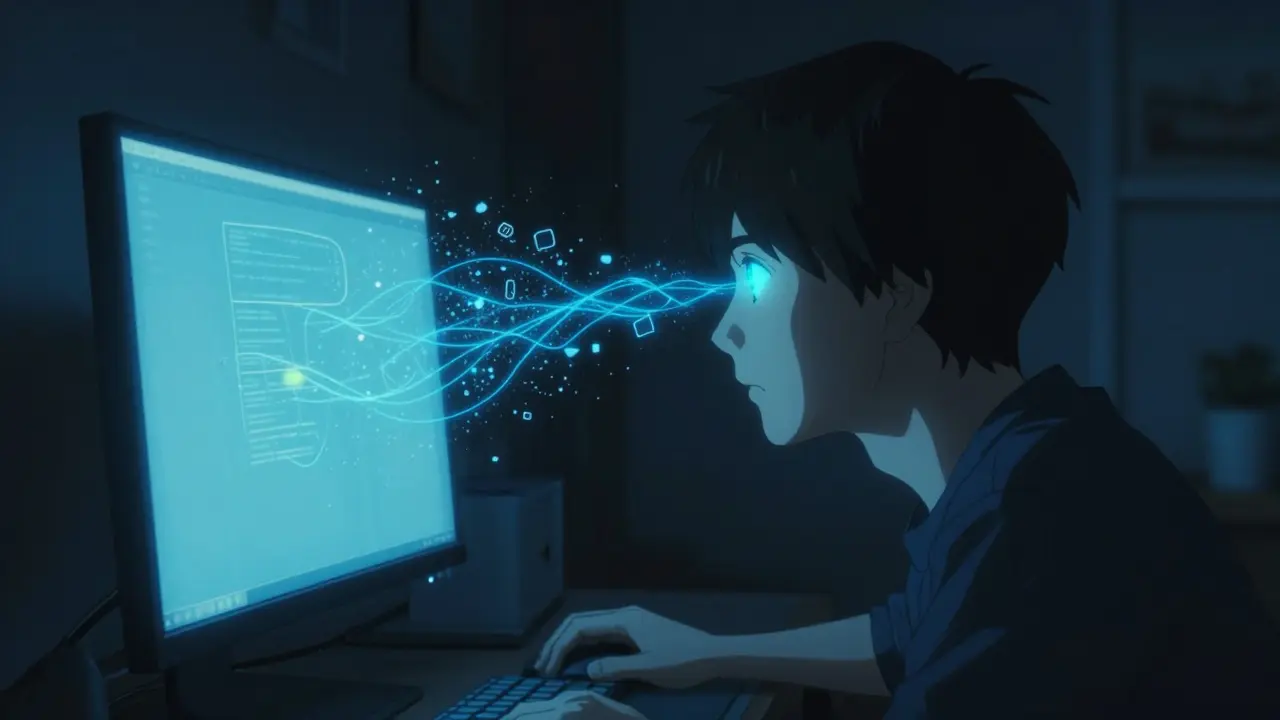
To understand the problem, we first need to define what we're dealing with. Blue Light is high-energy visible (HEV) light with a short wavelength, specifically between 415 and 455 nanometers. Because it has higher photon energy than other visible light, it can penetrate deeper into the eye, reaching the retina. The real-world issue is that our screens emit a concentrated dose of this light, which our eyes weren't designed to handle for 10 hours a day.
The Conflict: Is Blue Light Actually Dangerous?
If you look for a straight answer, you'll find two warring camps. On one side, researchers like Dr. Martin Rosenberg point to studies showing that short-wave blue light can cause oxidative stress in the cornea, potentially leading to cataracts or age-related macular degeneration. In fact, some lab tests showed that high-intensity blue light could decrease the viability of corneal cells by over 37%.
On the other side, the American Academy of Ophthalmology is a medical specialty organization that sets the standard for eye care in the US . Their official stance is that there is no scientific evidence that the blue light from digital devices causes permanent eye damage. They argue that the "strain" we feel isn't from the light's color, but from the fact that we stop blinking when we stare at screens, drying out the ocular surface.
So, who is right? Both. The danger depends on intensity and duration. The amount of blue light from a phone is far lower than the amount you get from standing in the sun for ten minutes. However, the cumulative effect of staring at a screen for 8 hours a day, every day, is where the concern lies.
How Screen Filters Actually Work
When you use a filter, you're essentially trying to block those high-energy photons from hitting your retina. There are three main ways to do this, and they vary wildly in effectiveness.
First, there are software solutions like Night Shift or f.lux. These tools shift the color temperature of your screen toward the warmer, yellow end of the spectrum. They are great for helping you fall asleep, but they only reduce blue light by about 10-20%. They don't actually "block" the most hazardous wavelengths; they just make the screen look less harsh.
Then we have physical screen protectors. These hardware films usually provide a slightly better reduction (around 15-25%). They are a decent middle-ground if you can't change your device settings.
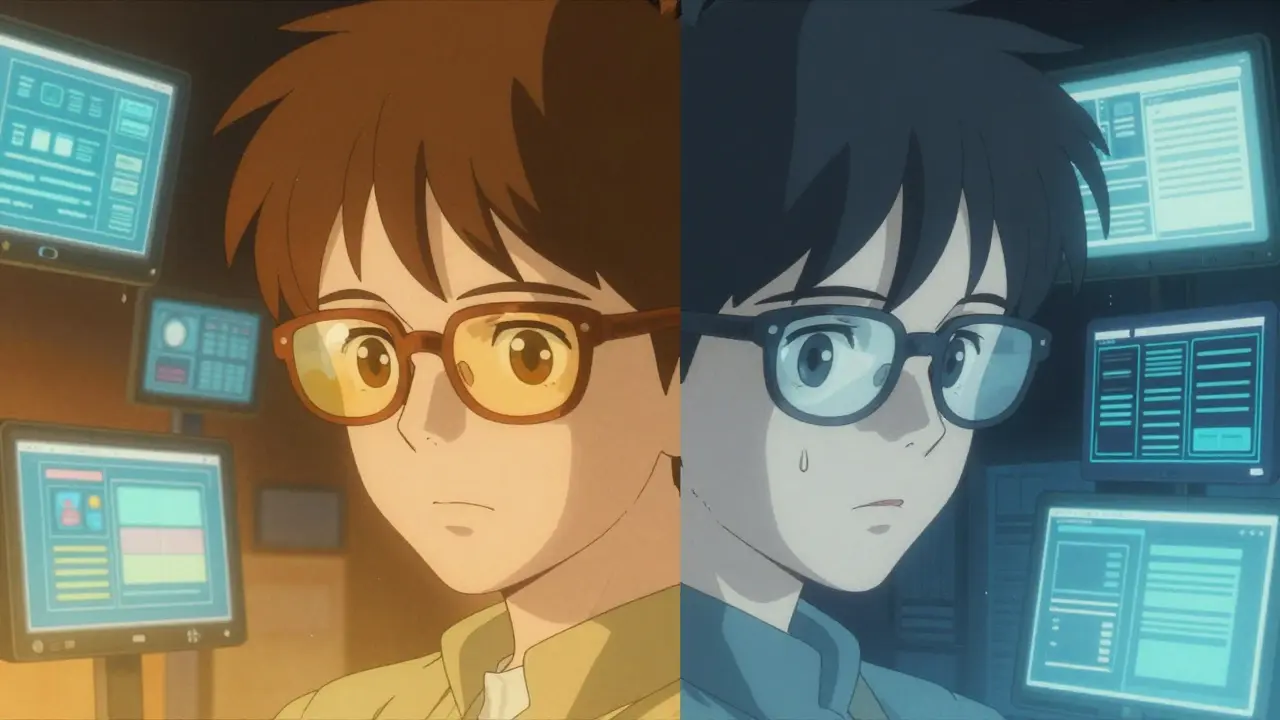
Finally, there are blue light-blocking glasses. This is where the most confusion happens. Clear lenses typically only block 10-25% of blue light. If you want real protection, you need amber-tinted lenses, which can block up to 100% of the 400-500 nm range. The trade-off? Everything looks yellow. For a professional photographer or graphic designer, this is a deal-breaker because it ruins color accuracy.
| Method | Blue Light Reduction | Pros | Cons |
|---|---|---|---|
| Software (Night Shift/f.lux) | 10% - 20% | Free, easy to toggle | Low effectiveness for retinal protection |
| Clear Filter Glasses | 10% - 25% | Looks natural, socially acceptable | Minimal actual blocking power |
| Amber Tinted Glasses | 65% - 100% | Maximum protection, helps sleep | Heavy color distortion, looks odd |
| Hardware OLED Filters | 30% - 40% | Built-in, no extra gear | Only available on new high-end devices |
The Sleep Connection: Melatonin and Circadian Rhythms
Even if the blue light doesn't "burn" your retina, it absolutely tricks your brain. Your body uses blue light from the sun to know it's daytime. This suppresses the production of Melatonin, which is the hormone responsible for regulating sleep-wake cycles . When you scroll through TikTok at 11 PM, your brain thinks it's high noon.
Research from Harvard Medical School found that blue light suppresses melatonin much more powerfully than green light. In one study, exposure to blue light shifted circadian rhythms by 3 hours. This is why you might feel "wired" but exhausted after a late-night gaming session. Using a warm-screen filter two hours before bed can increase melatonin production by nearly 60%, making it much easier to drift off.
Proven Habits to Stop Digital Eye Strain
If you're feeling the burn, a pair of glasses might not be the answer. Most of what we call "blue light damage" is actually Digital Eye Strain. To fix this, you need to change your behavior, not just your hardware.
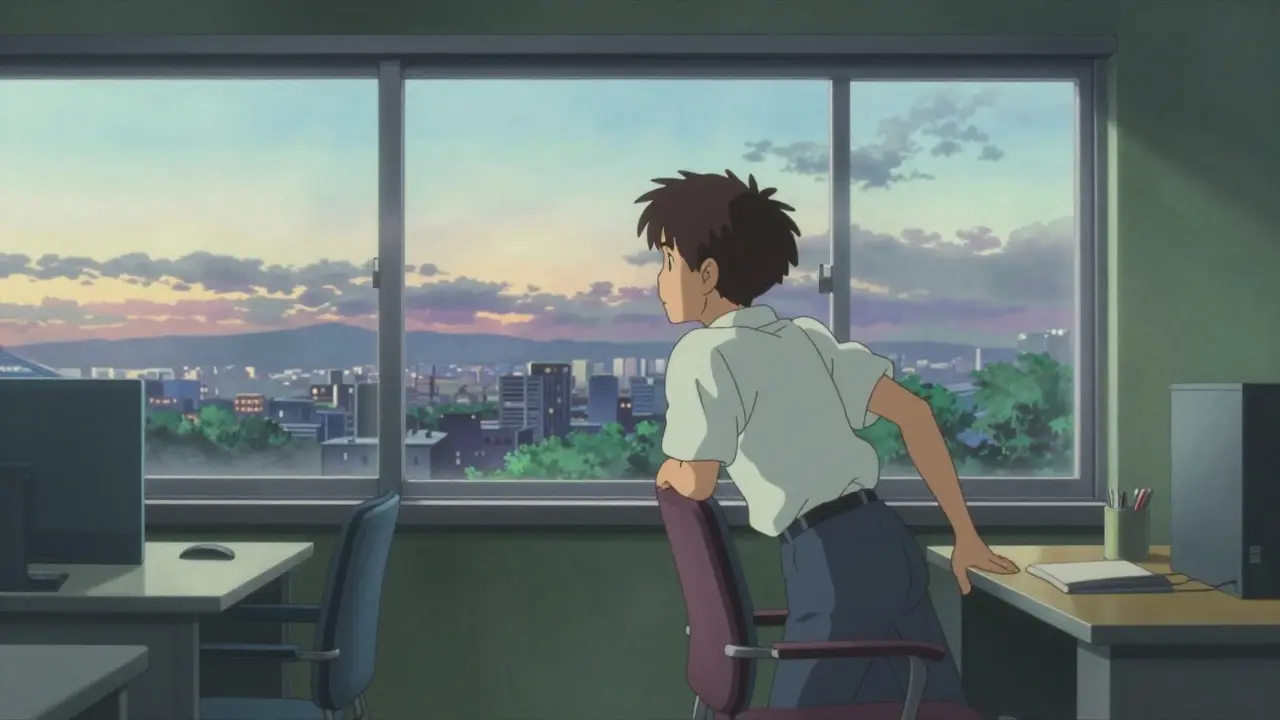
The gold standard here is the 20-20-20 rule. It's simple: every 20 minutes, look at something 20 feet away for 20 seconds. This forces your ciliary muscles-the ones that focus your lens-to relax. A study in Optometry and Vision Science found that this habit reduced reported eye strain by over 50%.
Beyond that, consider these three concrete adjustments:
- Match Your Brightness: Your screen should not be a light source in a dark room. Adjust your brightness to match the ambient light (ideally 300-500 lux). If your screen is the brightest thing in the room, your eyes will fatigue much faster.
- The 25-Inch Gap: Keep your monitor about 20 to 30 inches from your face. Getting too close increases the "accommodative demand" on your eyes, which is a fancy way of saying your eye muscles have to work harder to keep the image sharp.
- Force Yourself to Blink: We blink about 60% less when looking at a screen. Use artificial tears or a humidifier if you work in a dry office to prevent the "gritty" feeling.
Natural Protection and Future Tech
You can also fight blue light from the inside out. Some evidence suggests that increasing your intake of Lutein and Zeaxanthin-carotenoids found in leafy greens and egg yolks-can increase your macular pigment. This pigment acts as a natural internal filter, absorbing blue light before it hits the sensitive parts of the retina.
Looking ahead, we're moving away from clunky glasses. New OLED displays are being built with hardware-level blue light reduction that cuts the 415-455 nm range by 30-40% without making the screen look yellow. We're also seeing the rise of "adaptive color temperature" in smartphones, which uses ambient light sensors to adjust the filter in real-time, providing a more natural transition than a manual switch.
Do I really need blue light glasses for office work?
For most people, no. If you aren't experiencing severe strain, clear blue light glasses offer minimal benefit. You'll get more relief by implementing the 20-20-20 rule and adjusting your monitor's brightness to match the room.
Will blue light filters help me sleep better?
Yes. While they may not prevent retinal damage, filters that shift the screen to a warm/orange hue suppress melatonin less than standard blue-white light. This helps your brain transition into sleep mode more effectively.
Are amber-tinted glasses better than clear ones?
In terms of raw blocking power, yes. Amber lenses can block up to 100% of the most energetic blue light. However, they cause significant color distortion, making them a poor choice for anyone doing color-critical work like photo editing.
Can blue light cause permanent blindness?
There is no evidence that standard consumer screens cause immediate blindness. The risk is long-term and cumulative, potentially contributing to conditions like macular degeneration over decades of extreme exposure.
What is the best way to reduce eye strain quickly?
The fastest way to relieve active strain is the 20-20-20 rule: look 20 feet away for 20 seconds every 20 minutes. Combine this with a few deep blinks and a quick stretch to reset your focus.