

Bepotastine and Allergic Reactions to Medications: Can It Help Prevent Them?
 Dec, 1 2025
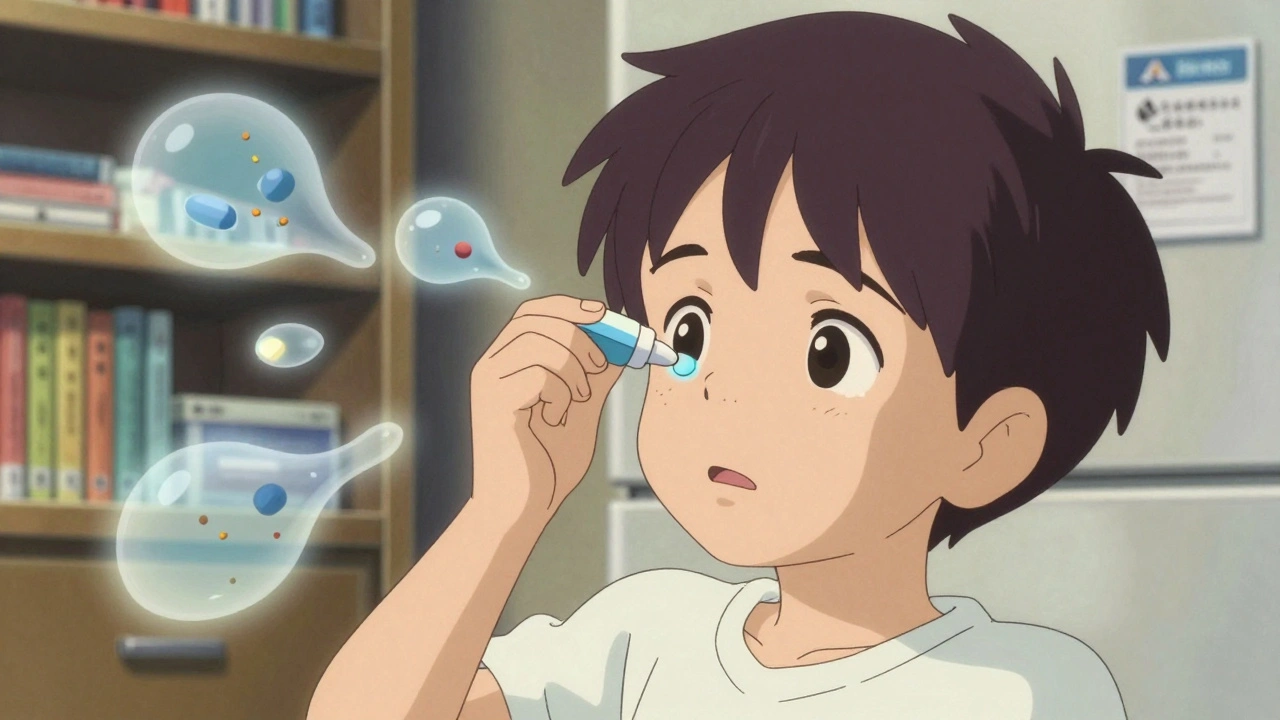
When your eyes itch, water, and swell after using a new eye drop or even just walking outside, it’s not just a nuisance-it’s a sign your body is reacting to something it thinks is dangerous. For many people, these reactions aren’t caused by pollen or pet dander. They’re triggered by the very medications meant to help them. That’s where bepotastine comes in-not to prevent all allergic reactions, but to calm the ones that flare up in the eyes.
What is bepotastine?
Bepotastine is an antihistamine eye drop used to treat allergic conjunctivitis. It’s sold under brand names like Bepreve and is approved for use in adults and children as young as two years old. Unlike older eye drops that only block histamine, bepotastine works in two ways: it stops histamine from binding to receptors in your eyes, and it reduces the release of other inflammatory chemicals from mast cells. This dual action makes it faster and longer-lasting than many first-generation antihistamine eye drops.
It’s not a cure. It doesn’t change your immune system. It doesn’t stop you from becoming allergic to something new. But when you’re already having a reaction-whether from pollen, cosmetics, or even a new prescription eye drop-bepotastine can reduce redness, itching, and swelling within minutes and keep it under control for up to 12 hours.
Can bepotastine prevent allergic reactions to medications?
No, bepotastine cannot prevent allergic reactions to medications. That’s a common misunderstanding. Allergic reactions to drugs happen when your immune system mistakes a medication for a threat. These reactions can range from a mild rash to life-threatening anaphylaxis. They’re systemic, meaning they involve your whole body, not just your eyes.
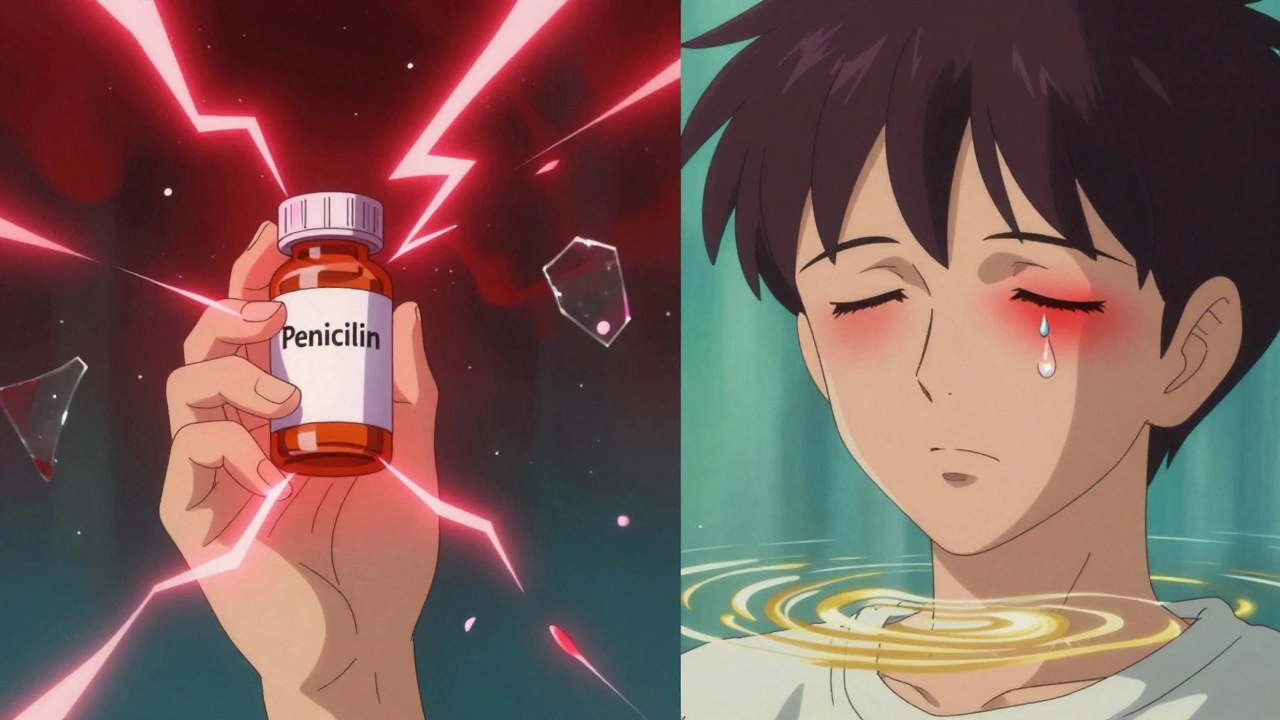
Bepotastine is only designed to treat allergic symptoms in the eyes. It doesn’t enter your bloodstream in significant amounts. Even if you’re allergic to penicillin, ibuprofen, or a new antibiotic, putting bepotastine in your eyes won’t stop your skin from breaking out or your throat from swelling.
Think of it like using a bandage on a cut caused by a faulty tool. The bandage helps the wound heal, but it doesn’t fix the tool. Bepotastine treats the eye irritation-but it doesn’t fix the underlying allergy to the medication causing it.
What causes allergic reactions to medications?
Medication allergies happen when your immune system produces IgE antibodies in response to a drug. Common triggers include antibiotics like penicillin, NSAIDs like ibuprofen, chemotherapy drugs, and even some eye drops themselves. Sometimes, it’s not the active ingredient but a preservative like benzalkonium chloride that causes the reaction.
People who have other allergies-like hay fever, eczema, or food allergies-are more likely to develop drug allergies. That’s why someone using bepotastine for eye allergies might also react to a new antibiotic prescribed for a sinus infection. The immune system is already primed to overreact.
Unlike side effects (like nausea or drowsiness), true allergic reactions get worse with repeated exposure. The first time you take a drug, you might feel fine. The second time, your body remembers it as a threat-and reacts harder.
How do you know if you’re having an allergic reaction to a medication?
Not every bad reaction is an allergy. Side effects are common and expected. Allergies are immune-driven and often unpredictable. Here’s how to tell the difference:
- Itchy, red, swollen eyes after using a new eye drop? Could be an allergy to the drop or its preservatives.
- Hives or rash that appears hours after taking a pill? Likely allergic.
- Swelling of lips or tongue or trouble breathing? This is an emergency-call 911.
- Stomach upset or dizziness after taking a new medication? More likely a side effect, not an allergy.
If you’ve had a reaction to a medication before, write it down. Include the name of the drug, what happened, and when. Bring this list to every doctor visit. Many people don’t realize they’re allergic until they’ve had a serious reaction-and that’s too late.
What should you do if you’re allergic to a medication?
If you’re allergic to a drug, the only sure way to prevent a reaction is to avoid it completely. That doesn’t mean you’re out of options. Pharmacists and allergists can often find alternatives.
For example, if you’re allergic to penicillin, there are dozens of other antibiotics that work just as well. If you react to a preservative in eye drops, there are preservative-free versions available. Bepotastine itself comes in a preservative-free formulation for people with sensitive eyes.
Some people assume they’re allergic to a whole class of drugs-like all NSAIDs-when they’re only allergic to one specific one. Allergy testing, usually done by an allergist, can help pinpoint exactly what you’re reacting to. Skin tests or blood tests can confirm whether your reaction is truly immune-mediated.
How does bepotastine fit into managing eye-related drug allergies?
Here’s the real role bepotastine plays: it’s a rescue treatment. If you accidentally get a medication in your eyes that triggers an allergic response-say, a new antibiotic eye drop-you can use bepotastine to calm the irritation. It doesn’t stop the allergy. But it makes the symptoms bearable while your body clears the trigger.
It’s also useful if you’re on long-term eye treatments and develop allergic conjunctivitis as a side effect. For example, people using glaucoma drops like timolol sometimes develop eye itching and redness. Switching to a different drop might help, but if that’s not possible, bepotastine can be used alongside it to manage symptoms.
Doctors often prescribe bepotastine for patients who’ve had prior reactions to other antihistamine eye drops. It’s less likely to cause stinging or burning, and it doesn’t contain sulfites or other common irritants found in older formulations.
What are the risks of using bepotastine?
Bepotastine is generally safe. The most common side effects are mild: a brief stinging sensation when you put it in your eye, a bitter taste in your mouth (because the drop drains into your throat), and occasional headaches. These usually go away after a few days.
It’s not known to interact with other medications because it’s not absorbed systemically. You can use it with blood pressure pills, antidepressants, or even oral antihistamines. But if you’re pregnant or breastfeeding, talk to your doctor first. There’s limited data, so caution is advised.
Never use bepotastine if you’re allergic to it. If your eyes swell shut, your vision blurs, or you develop a rash after using it, stop immediately and see a doctor. That could mean you’re allergic to bepotastine itself-which is rare, but possible.
Alternatives to bepotastine for eye allergies
If bepotastine doesn’t work for you-or if you can’t afford it-there are other options:
- Olopatadine (Patanol): Similar dual-action mechanism. Often cheaper as a generic.
- Ketotifen (Zaditor): Available over-the-counter. Good for mild cases.
- Azelastine (Optivar): Also an antihistamine, but can cause drowsiness in some people.
- Corticosteroid drops (loteprednol): For severe, chronic cases. Not for long-term use due to glaucoma and cataract risks.
Each has pros and cons. Olopatadine lasts longer. Ketotifen is cheaper. Azelastine works faster. Your choice depends on your symptoms, cost, and whether you need prescription coverage.
Can you build up a tolerance to bepotastine?
No. Unlike some medications, bepotastine doesn’t lose effectiveness over time. You don’t need to increase the dose. You don’t need to take breaks. If it works for you, you can use it daily during allergy season or as needed for flare-ups.
Some people think they’ve become immune to it because their symptoms return. But that’s usually because their exposure to allergens increased-like more pollen, new makeup, or switching to a different brand of eye drops. Bepotastine hasn’t stopped working. Your environment just got worse.
Final thoughts: Prevention vs. management
Bepotastine is a powerful tool for managing eye allergies. It’s fast, safe, and effective. But it’s not a shield against drug allergies. If you’re worried about reacting to a new medication, talk to your doctor or pharmacist before you start it. Ask: "Is there a version without this preservative?" or "Is there another drug I could use instead?"
Keep a list of your medication allergies. Carry a medical alert card if you’ve had a serious reaction. And if your eyes start itching after using a new product-don’t just reach for more drops. Stop. Assess. Call your doctor. Sometimes, the best way to prevent an allergic reaction is to avoid the trigger entirely.
Bepotastine helps you breathe easier, see clearly, and live better when allergies strike. But it doesn’t stop your body from reacting to what it thinks is dangerous. Prevention? That’s about knowing your triggers-and choosing wisely.
Can bepotastine prevent allergic reactions to medications?
No, bepotastine cannot prevent allergic reactions to medications. It is an eye drop designed only to relieve allergic symptoms in the eyes, such as itching and redness. It does not affect the immune system’s response to drugs taken orally or injected, nor does it prevent systemic allergic reactions like hives, swelling, or anaphylaxis.
Is bepotastine safe to use with other eye drops?
Yes, bepotastine is generally safe to use with other eye drops, including glaucoma medications or artificial tears. Wait at least 5 minutes between applying different drops to avoid washing out the first one. Always use bepotastine last if you’re using multiple products.
Can children use bepotastine eye drops?
Yes, bepotastine is approved for children as young as 2 years old. The dosing is the same as for adults-one drop in each affected eye twice daily. Always supervise application and avoid letting the dropper touch the eye or any surface to prevent contamination.
Does bepotastine cause drowsiness?
No, bepotastine is not known to cause drowsiness. Unlike some oral antihistamines, it’s designed to stay localized in the eyes with minimal absorption into the bloodstream. This makes it safer for daily use, even for people who drive or operate machinery.
How long does it take for bepotastine to work?
Most people notice relief from itching within 3 to 5 minutes after applying bepotastine. The full effect usually lasts up to 12 hours, making it suitable for twice-daily use during allergy season or flare-ups.
Are there preservative-free versions of bepotastine?
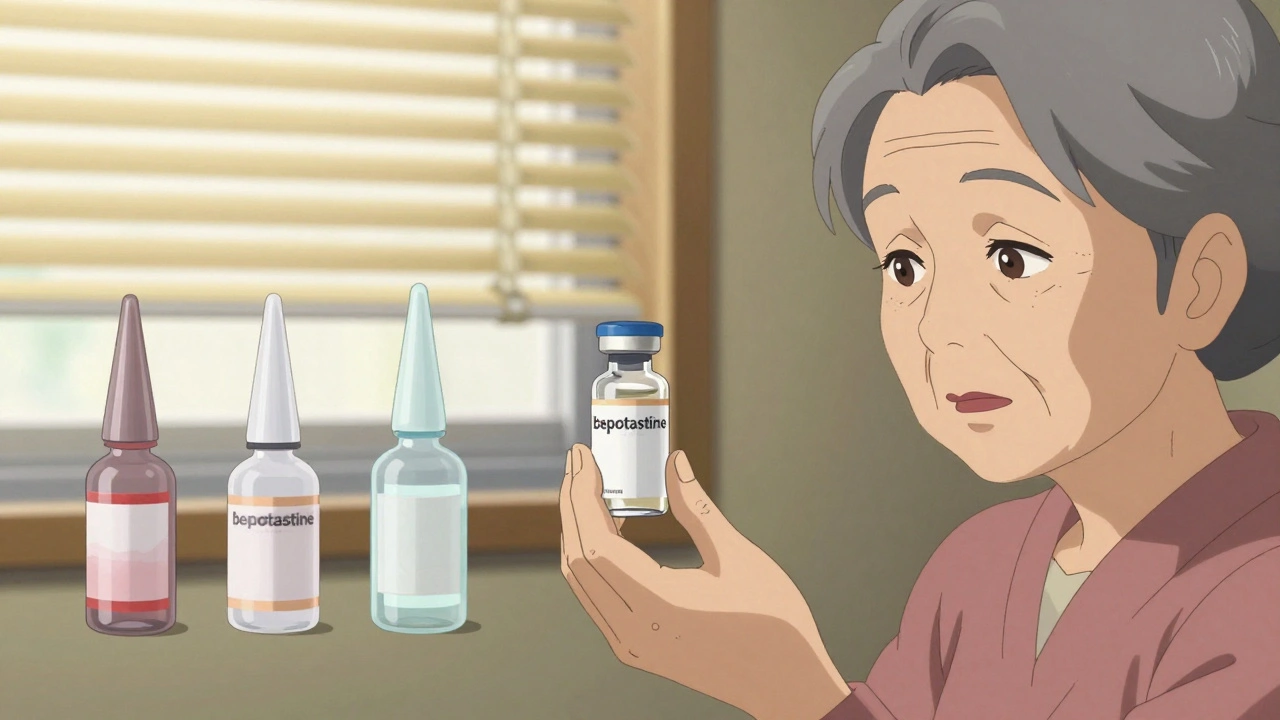
Yes, bepotastine is available in preservative-free single-use vials. These are ideal for people with sensitive eyes or those who have had allergic reactions to preservatives like benzalkonium chloride in other eye drops.
Can I use bepotastine if I have glaucoma?
Yes, bepotastine does not raise eye pressure and is safe for people with glaucoma. It can even be used alongside glaucoma medications to manage allergic symptoms without interfering with pressure control.
Lauryn Smith
December 2, 2025 AT 19:04Bepotastine is a game changer for my chronic eye allergies. I used to rely on oral antihistamines that made me drowsy, but this drops right into the problem zone without affecting my focus. No more squinting through meetings or rubbing my eyes raw.
It’s not magic, but it’s the closest thing I’ve found to a reliable reset button for my eyes.
Edward Hyde
December 2, 2025 AT 21:17So let me get this straight-you’re telling me this $80 eye drop won’t stop me from going into anaphylaxis if I accidentally take penicillin? Shocking. I thought modern medicine had finally cracked the code on allergies. Guess I’ll keep my EpiPen handy and my wallet closed.
Charlotte Collins
December 4, 2025 AT 08:31Let’s be real-pharma’s marketing machine is at it again. They package a localized symptom suppressor as if it’s a systemic solution, then charge premium prices for the illusion of control.
Meanwhile, the real issue-overuse of preservatives like benzalkonium chloride in eye drops-is buried in paragraph 12 where no one reads.
They don’t want you to know you can switch to preservative-free. They want you to keep buying the same bottle over and over.
Scotia Corley
December 4, 2025 AT 22:46It is imperative to clarify that bepotastine functions exclusively as a topical antihistaminic agent with mast cell-stabilizing properties. Its pharmacokinetic profile demonstrates negligible systemic absorption, rendering it incapable of modulating IgE-mediated immune responses beyond the ocular mucosa.
Therefore, any suggestion that it confers prophylactic benefit against systemic drug allergies constitutes a fundamental misunderstanding of immunopharmacology.
elizabeth muzichuk
December 6, 2025 AT 01:58I used bepotastine for three days and then my husband started having chest pains. Coincidence? I don’t think so.
They put something in that drop to make you dependent. I read a Reddit thread from 2018 where someone said their vision got blurry after a month. No one talks about this.
What if it’s linked to the rise in autoimmune disorders? What if the FDA is asleep at the wheel?
I’m not saying it’s evil-but I’m not using it again until someone proves it’s safe.
Debbie Naquin
December 6, 2025 AT 13:22The ontological gap between symptom suppression and immune modulation is the core tension here. Bepotastine operates within the phenomenological sphere of ocular irritation, not the epistemic domain of allergen recognition.
It’s a palliative, not a paradigm shift.
And yet, we treat it as if it reconfigures the host-pathogen dynamic.
We mistake relief for resolution.
That’s the pathology of modern medicine.
It’s not about fixing the system-it’s about managing the symptoms so we don’t have to fix the system.
Mary Ngo
December 8, 2025 AT 06:41Did you know that in 2021, the FDA approved 14 new eye drops-none of which addressed the root cause: overprescription of antimicrobials and preservatives in ophthalmic products?
They’re not trying to cure allergies-they’re trying to sell you a new bottle every month.
And the worst part? The same companies that make bepotastine also make the preservatives that cause the reactions in the first place.
It’s a closed loop of profit disguised as care.
You’re not getting healthier-you’re getting addicted to bandaids.
Kenny Leow
December 9, 2025 AT 17:49As someone who grew up in a household where eye drops were treated like candy, I can say this: bepotastine is the least offensive option I’ve tried.
It doesn’t sting like the old stuff. Doesn’t make me sleepy. Doesn’t cost a fortune if you get the generic.
And honestly? If it helps me keep my eyes open during Zoom calls, I’m not gonna complain.
Medicine isn’t perfect-but sometimes, good enough is enough.
Kelly Essenpreis
December 11, 2025 AT 09:21Why do we even need this? In my country we just use salt water and a cold spoon. No pills no drops no nonsense.
Americans turn every sneeze into a crisis and then sell you a $70 solution.
My grandma never heard of bepotastine and she lived to 92.
Stop overmedicating your eyes
Alexander Williams
December 11, 2025 AT 16:05Pharmacokinetic bioavailability of bepotastine is <1% systemic absorption-per FDA labeling. That’s why it doesn’t prevent systemic reactions. But that same property makes it ideal for localized control without cross-reactivity.
It’s not a loophole-it’s a feature.
Stop conflating mechanism of action with therapeutic scope.
The post is accurate. You’re just reading it wrong.
Suzanne Mollaneda Padin
December 12, 2025 AT 06:55For anyone struggling with preservative sensitivity: ask your pharmacist for the single-dose vials. They’re preservative-free and often covered by insurance if you have a documented reaction.
I switched after my eyes swelled shut from a generic drop-and now I use bepotastine in the vials twice a day during pollen season.
No stinging. No burning. No panic.
It’s not glamorous, but it works.
And if you’re on glaucoma meds? Talk to your doctor about combining it safely. It’s a common combo.
ariel nicholas
December 13, 2025 AT 13:24Wait-so you’re telling me that if I’m allergic to penicillin, I can’t just put bepotastine in my eyes and suddenly be safe? What kind of scam is this? I thought this was the miracle cure they were advertising on TV.
So what’s the point? Why even make it if it doesn’t stop the real danger?
They’re just selling hope. And I’m done buying it.
Bonnie Youn
December 13, 2025 AT 23:22You’re not alone. I thought bepotastine was going to save me from every allergy under the sun.
Turns out, it just saves my eyes.
And honestly? That’s enough.
My skin still breaks out when I take ibuprofen. My nose still runs when I’m near cats.
But now I can see clearly. I can blink without crying.
That’s not nothing.
It’s not a shield-but it’s a window.
And sometimes, that’s all you need to get through the day.